
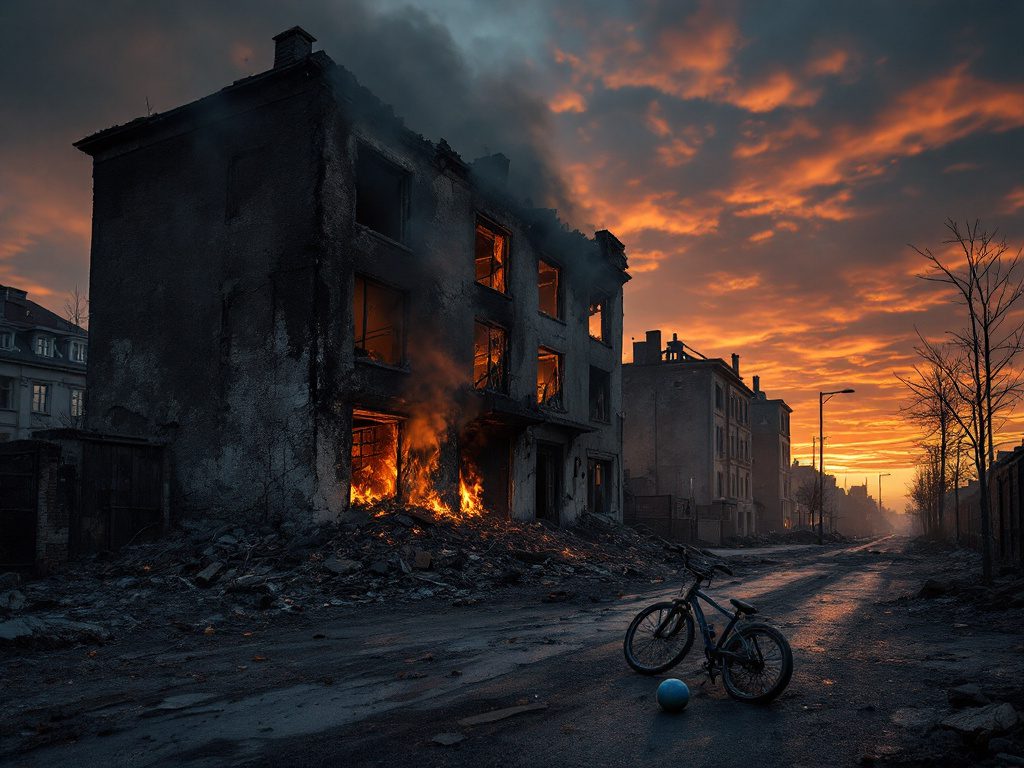
The Night the Sky Fell: Odesa’s Terror by Drone
Residents of Odesa woke in terror to the distant roar and unmistakable thunder of explosions, piercing the darkness of a city well-versed in the ritual of air raid sirens. In the small hours, Russian forces unleashed a massive wave of Shahed-type attack drones, which ignited sweeping fires across this Black Sea port—a city vital not only to Ukraine’s economy, but also to its cultural soul.
Ukrainian officials and monitoring groups tracked a swarm of at least 25 drones across the cityscape, their targets chillingly clear: residential neighborhoods, civilian infrastructure, even a local educational institution. Mayor Hennadiy Trukhanov’s urgent pleas for residents to “stay in safe places” provided grim confirmation that Odesa’s population once again served as unwilling participants in Russia’s slow-motion campaign of terror. “Air defense forces are working,” he declared, as explosions shattered apartment windows and fires raged in densely populated districts.
While emergency crews rushed to contain the infernos and provide first aid, the damage to civilian lives and livelihoods continued to mount. The regional administration confirmed damage to apartments, vehicles, and infrastructure, with at least three people injured and many others left in shock. Odesa’s educational institutions, meant to offer shelter and promise for the next generation, now bear the scars of foreign aggression.
Drone Warfare and the Relentless Assault on Civilians
The mass attack on Odesa isn’t an isolated incident; it’s part of a cruel pattern defining Russia’s war on Ukraine—a conflict that, three years in, has normalized bomb shelters in schools and reinforced windows in every home. That Russian forces again targeted dense urban neighborhoods speaks of a strategy not of swift battlefield victories, but of attritional warfare designed to break civilian morale, disrupt daily life, and erode the very basics of normalcy.
Far from being “precision warfare,” these nightly attacks represent the cynical use of drone swarms to circumvent depleted missile stockpiles, according to military analysts like Olga Romanova of the Atlantic Council. The targeting of a school in Odesa this week illustrates the deep moral bankruptcy of such tactics, all under the pretense of military necessity. Images circulating on local social media show classrooms torn open to the sky and smoldering playgrounds—a haunting reminder that Putin’s war continues to be waged on Ukraine’s children as much as its soldiers.
What lends these attacks their particular cruelty is the timing. As Ukraine renews calls for a ban on targeting civilian infrastructure—seeking a pragmatic ceasefire that would shield homes, hospitals, and schools—Moscow’s drones fill the night sky. The symbolism is as painful as the physical damage: a deliberate rebuke to any notion that the Kremlin is interested in meaningful de-escalation. President Zelensky’s proposal for a partial ceasefire has been met with public “openness” from Vladimir Putin, yet no substantive action—just more drone motors and burning buildings.
“Every new crater in Odesa isn’t just a scar on the city; it is a message from Moscow—a refusal to recognize the humanity of the people who live here.”
According to the Geneva Academy, deliberately targeting civilians or civilian infrastructure constitutes a serious breach of international law, and yet accountability often feels like a distant hope. Residents face the impossible choice between fleeing their homes or risking everything in the hope that the next drone won’t find their roof. Each night of terror pits the resolve of a civilian population against the weight of geopolitical indifference.
Resilience and Response: Odesa’s Fight to Endure
Beneath the smoke and heartache, Odesa’s story is also one of unyielding resilience. After the attack, the city’s local government quickly announced new emergency measures, including a district administration center to help residents apply for financial aid and compensation for repairs through the eRestoration program. This rapid mobilization stands in stark contrast to the paralysis at the international negotiating table, where proposals for humanitarian corridors and ceasefires languish in diplomatic limbo.
The broader consequences are impossible to ignore. Odesa, with its three major ports, is not only a linchpin for Ukrainian trade but a lifeline for global food security—as stifling exports here ripples across markets far beyond the Black Sea. The repeated targeting of such critical infrastructure threatens to spark food shortages and economic hardship well outside Ukraine’s borders. As reported by Reuters, disruptions to Odesa’s grain exports have already sent shock waves through African and Middle Eastern food supply chains.
Beyond that, the drone attacks highlight the futility of punitive strategies that inflict suffering on ordinary people. Each escalation undermines social cohesion, fans the flames of nationalist grievance, and delays the path to a just peace. Princeton historian Stephen Kotkin has pointed out that “wars of attrition… rarely end in total victory, but in exhaustion, ruin, and lasting rancor.” This grim calculus should weigh heavily on those in Washington, Brussels, and capitals around the world contemplating the costs of inaction or the temptation to pursue “peace” at the expense of justice.
The responsibility now extends past the war cabinets and chanceries—it falls on the conscience of the world. Will we allow Odesa to become an emblem of abandonment, or stand in solidarity with a city and people who refuse to yield? The answer, as always, will be written in the choices made after the bombs stop falling.
