
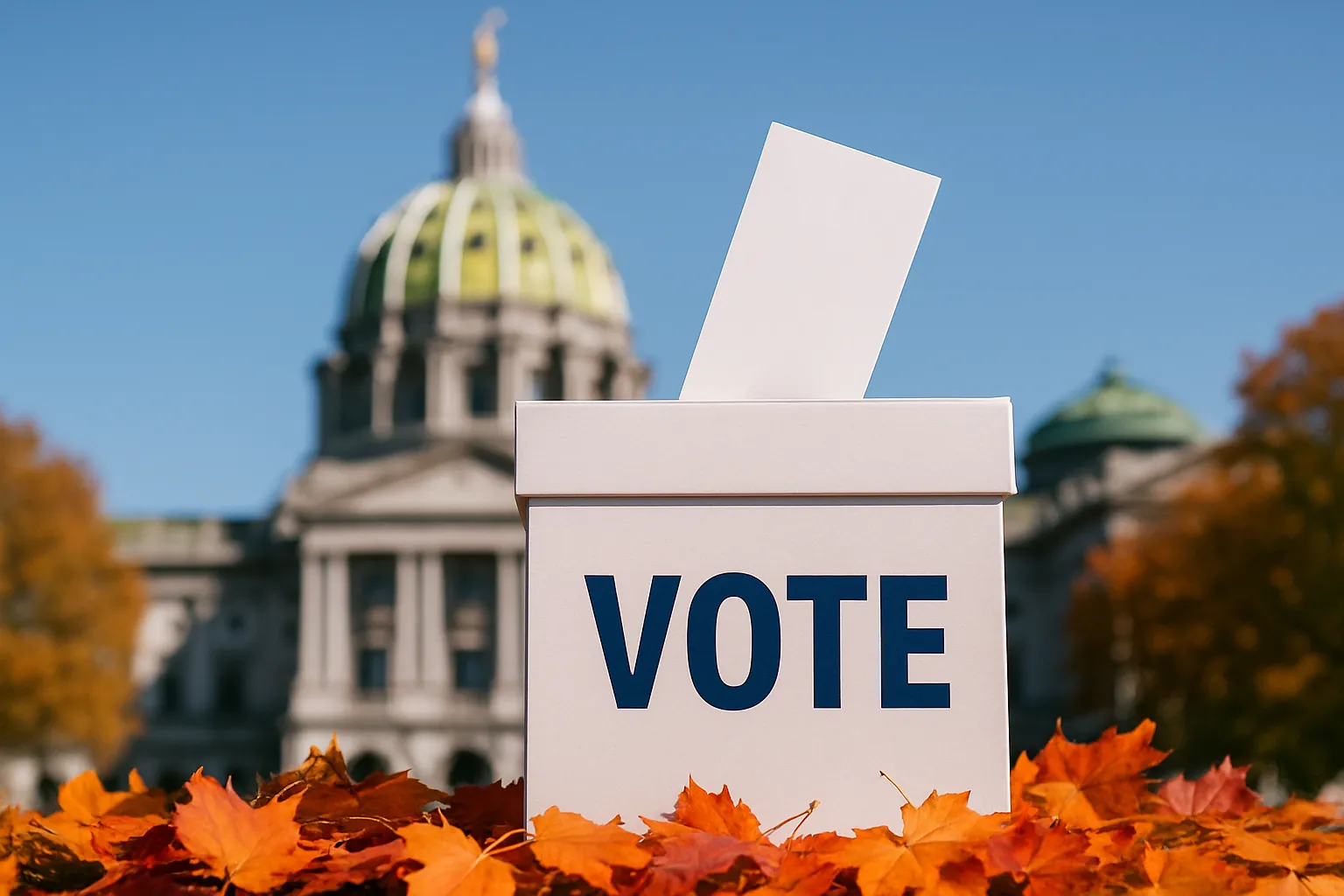
The Unusual Yet Pivotal Power of Retention Elections
As autumn leaves begin to fall across Pennsylvania, a quieter but dramatic battle for democracy brews—not in the legislature, but in the retention votes for the state’s Supreme Court. At stake: whether three Democratic justices—Christine Donohue, Kevin Dougherty, and David Wecht—will be kept on the bench for another decade. On the surface, it’s a straightforward yes-or-no vote, lacking flashy candidate debates or campaign rallies. Yet, beneath that bland format is a contest that could reshape Pennsylvania’s—and by extension, the nation’s—political landscape.
Pennsylvania’s Supreme Court isn’t just another tribunal. It has repeatedly held center stage in decisive national controversies: drawing new congressional maps after Republicans tried gerrymandering the state into their control in 2018, and ensuring access to mail-in voting through the fraught months of the 2020 election. As the Republican strategy increasingly targets state high courts as battlegrounds for partisan gain, Pennsylvania’s retention votes are drawing unprecedented national money and attention.
What’s a retention election? Since 1968, Pennsylvania justices stand for retention rather than direct contests, meaning voters choose “yes” or “no” on whether to keep them. According to University of Pittsburgh political scientist Kristin Kanthak, “Most voters don’t even know these elections happen—until big money, attack ads, and outside interests descend.”
This year, spending will likely surpass $10 million—a record for a judicial retention event in the state, per the Brennan Center for Justice. Races elsewhere, like Wisconsin’s $100 million Supreme Court slugfest last year, have inspired donors on both sides. Now, casino billionaire Jeffrey Yass, a major GOP supporter, is pouring funds into efforts to oust the Democratic trio, while trial lawyers, labor groups, and Planned Parenthood mobilize to defend them.
Beyond Fairness: Why These Justices Matter
It’s tempting to view judicial retention as technocratic housekeeping—a periodic up-or-down on performance. Bar associations, including the influential Allegheny County Bar, remind the public that these votes should be about “fairness, professionalism, and demeanor,” not the latest hot-button issue. Yet reality bites. Every vote on the state Supreme Court, particularly with redistricting and voting rights in play, can change lives far beyond the commonwealth.
Rewind to 2018: When Pennsylvania became the epicenter of a national gerrymandering fight, it was this court—anchored by Democratic justices—that redrew legislative maps, restoring some balance and integrity to elections. Two years later, the court made crucial decisions on ballot deadlines in a pandemic-rattled presidential contest, resisting a flood of lawsuits egged on by the Trump campaign. In an era when democracy is under siege, who sits on the bench is every bit as consequential as who sits in the governor’s mansion.
The stakes in November? If any of the three justices fail to win retention, the court could fall into a rare, evenly split 2-2 partisan deadlock. The state constitution gives the governor power to fill vacancies, but the Republican-controlled Senate can refuse to confirm appointees. As Drexel University law professor David S. Cohen notes, “A gridlocked court during potential 2024 election litigation could throw the state’s—and perhaps the nation’s—political process into chaos.”
This election isn’t happening in a vacuum. Across the country, conservatives are shrewdly targeting state courts. After their successes with hard-right federal judicial appointments under Trump, the Republican blueprint is to undermine progressive majorities at the state level—even if it means politicizing previously sleepy retention votes. Look no further than the political ads blasting Pennsylvania’s justices over “judicial activism” and invoking culture-war rhetoric on abortion and voting. The result? A judicial contest cloaked in the language of impartial justice but fiercely contested along partisan lines.
“A judiciary beholden to outside interests cannot defend democracy—it only impersonates it.”
— Harvard Law professor Noah Feldman, warning against the growing nationalization and politicization of America’s state courts
Voter Awareness and the Progressive Stakes
Retention votes, as political scientists observe, are typically low in drama and turnout, and the default for voters is often “yes.” Since Pennsylvania adopted its system, only one justice—a post-scandal casualty in 2005—has ever lost a retention vote. This complacency may not hold in 2024. As progressive voters face a blend of escalating threats to reproductive rights, labor protections, and fair elections, judicial impartiality is no longer a background concern but a flashpoint.
Progressive groups are working overtime to explain the stakes. Ads stress the justices’ records protecting abortion rights, upholding labor laws, and resisting efforts to disenfranchise voters. Endorsements from Planned Parenthood, the AFL-CIO, and even smaller grassroots groups poured in, creating, as Democratic strategist J.J. Abbott put it, “an emerging playbook for how the left defends democracy in overlooked but critical institutions.”
Yet, Republican operatives and their donors frame the vote as a referendum on “judicial overreach,” leveraging dark-money groups and social media to sway fickle or uninformed voters. If their gamble succeeds—or if progressive turnout falters—Pennsylvania could stagger into 2025 with a deadlocked Supreme Court. The consequences? Disrupted protections for voting access, the potential rollback of reproductive rights, and judicial paralysis at a perilous moment for democracy.
The high-dollar arms race in this retention election may seem excessive for what once was an inside-baseball event. But ask yourself: Who benefits when courts swing from steady hands to political pawns? When you step into the voting booth this November, the question is not just whether you trust these justices—it’s whether you trust Pennsylvania’s highest court to stand as a firewall against anti-democratic scheming, not as a pawn in someone else’s game.
