
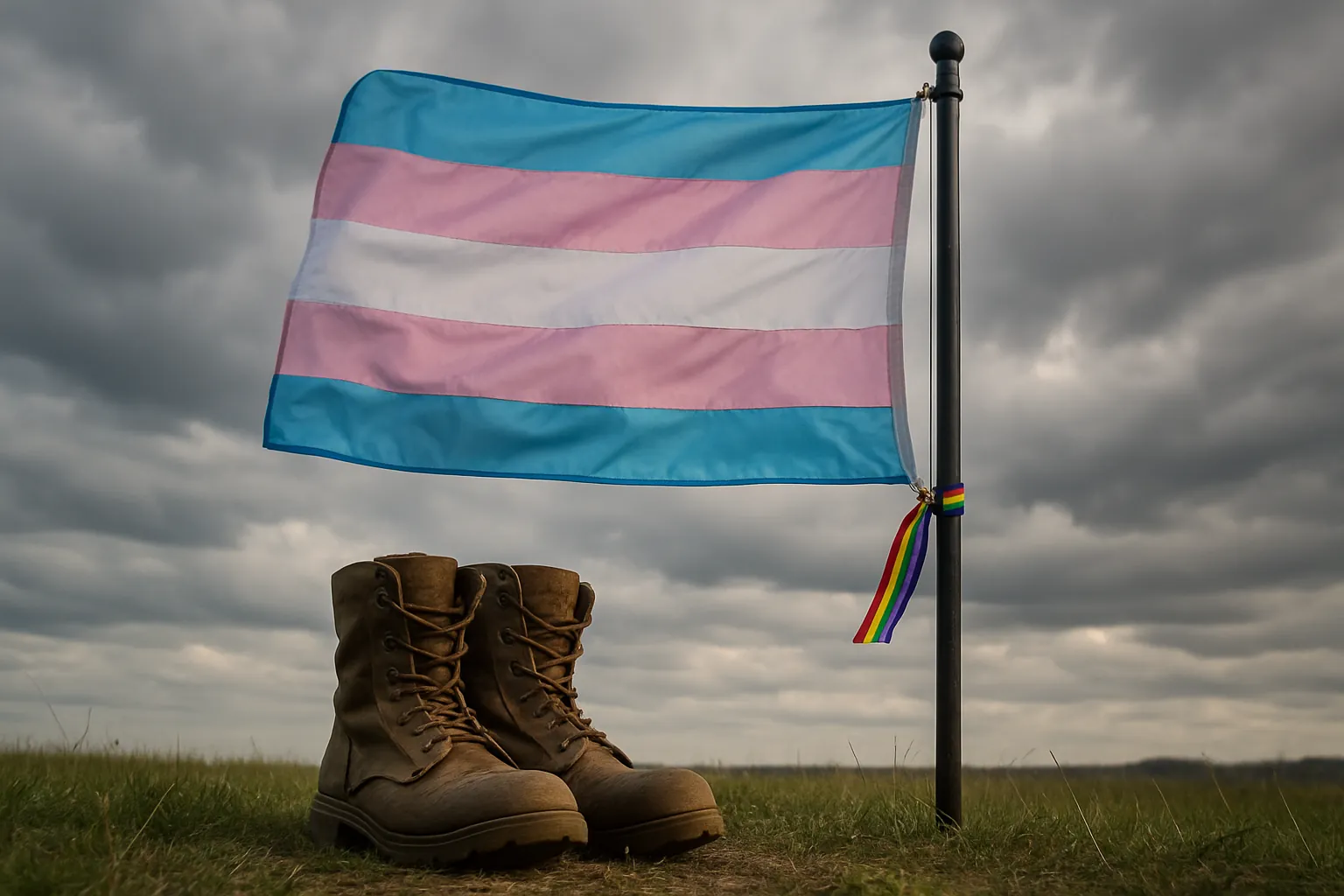
A Ruling That Echoes Beyond the Barracks
In a move belying the hard-won progress of recent years, the Pentagon has ordered an immediate stop to gender-affirming healthcare for all transgender troops, leaving more than 4,200 service members in jeopardy. The ban—announced via a memo from acting Assistant Secretary of Defense for Health Affairs Dr. Stephen Ferrara—marks the swift enforcement of an embattled policy initiated under President Donald Trump. Despite years of inclusive strides, the Department of Defense is now following Supreme Court backing to implement a sweeping rollback of rights for transgender troops.
For many, this abrupt about-face feels like history repeating itself: the echoes of “Don’t Ask, Don’t Tell” and earlier military exclusions ring loud. Weaponizing healthcare as a tool for exclusion, the Pentagon has not just withdrawn medical support, but created an environment of fear and anxiety for those who risk their lives in service. Consider the voice of Army Captain Rayna (name changed for privacy), who described the sudden shift as “not simply a matter of benefits, but one of human dignity and trust in leaders sworn to protect all their people.”
Legal observers note that while Supreme Court intervention has given this ban temporary legal footing, the ethical and operational consequences are profound. Shannon Minter of the National Center for Lesbian Rights called the policy “cruel and disrespectful,” and warned that sidelining transgender troops undermines both morale and military readiness. A Pew Research Center survey showed national support for transgender military service dropped from 71% in 2019 to 58% today, in part due to coordinated misinformation campaigns and political maneuvering—but a clear majority still stands opposed to these draconian measures.
Lives in Uniform, Rights Denied
The chilling effect is immediate and far-reaching. With the Defense Department now prohibiting all new hormone treatments and gender-affirming surgical procedures, officials have sent a message that transgender troops are unwelcome. Notices for voluntary resignation by June 6—timed, not coincidentally, to coincide with Pride Month—add insult to injury. Defense Secretary Pete Hegseth’s public edicts have further inflamed the situation, encouraging forced departures with remarks many see as willfully provocative.
Active duty service members now face the excruciating decision to leave careers, support networks, and the only livelihood many have known, or remain and face discharge without medical care. The numbers underscore the scale: the Pentagon officially counts 4,240 transgender service members, but advocacy groups argue the true figure is likely much higher, given the stigma and risk associated with disclosure. “The threat of expulsion is constant,” says an Air Force NCO who asked not to be identified. “Our commanders tell us to focus on the mission, but how do you do that when you’re worried about losing your treatment, your job, your life’s stability?”
This is not merely a political directive—it is a deeply personal intrusion for those affected. According to the American Medical Association, gender-affirming care is recognized as medically necessary and professionally endorsed by dozens of health and psychiatric associations across the U.S. and internationally. “This ban will cause real suffering, and possibly worse,” says Dr. Elias Turner, a physician who treats LGBTQ+ veterans. Denying federally protected healthcare to a minority group within the military not only violates medical ethics, but strips the armed forces of valuable, trained personnel at a time when recruitment and retention are already major challenges.
“The choice the Pentagon is forcing on our troops isn’t about readiness or discipline—it’s a cruel ultimatum: your healthcare or your service. That’s not the America I swore to defend.”
National Center for Transgender Equality Director Mara Keisling has warned that such policies set a dangerous precedent, eroding trust in the chain of command and inviting a patchwork of discriminatory practices not just in the military, but across U.S. society.
The Politics of Exclusion: Rhetoric vs. Reality
Trump-era rhetoric about “unit cohesion” and “military readiness” was repeatedly debunked by military brass and independent analyses, including a 2016 study commissioned by the Pentagon itself, which found that the cost and impact of including transgender troops was negligible. Yet facts appear to have taken a back seat to ideology. The current ban contravenes decades of growing acceptance and equal protection within the armed services—from integrating women and people of color, to repealing “Don’t Ask, Don’t Tell.” Each time, conservatives sounded alarms that were never borne out. Each time, the military became stronger and more representative of the country it serves.
Refusing necessary healthcare to loyal, able-bodied soldiers, sailors, and airmen isn’t just a policy misstep—it’s a moral blunder. Harvard political scientist Dr. Jessica Hanley notes, “Exclusionary tactics erode the principle of equal citizenship and signal that some Americans, even in uniform, are less deserving of rights than others.” The Supreme Court ruling—permitting enforcement of the ban despite active litigation—further complicates matters. Yet history suggests legal tides can turn, especially when public outrage and reasoned advocacy intersect.
What kind of nation tells warriors they must choose between their authentic selves and their commitment to defend their country? The answer will reverberate far beyond the barracks, shaping the arc of inclusion, trust, and shared purpose that defines a healthy democracy. As the legal and political fight continues, the nation’s conscience is—once again—on the line.
