
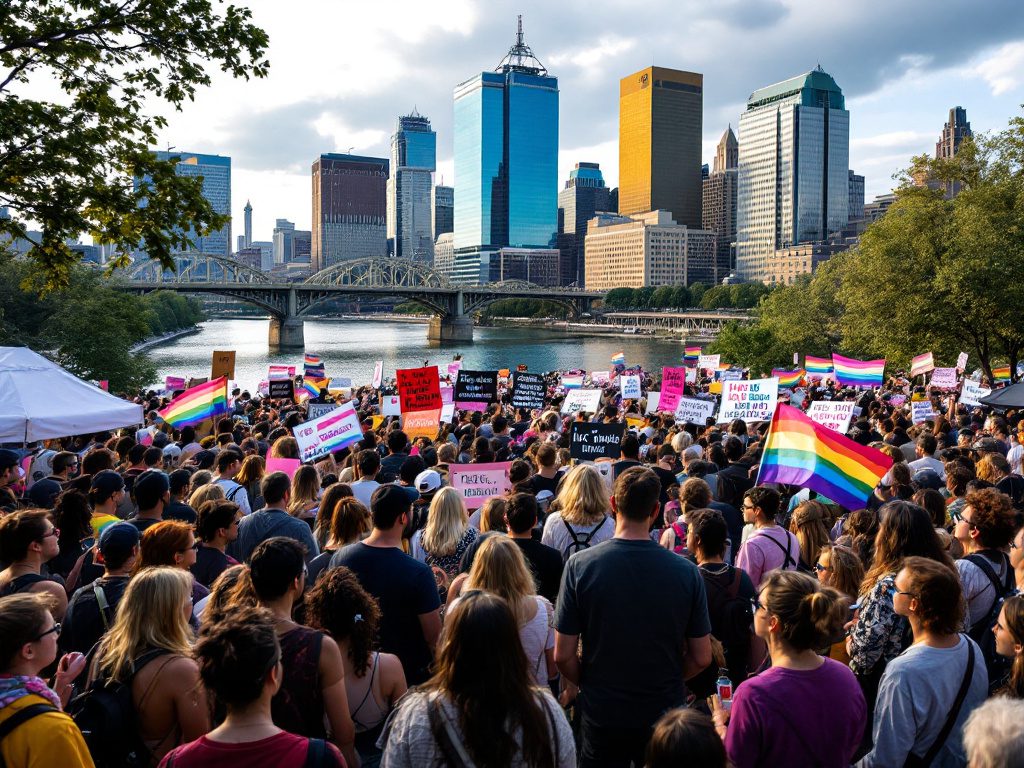
Under Pittsburgh’s overcast skies, frustration and determination filled the air as nearly 200 protestors gathered outside the headquarters of healthcare giant UPMC. Their cries resonated with demands of human rights, health equality, and dignity in response to UPMC’s recent decision to limit gender-affirming healthcare services for patients under nineteen years of age—a move aligning with President Trump’s executive order restricting transgender healthcare.
The Consequences Are Heartbreaking: Pittsburgh Families Speak Out
“Imagine telling your child: ‘I’m so sorry. I know you need this surgery, but if I do it, I’m pretty sure they will take my department away.'” This heartbreaking sentiment was shared by Cori Fraser, whose 18-year-old child, Salem, had their gender-affirming surgery postponed due to UPMC’s recent policy. Salem, just shy of turning nineteen, must now endure additional months of stress and anxiety, prompting Fraser to argue passionately that “gender-affirming health care is lifesaving health care.” Salem’s wait of three months is distressing enough; however, Fraser emphasized, “for some kids, it’s years.”
This personal testimony highlights not only individual anguish but a broader injustice imposed by policies disregarding medical necessity and human compassion. Such restrictions underscore the systemic hurdles transgender youth frequently confront, placing political considerations above patient care.
Local Leaders Step Forward with a Clear Message for UPMC
Among the prominent voices at the rally was Pittsburgh’s Mayor Ed Gainey, whose presence underscored the urgency and gravity of the situation. “Every community is coming under attack,” he insisted, “Don’t judge. Stand up and tell UPMC to do the right thing by making sure that they take care of all communities.” Gainey’s words underscored a fundamental responsibility held by healthcare institutions—not to bow to political whims, but to defend and provide equitable care for all patients.
Backing Mayor Gainey were influential local voices—including Maria Montaño, Pittsburgh’s first openly trans woman press secretary for a mayor, whose impassioned speech encapsulated a broader existential threat to transgender rights. “We are facing a federal government that is doing everything, everything in its power to deny us our humanity, erase us from history and existence,” Montaño emphasized to an attentive crowd, eliciting fervent agreement and reinforcing resolve among attendees.
“We are facing a federal government that is doing everything, everything in its power to deny us our humanity, erase us from history and existence.” — Maria Montaño
Demanding Action & Accountability: What’s Next?
In tangible terms, local leaders and activists are calling for immediate policy reversals regarding gender-affirming healthcare. They specifically requested UPMC to reinstate comprehensive healthcare services for transgender youth, while simultaneously proposing the establishment of an advisory committee composed not just of healthcare officials but of transgender youth themselves and community leaders. This committee would ensure affected individuals have a meaningful voice in crafting supportive, medically grounded healthcare policies.
Although UPMC issued a statement reiterating their commitment “to providing exceptional care for all patients while complying with federal directives,” many activists argue that the institution is prematurely acquiescing to politically motivated policies, even as the executive order faces legal challenges. Indeed, a federal judge has currently put Trump’s healthcare restrictions on hold for the moment, prompting critics to question UPMC’s rush toward compliance.
UPMC, as one of the state’s—indeed, the nation’s—largest and most influential healthcare providers, wields significant social power. Unsurprisingly, many advocates characterized the institution’s choice to limit transgender healthcare as a cowardly move that prioritized profits and politics over patient wellbeing. “If UPMC wanted to stand up and show moral leadership, it certainly has the resources and prestige to do so,” remarked Dena Stanley, Executive Director of TransYOUniting. Stanley underlined that UPMC’s preemptive alignment with restrictive policies sets a dangerous standard of care for other medical institutions nationwide to follow.
The rally’s larger message was clear: healthcare institutions have a moral imperative to defend vulnerable communities rather than yield to political threats, especially when such threats undermine medically endorsed practices crucial to saving lives.
For now, the community’s frustration stands highlighted against a backdrop of political scapegoating and uncertainty. Pittsburgh residents and leaders alike stress vigilance and solidarity in the continued fight for dignified healthcare and human rights. Their determination ensures this clash between politics and patient care will remain firmly in the spotlight, holding powerful institutions accountable and protecting lives and livelihoods of transgender people from policies rooted in prejudice rather than public health.
