
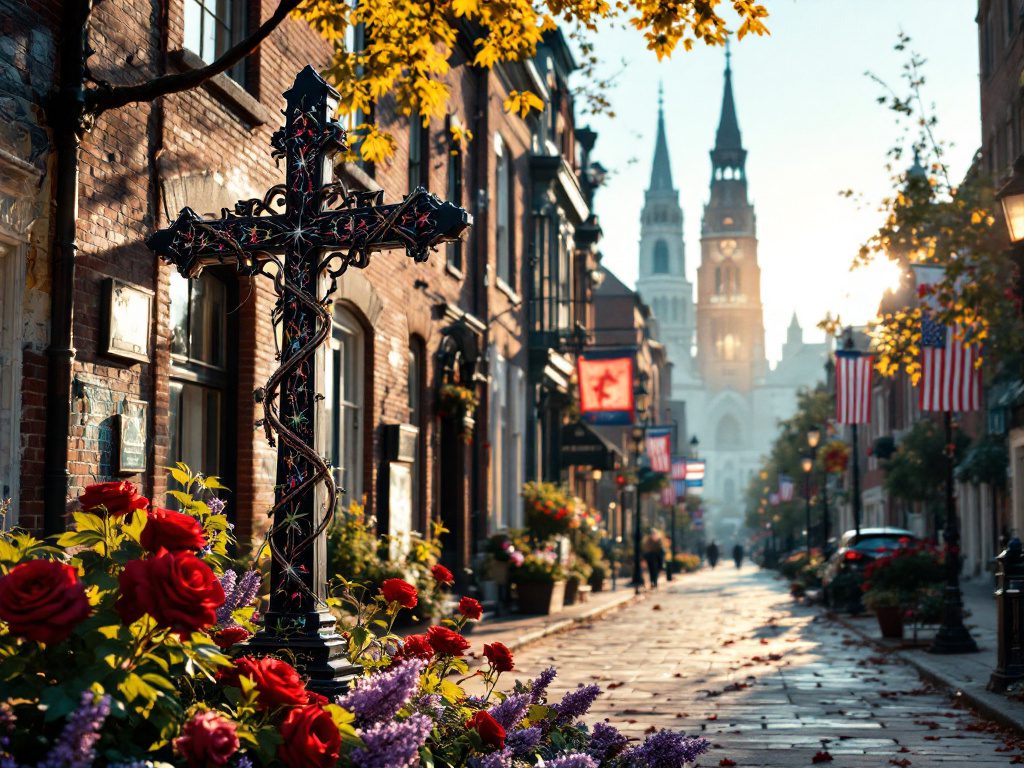
A Pontiff’s Journey: The Spirit of 2015 Lives On
The city of Philadelphia has seldom witnessed the kind of awe-stricken anticipation that electrified its core in September 2015. As Pope Francis stepped onto American soil for the very first—and ultimately, only—time, he brought with him a message of hope, inclusivity, and profound humility. Crowds swelled along Benjamin Franklin Parkway, hopeful pilgrims and curious onlookers alike, while a sense of shared purpose momentarily transformed the urban churn into a kind of sacred celebration.
Why did upward of a million people embark on an arduous journey, tolerating long lines, scant restroom facilities, and limited accessibility for those with disabilities? The answer lies not just in Catholic devotion but in something deeper, something progressive at its core: a longing for renewal within longstanding institutions. Pope Francis, a son of immigrants, having survived partial removal of his lung as a young man, embodied resilience and openness—qualities that resonated far beyond the Church’s inner sanctum.
According to contemporary accounts, the pope departed from prepared remarks at the Festival of Families, choosing instead to speak extemporaneously and humorously about familial joys and trials. His empathy, visible in small gestures—like blessing children and sharing in the struggles of marginalized families—sent an unmistakable signal: this was a papacy intent on meeting people where they are, not lecturing them from a gilded distance.
Moments of Grace: Compassion in Action
Beyond the grandeur of papal motorcades, the visit was marked by extraordinary personal encounters. Consider the scene as Pope Francis used the very lectern from which Abraham Lincoln once delivered the Gettysburg Address, addressing a world riven by division with calls for peace and equality. During his stay, Francis visited with inmates at the Curran-Fromhold Correctional Facility, accepting a handmade chair crafted by prisoners—a humble act recognizing dignity within prison walls.
Another moment seared into the city’s collective memory came when Pope Francis paused to kiss and bless baby Gianna Masciantonio, who was battling a critical brain tumor. The event swiftly became national news, with the family and many in the faith community embracing it as a miracle when her condition improved in the following months. In a world so often defined by cynicism, the crowd’s tears and gasps testified to a rare communal hope.
“The Pope’s visit wasn’t just a spectacle—it was an earnest, personal dialogue with the soul of America. In the simple blessing of a child, or the honest words about the Church’s failures, you saw a leader daring to acknowledge pain, and urging us all toward reconciliation.”
Pope Francis confronted the Church’s scandals with unprecedented candor, telling seminarians and bishops that “God weeps” for survivors of abuse. Public acknowledgment of the institution’s profound failings was not mere rhetoric but a deliberate attempt to foster healing and transparency that is, frankly, sorely lacking from many conservative leaders today.
A Legacy of Inclusion—and Lingering Challenges
Connection and solidarity were the through lines of his American sojourn. His address at the United Nations called for environmental stewardship and nuclear disarmament—unmistakably progressive positions that challenged leaders to embrace the ethics of global responsibility. Harvard theologian Father Bryan Massingale observed, “Pope Francis reminded us that faith must serve justice, not shield the powerful from accountability.” His insistence on compassion over dogma, and his embrace of diversity, ran squarely counter to the exclusionary policies often championed by conservative politicians—a stark reminder of how leadership rooted in humility and equality can mobilize positive change.
Yet the 2015 visit was not free from criticism. Logistical nightmares—a lack of bathrooms along the Parkway, impossibly long lines, minimal accommodation for people with disabilities—exposed weaknesses in both city planning and ecclesiastical oversight. For all the talk of inclusion, access was sometimes reserved only for the resilient or fortunate. The lesson here, especially for any institution striving to be “a Church for the poor,” is that the nuts and bolts of social justice matter as much as lofty rhetoric.
Attendance estimates for the final Mass fell short of the feverish predictions, with actual turnout in the low hundreds of thousands rather than the anticipated 1.5 million. As NPR’s analysis pointed out, the overhyped crowd projections and subsequent security cordons may have discouraged many locals who otherwise would have joined. It’s a telling example of how, in the rush to showcase grandeur, well-meaning planners can inadvertently shut out the very communities Francis sought to embrace.
A closer look reveals enduring lessons. Pope Francis’ ability to captivate both the devout and the skeptical has left a long shadow—not only for Catholics but for any progressive movement seeking to bridge divides. He laid bare the complexity of institutional reform, illustrating that calls for justice and mercy must be both loudly proclaimed and quietly, doggedly practiced.
The Path Forward: Grieving and Growing
Today, as the world mourns the passing of a transformative leader, we’re left to contemplate what his legacy truly means in a fractured political and social landscape. His 2015 visit was less about pageantry than planting seeds—of ecological concern, inclusiveness, and moral courage. If we admire Pope Francis’ willingness to confront uncomfortable truths, we must also demand the same from our own leaders and institutions.
Embedded in the collective memory of Philadelphia, Pope Francis’ sojourn sent ripples far beyond the Parkway. His willingness to speak in the language of love, solidarity, and even righteous anger challenged us to envision a world where faith stands with, not over, the most vulnerable. The final lesson? That lasting change—whether in sacred halls or public squares—requires both the courage to dream and the resolve to dismantle barriers, large and small.
