
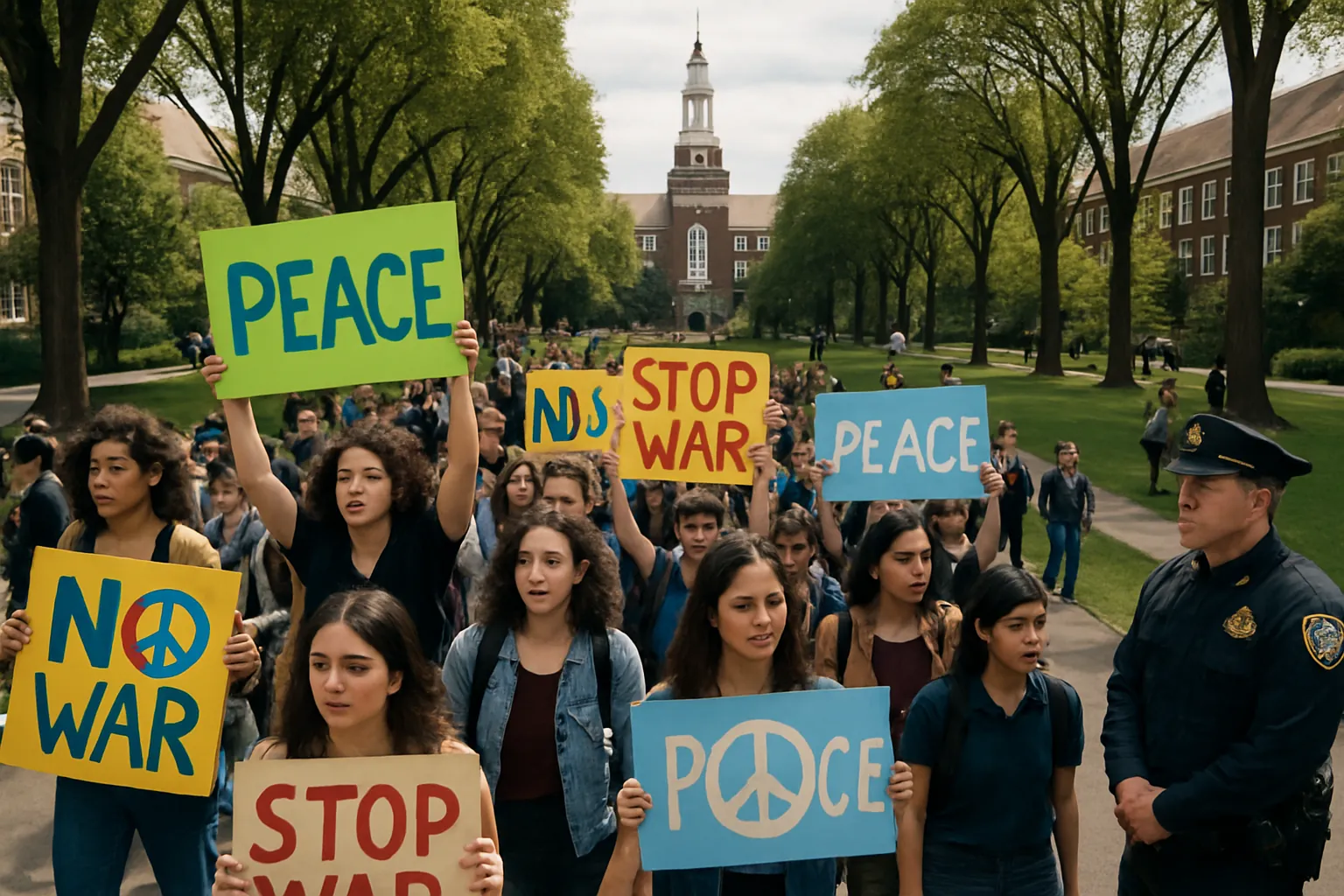
College Campuses on Edge: Brooklyn’s Turbulent Night
Sirens flashed across the gates of Brooklyn College Thursday evening as a pro-Palestinian encampment attempt spiraled into chaos—an episode that exposes the painful rift running through American higher education. Protesters chanting, “Disclose, divest—we will not stop, we will not rest,” locked arms and voices just beyond campus security, demanding institutional action and Palestinian solidarity in the wake of war in Gaza. As the sun set, these scenes echoed only a day after over 100 demonstrators at Columbia University seized Butler Library in a parallel cry for justice, culminating in 80 arrests and a sense that the nation’s storied universities had hit a boiling point.
Nine-year-old Layla clung to her mother’s side—eyes wide with fear—when police urged the crowd to clear. A nearby officer, recognizing the risk, pleaded gently: “Ma’am, please, get your child to safety.” The urgency was real: as officers issued repeated warnings, the air thickened with tension. Protesters’ chants of “Down, down with occupation. Up, up with liberation,” grew sharper even as barricades rose. The NYPD, enlisted after campus security’s efforts faltered, moved quickly. Tearful students, arm-in-arm, refused to relinquish their tents or their presence. Video footage soon revealed the grim reality: an individual struggling beneath a flurry of uniforms and urgently yelling, a flash of a Taser, and hands scrambling to intervene.
These flashpoints—now all too common—underscore the emotional urgency fueling this new wave of student activism. According to campus statements, both Brooklyn College and Columbia University maintain that they “respect the right to protest,” but insist “campus security and student safety must come first.” These words ring familiar to seasoned observers of campus unrest, recalling eras from Vietnam to Black Lives Matter. Yet as police and administrators scramble to balance safety with civil liberties, the cost in trust—and physical safety—mounts on all sides.
Clash of Rights: Free Speech, Safety, and Institutional Accountability
At the heart of Thursday’s confrontation is a fundamental tension between public safety and the constitutionally protected right to dissent. Students, faculty, and community supporters argue that American universities exist to foster robust, sometimes uncomfortable dialogue, particularly on divisive issues such as the Israeli-Palestinian conflict. For many progressive advocates, the police response—pepper spray, Tasers, and the threat of arrest—reflects a troubling escalation. “Universities are supposed to be sanctuaries for free speech and learning,” Columbia history professor Alan Husain told CNN, “not venues for militarized policing.”
Critics of the campus crackdowns point to a familiar conservative playbook rooted in “law and order” rhetoric that too often conflates civil protest with criminality. Historian Peniel Joseph, writing for The Atlantic, reminds us that student activism has “served as the conscience of the nation.” The sight of heavily armored police clashing with students recalls Kent State in 1970, or the Occupy protests of the past decade—episodes where forcibly quelling activism fanned more outrage, not less. What’s changed is the national context: following pressure from the Trump administration and Republican lawmakers, schools now face rising demands for clampdowns on disruptive protest. Even the U.S. State Department has stepped in, warning foreign students that their immigration status could be at risk if suspected of supporting illicit activity—including ambiguous definitions of “terrorism support.”
“When you send police in riot gear against students trying to voice their conscience, you’re not protecting free speech—you’re chilling it. The more force you use, the deeper the mistrust grows on all sides.”
Many have criticized the decision to call in outside law enforcement rather than relying on campus mediation or de-escalation. “There’s a pattern,” American Civil Liberties Union spokesperson Priya Parker tells MSNBC. “Rather than dialogue and negotiation, we’re seeing universities use force and scare tactics, setting a precedent that activism will not just be discouraged, but actively criminalized.”
The Way Forward: Who Shapes Campus Democracy?
A closer look reveals a dangerous drift toward a climate of fear and suppression—contrary to the values upon which higher education was founded. University leaders insist they must “preserve order” and ensure that “campuses are safe learning environments.” Yet student leaders and progressive faculty counter that the price for safety cannot be the silencing of dissent. At Brooklyn College, signs left behind among trampled tents read simply: LIBERATION IS A HUMAN RIGHT.
This latest eruption at Brooklyn comes at a moment of global solidarity with Palestine, as well as rising domestic anxiety about antisemitism, Islamophobia, and the responsibilities of major institutions. According to a recent Pew Research Center poll, over 60% of young Americans believe colleges should support student protests, not suppress them. While campus administrators cite rising legal and political risks, public opinion suggests broad support for students’ right to peaceful protest—even concerning controversial issues.
Is policing the only answer? Or can dialogue prevail over escalation? The choice facing college leaders now mirrors longstanding debates about social change in American democracy. As Harvard sociologist Juliet Schor notes, “When institutions open themselves up to respectful criticism and reform, they thrive. History shows that shutting down dissent only intensifies it.” If institutions hope to regain credibility, real engagement—starting with listening—must come before threats or violence.
Progressives must recall that sustained reform is born in moments of discomfort. Sometimes, that discomfort is the price of genuine justice. Thursday’s protest at Brooklyn College was not an isolated disturbance—it was part of a larger struggle for the soul of public life and the boundaries of civic action. Whether those boundaries will be drawn anew by conversation or confrontation remains to be seen. Yet if our universities are truly to be “laboratories of democracy,” they owe it to future generations to choose courage, creativity, and compassion over coercion.
