
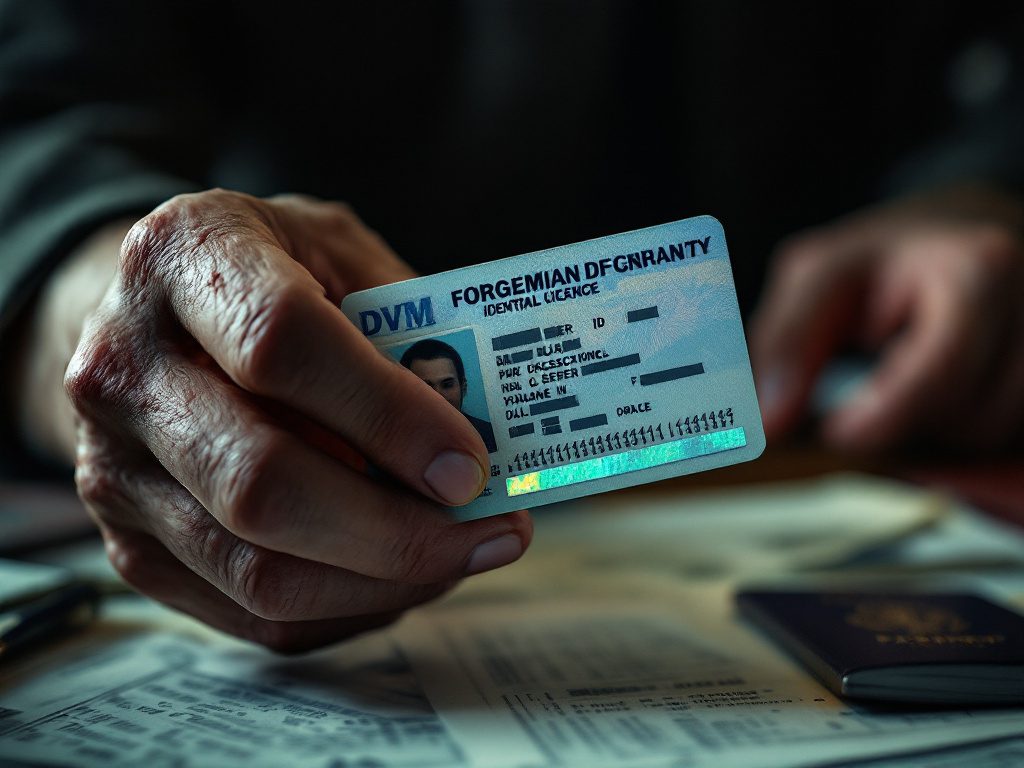
A Federal Mandate, a Looming Deadline, and a Nationwide Scam Surge
Few bureaucratic changes in recent years have inspired such a whirlwind of public confusion—and opportunistic fraud—as the federal enforcement of REAL ID compliance. With the May 7 deadline on the horizon, Americans across the country are scrambling to secure the upgraded identification cards necessary for domestic air travel and access to federal facilities. But this rush toward compliance has also unleashed a tidal wave of scams, many targeting the most vulnerable in our society.
GuidePoint Security, a leading cybersecurity firm, has tracked a noticeable spike in fraudulent activity tied to REAL ID acquisition. Fake websites offering expedited services, AI-generated text messages mimicking Department of Motor Vehicles (DMV) correspondence, and convincing phone calls have all become alarmingly commonplace. These scams exploit the sense of urgency and confusion that federal mandates so often cause—turning bureaucracy into a breeding ground for digital criminals.
The origin of this latest episode in American identity policy traces back nearly two decades. Passed in 2005 as a hardline response to the September 11 terrorist attacks, the REAL ID Act set out to impose heightened security standards on state-issued driver’s licenses and identification cards. According to the Department of Homeland Security, the intent was to create a reliable, uniform standard across all 50 states. But the path to implementation has been anything but smooth: delays, misinformation, and now, a boom in fraud.
States like Colorado, which reports that 96% of its residents are already REAL ID-compliant, are leading the charge. Others lag behind, in part because the act’s sporadic rollouts have left Americans with more questions than answers—and left scam artists plenty of room to maneuver.
Scammers Exploit Confusion and Fear
Americans face an onslaught of fraudulent schemes as the deadline draws near. According to Nicole Cordero of the Better Business Bureau (BBB), the scam playbook is both sophisticated and wide-reaching: fake emails, cloned websites designed to look exactly like state DMVs, and even AI-driven “deepfake” robocalls that imitate government officials’ voices. All are designed to trick rushed, anxious applicants into handing over sensitive information or paying phony fees for supposed “fast-track” services.
The Federal Trade Commission and the BBB warn that no government agency will ever request payment or confidential data via unsolicited texts, emails, or phone calls. If you’ve been approached with such requests, you’re being targeted by a scam.
As highlighted by GuidePoint Security strategist James Chatwani, one of the fastest-growing threats involves fake DMV websites. These mirror the real thing, using nearly identical logos and layouts—often differing by just a single character in the URL. In a digital ecosystem already saturated with phishing attacks, this new twist has proven dangerously effective.
“Citizens are rightfully overwhelmed,” says Chatwani. “The technology behind these scams is advancing fast, and most people don’t know what to look for. In some cases, scammers even use deepfake audio or video to impersonate trusted officials. They prey on panic.”
“What these scams reveal isn’t just digital cunning—it’s the vulnerability of a society forced to navigate complex bureaucratic systems without adequate support.”
Ironically, while the federal government urges citizens to get their REAL ID to “increase security,” the rushed rollout and patchwork enforcement are creating the very insecurity that criminals thrive on. Is it any wonder so many Americans feel caught between a rock and a hard place?
Safer Paths Forward—and a Call for Reform
How can you protect yourself if you still need to secure a REAL ID? First and foremost, ignore unsolicited offers—by email, text, or phone—that promise speed or convenience. “The only legitimate path to a REAL ID is in person, through an authorized office,” reminds the BBB’s Nicole Cordero. DMVs do not operate through fast-track services or anonymous request forms. Look for the telltale gold star in the upper-right corner of your license; that’s the sign you’ve met compliance. If in doubt, reach out to your state DMV’s official website (double-check the URL) or visit in person before sharing any information.
Victims of these scams aren’t without recourse. The FBI’s Internet Crime Complaint Center and the Federal Trade Commission urge victims to report incidents promptly. Many states also maintain their own DMV anti-fraud hotlines and online resources. These remedial options are absolutely necessary, but they treat the symptoms rather than the disease.
Ultimately, band-aid solutions won’t solve flawed policy implementation. The current patchwork of federal mandates, state-level enforcement, and public outreach failures leaves millions exposed. Harvard security expert Katina Michael argues that “meaningful protection requires much stronger consumer education campaigns, centralized digital portals with absolute clarity, and—above all—a system designed from the ground up for digital safety and accessibility.” Such reforms could reduce risk and restore public confidence, but require genuine political will and funding—two commodities often in short supply.
Beyond that, consider the wider context: the persistent gaps in American digital literacy, the lack of government transparency, and, at times, a near-complete disregard for how policy affects real people, not just statistics. If progressive values mean anything, surely they demand systems that empower, not endanger. Until we see that approach, expect scam artists to continue thriving wherever the public is left guessing.
