
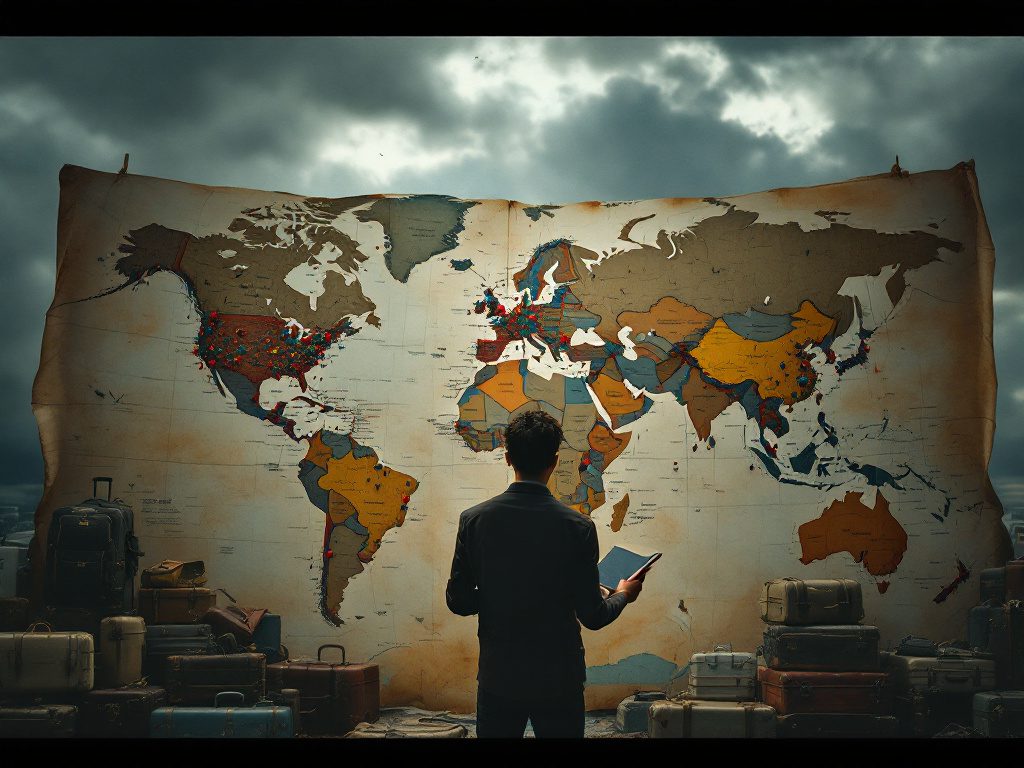
Diplomatic Whiplash: The Visa Waiver Reversal
In a move that sent shockwaves through diplomatic circles, the United States has revoked Romania’s long-sought entry to the Visa Waiver Program (VWP), abruptly reversing a policy greenlit just months earlier by the Biden administration. The program, which allows travelers from partner nations to visit the U.S. without a visa for up to 90 days, had appeared to be expanding—inching toward the kind of global openness progressive voters champion. Yet, as the Trump administration’s Department of Homeland Security yanked Romania’s status “in consultation with the Secretary of State,” many observers saw politics eclipsing policy, far more than any emergent security imperative.
Romania’s journey toward visa-free travel wasn’t a mere bureaucratic box-checking. The country spent years strengthening intelligence and law enforcement cooperation with Washington. As recently as January, Biden officials touted Romania’s “stringent security requirements” and its robust information-sharing regarding terrorism and serious crimes, aligning with the strict standards that undergird the VWP. Romanian officials, blindsided by the sudden reversal, emphasized their compliance. The Foreign Ministry condemned the move as deeply politicized, saying, “Romania had met all legal requirements stipulated by U.S. law for entry into the Visa Waiver Program.”
A closer look reveals that recent U.S. administrations, both Democratic and Republican, have largely expanded the program, weaving a tapestry of transatlantic solidarity. Now, that fabric is fraying. The whiplash leaves ordinary Romanians—students, families, business travelers—in limbo, confronting the uncertainty that ripples far beyond airport security lines.
Political Calculus Versus Shared Security
What changed between January and now? The official rationale, echoed by DHS and the State Department, centers on border security and program integrity. The Trump administration argued that pausing and ultimately ending Romania’s VWP approval was “necessary to protect the program’s integrity.” Yet, the timing—coinciding with an election season notorious for saber-rattling on immigration—raises poignant questions. Was this a genuine safeguard, or a gesture crafted for political optics?
Critics on the right have pointed to exploits by “foreign burglary gangs” taking advantage of visa-free entry, citing sources like Breitbart News. But experts caution against overblown rhetoric. According to Brookings Institution senior fellow Vanda Felbab-Brown, “Visa Waiver participants are rigorously vetted, and law enforcement cooperation has only expanded in recent years.” No credible evidence suggests that Romania poses any unique risk; if anything, its compliance was lauded across the Atlantic.
The reversal lands hardest on real people. Romanian students admitted to U.S. universities now face cancelled plans and labyrinthine visa applications. Business leaders, once poised to invest, pull back amid uncertainty. “We’d positioned ourselves for growth based on reliable policy, not political caprice,” lamented a Romanian tech CEO whose U.S. expansion has stalled.
“When policies pivot on political winds, families, entrepreneurs, and allies pay the price in lost opportunity and trust.”
Department of Homeland Security officials left open the possibility of reconsidering Romania in the future, yet there’s little solace to those whose lives remain on hold. Historical parallels abound. After 9/11, the U.S. drew its borders tighter in the name of national security, only to later acknowledge how missed diplomatic opportunities and lost goodwill hindered international collaboration. Will this latest reversal yield similar regrets?
Between Partnership and Isolationism: The Stakes of Policy by Whim
A pattern is emerging. In recent months, foreign tourist arrivals to the U.S. sagged by 10%, a decline that travel analysts link directly to uncertainty over the Visa Waiver Program’s future and the specter of unpredictable policy. Global goodwill, difficult to restore once eroded, is a precious currency in today’s tumultuous landscape. The world watches not only for what the U.S. does, but how—whether decisions are measured, inclusive, and evidence-based, or reactionary, favoring isolationist reflexes over collective progress.
The Romanian case exposes larger truths. Progressive values hold that society flourishes when openness, cooperation, and equity prevail over arbitrary exclusion and suspicion. This episode highlights how policy can drift dangerously close to nativist posturing under the guise of security, undermining long-term national interests. A visa waiver is more than a travel stamp—it’s a signal of trust, welcome, and partnership. When such agreements unravel suddenly, the message to global partners echoes: “Your efforts may never be enough. American politics matter more than universal principles.”
Harvard Kennedy School expert Elaine Kamarck underscores, “International security isn’t served by isolating proven partners. It’s advanced by weaving tighter bonds of trust, transparency, and shared purpose.” Those ideals feel distant in moments like these.
For progressives, the lesson is urgent and unavoidable: Real security isn’t built on walls or sudden exclusions. It’s achieved by reinforcing global alliances, remaining steadfast to tested partnerships, and resisting the easy temptation of stoking public fear. Otherwise, the U.S. risks not only undermining its own security interests, but also forfeiting the leadership and credibility that underpin its standing in the world.
