
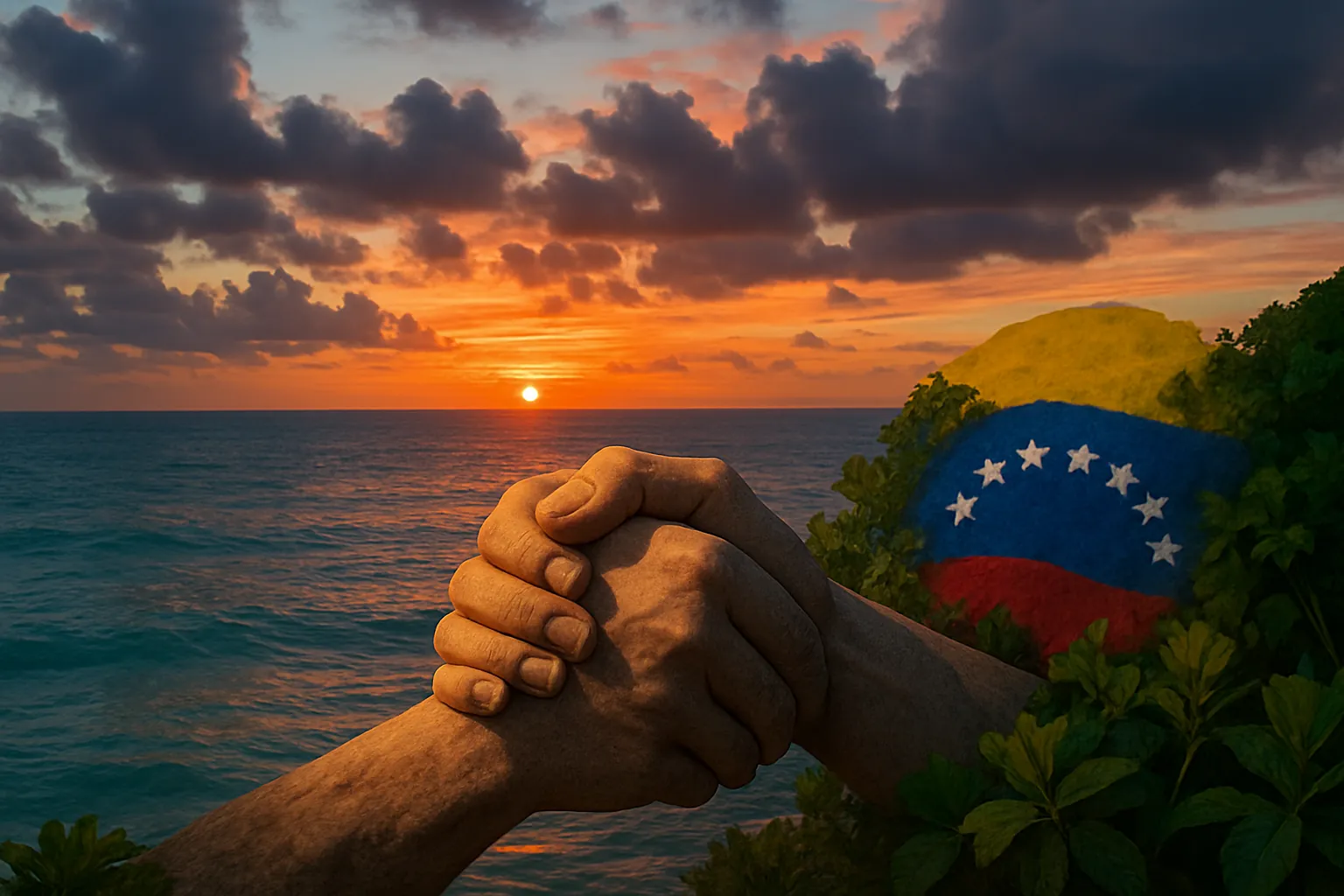
Rising Tensions on the Caribbean Waves
Midnight off the Venezuelan coast, an explosion shatters the silence. A U.S. Navy video, brief yet blunt, shows a vessel consumed by fire—a strike the Pentagon claims targets drug smugglers. Yet within hours, the aftermath ripples beyond charred wreckage. Russia, already a vocal ally to embattled President Nicolas Maduro, wastes no time condemning what it describes as reckless militarism threatening regional equilibrium. Venezuela itself decries the U.S. action as yet another attempt at destabilization. In the shadows of Caribbean waters, a familiar but newly charged geopolitical drama is underway.
Recent weeks have seen four U.S. military strikes on vessels allegedly ferrying narcotics from Venezuela toward U.S. shores. The Pentagon’s rationale leans hard on the imperative to disrupt cartel networks, yet the human toll grows: at least 21 dead, including four in the latest attack. Each strike deepens anxieties about regional sovereignty and the true scope of U.S. objectives in Latin America.
Officially, Defense Secretary Pete Hegseth maintains that he operates with “every authorization needed,” citing constitutional grounds, war powers, the legal framing of narco-terrorists, and principles of self-defense. But specifics—clear evidence supporting the smuggling charges, or details justifying lethal force—stay shadowed, fueling skepticism among international observers and amplifying diplomatic backlash.
Russia’s Calculated Support: Solidarity or Strategy?
Beyond immediate outrage, the Kremlin’s swift show of support for Venezuela reveals calculated deliberation. Foreign Minister Sergey Lavrov, in a highly publicized call with his Venezuelan counterpart Yvan Gil, offered Moscow’s “full expression of support and solidarity.” Yet this is no altruistic gesture. Moscow frames its stance as a defense of Latin America as a “Zone of Peace”, a phrase laden with Cold War echoes and revived by present-day power plays. Russia’s condemnation of the U.S. strike serves both to bolster a beleaguered partner in Caracas and to signal Moscow’s intent to assert influence in a region often seen, rightly or wrongly, as Washington’s backyard.
From a historical vantage, the United States’ involvement in Latin America is fraught with painful precedent—CIA-driven coups from Guatemala to Chile, covert arms shipments, and a legacy of interventionism that has left wounds slow to heal. Pare those memories with current events, and U.S. claims of upholding order come off to many as paternalistic at best, neocolonial at worst. John Kerry once famously called Latin America “our backyard,” a phrase now widely derided for its condescension; yet the rhetoric and reach of these military actions evoke the same uneasy dynamic.
Recent polling by the Pew Research Center shows Latin American publics overwhelmingly wary of renewed U.S. intervention. Fears center around not just sovereignty violations but the potential spillover of conflict, economic disruption, and loss of life. Regional leaders increasingly question whether the U.S. war on drugs belies a deeper agenda of regime change. Harvard historian Greg Grandin notes, “For too long, U.S. approaches have prioritized short-term security interests over real stability or social progress.”
Collateral Risk: Stability, Sovereignty, and the Shadow of Escalation
Venezuela’s accusations resonate sharply in this climate. Maduro’s government contends that the latest U.S. strikes are less about cutting off drugs and more about cutting down his presidency. “Threats to regional stability” is no mere slogan—these operations risk turning maritime anti-drug efforts into broader confrontations with unpredictable consequences.
President Donald Trump, never one for subtlety, has openly hinted that if sea-based trafficking dries up, land campaigns may follow. Given the administration’s willingness to frame drug cartels as terrorists, the implications are chilling: expanded surveillance, possible incursions, and heightened militarization along already volatile borders. The blueprint to label criminal networks as enemy combatants recalls post-9/11 legal frameworks that enabled everything from indefinite detention to cross-border drone strikes.
“When counter-narcotics becomes a pretext for military escalation, we risk entangling the region in a cycle of violence that punishes the vulnerable while empowering authoritarians across the spectrum.”
Critics warn that escalation plays straight into authoritarian playbooks. Whenever legitimacy falters at home, beleaguered leaders invoke external threats—real or manufactured—to justify crackdowns and rally nationalist sentiment. Caracas and Moscow are well-versed in this maneuver. Yet U.S. heavy-handedness not only cedes rhetorical ground but may legitimize such reactionary stances, making peaceful resolution harder to achieve.
A closer look reveals one crucial truth: True peace and stability in Latin America depend less on foreign warships and more on empowering local institutions, supporting civil society, and addressing the poverty and inequality that fuel drug flows in the first place. The liberal imperative here is not withdrawal, but humility and solidarity—not bombs and blockades, but investments in health care, education, and accountable governance.
Even some U.S. voices echo caution. Former ambassador Arturo Valenzuela argues, “Military solutions rarely address the root problem, and more often destabilize fragile democracies.” Real progress means engaging multilateral partners—regional bodies, the UN, grassroots organizations—and centering the voices of those most affected. Too often, U.S. policy treats Latin America as a chessboard rather than a community of equals, perpetuating cycles of distrust and disappointment.
The Path Forward: Recalibrating American Power
Can Washington pivot from force to partnership? Will advocates for diplomacy and justice win out over the drumbeat of militarization? These questions cut to the core of America’s identity and its future in the hemisphere.
Recent strikes may make headlines and satisfy the hawkish crowd, but at what cost? Each missile may hit a target, but the wider repercussions—loss of trust, eroded legitimacy, suffering among ordinary families—linger much longer. Progressive foreign policy values demand more than reflexive shows of strength. They require courage: the courage to listen, to invest in solutions that transcend violence, and to recognize the dignity and sovereignty of all nations, even—especially—when doing so is politically inconvenient.
