
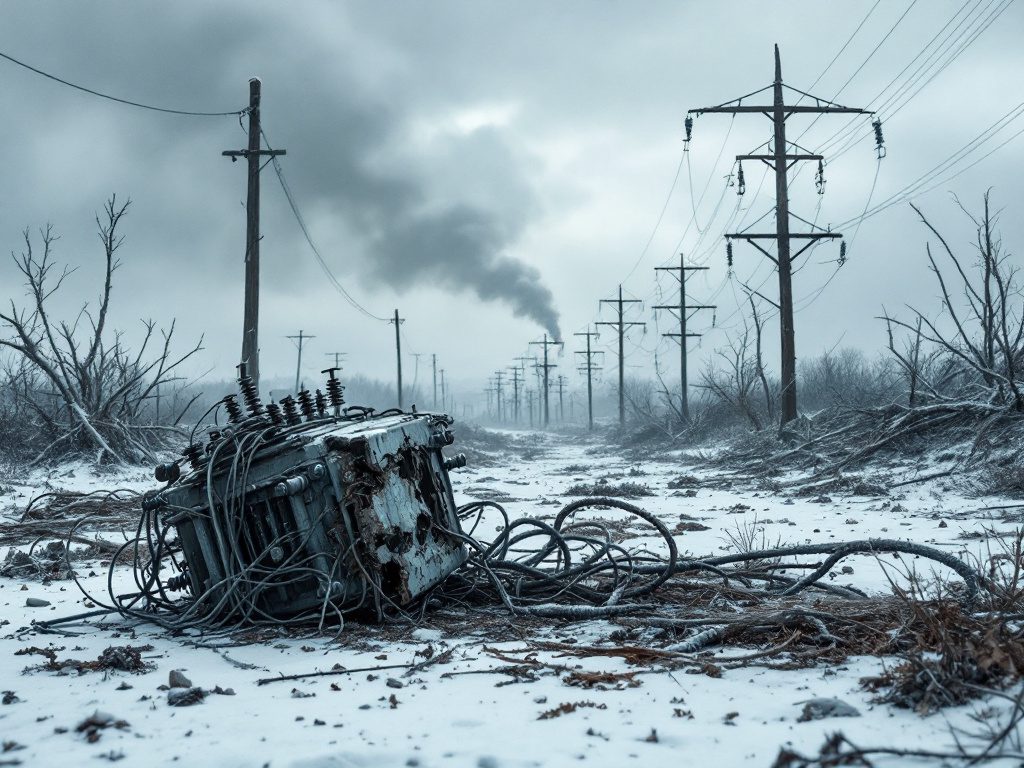
Energy Under Siege: Zelensky’s Warning and Russia’s Strategy
The latest barrage of Russian drone and missile attacks on Ukraine’s energy infrastructure signals an unsettling pattern—one that keeps millions living in the shadow of darkness. When President Volodymyr Zelensky gathered with energy workers this week, honoring their steadfast efforts under relentless assault, he wasn’t just offering praise. He was issuing an alarm: Russia is preparing new strikes on the nation’s grid, with intelligence reports revealing heightened risk before and after the Easter holiday.
The urgency of this warning can’t be overstated. Since March, Russian forces have conducted more than 30 strikes on critical energy facilities, a count confirmed by Ukraine’s Foreign Ministry spokesman Heorhii Tykhyi. Each attack damages not only substations and transformers but also the delicate trust citizens invest in their ability to heat homes, keep hospitals running, and simply switch on a light at night. The recent strike on Ukraine’s largest private energy company, DTEK, in Dnipropetrovsk Oblast underscores the threat’s scale. According to DTEK, structural damage was extensive, yet injuries miraculously did not occur—a grim reminder that luck cannot substitute for security.
Energy infrastructure has become ground zero in this war’s newest front, a deliberate targeting of civilian necessity as much as military might. Russian doctrine increasingly mirrors the darkest pages of twentieth-century warfare, reminiscent of carpet bombings or the siege tactics used in Grozny and Aleppo. The message is clear: inflict civilian hardship to sap morale and resistance. How long can Ukraine’s battered, but resilient, grid withstand such pressure?
Zelensky Honors Ukraine’s “Invisible Defenders”
Awards ceremonies may seem incongruous on the heels of air raid sirens, but this week’s event, in which President Zelensky honored energy sector workers, struck a deeper chord. The president himself described surviving the third winter of full-scale war without a blackout as “an extraordinary achievement.” Industry insiders, like DTEK CEO Maxim Timchenko, report that the backbone of this resilience lies in thousands of technicians, emergency responders, and grid operators who often work 24-hour shifts amidst rubble and threat.
This resilience is not born of privilege. Ukrainian energy workers have repaired blown substations in freezing rain and conducted grid maintenance within missile range—every task an act of courage and defiance. According to the International Energy Agency, restoration crews in Ukraine have set a modern record for the speed and scope of network repairs under conflict conditions.
Ukraine’s ability to prevent full-scale blackouts relies not just on technology, but on human grit. In the words of Zelensky:
“Our energy workers have become true defenders of Ukraine—no less than our soldiers on the front lines.”
The president’s acknowledgment resonates across a society that understands all too well the weaponization of basic utilities. The message: every lamp glowing in a Kyiv apartment block, every ventilator powered in a Kharkiv hospital, testifies to the front lines behind closed doors.
Ceasefires, Broken Promises, and the Global Stakes
Hopes for reducing civilian suffering flickered in March, when U.S.-brokered ceasefire talks in Jeddah saw Ukraine’s unconditional acceptance of a full interim halt to strikes. Those hopes were dashed when Russia rejected the terms, insisting instead on maximalist demands. What followed was not de-escalation, but an intensification of indiscriminate attacks. From the Sumy region, where drones struck wholesale bases and fire stations in the Hlukhiv community, to two consecutive nights of blackouts in Odesa—these are not collateral damage, but deliberate acts calculated to unnerve a nation.
Why target energy now? Beyond disrupting daily life, Russia seeks to undermine the West’s confidence in Ukraine’s stability and ability to recover. As Harvard energy security expert Meghan O’Sullivan noted in a recent NPR interview, “Disabling energy infrastructure is about more than battlefield advantage—it’s about making Ukraine appear ungovernable, and testing the resolve of its international backers.”
The world is watching not just a military conflict, but a moral test of whether the purposeful targeting of civilian infrastructure will go unchallenged. History offers little comfort; from the London Blitz to the targeting of Aleppo’s water supply, such strategies have always drawn condemnation—but rarely effective prevention. As civilians once again brace for potential outages during holidays meant for peace, the question persists: Will the international community step up with the resources and air defenses Ukraine desperately needs? Or will the cycle of destruction and restoration continue, energy workers left to hold the line with little but their own ingenuity?
Beyond that, there are calls from policy experts and humanitarian leaders for the U.S. and Europe to do more than supply weapons—to provide advanced grid protection, anti-drone systems, and emergency repair kits. As Zelensky urged, supporting the “invisible defenders” is every bit as crucial as aiding those on the battlefield.
