
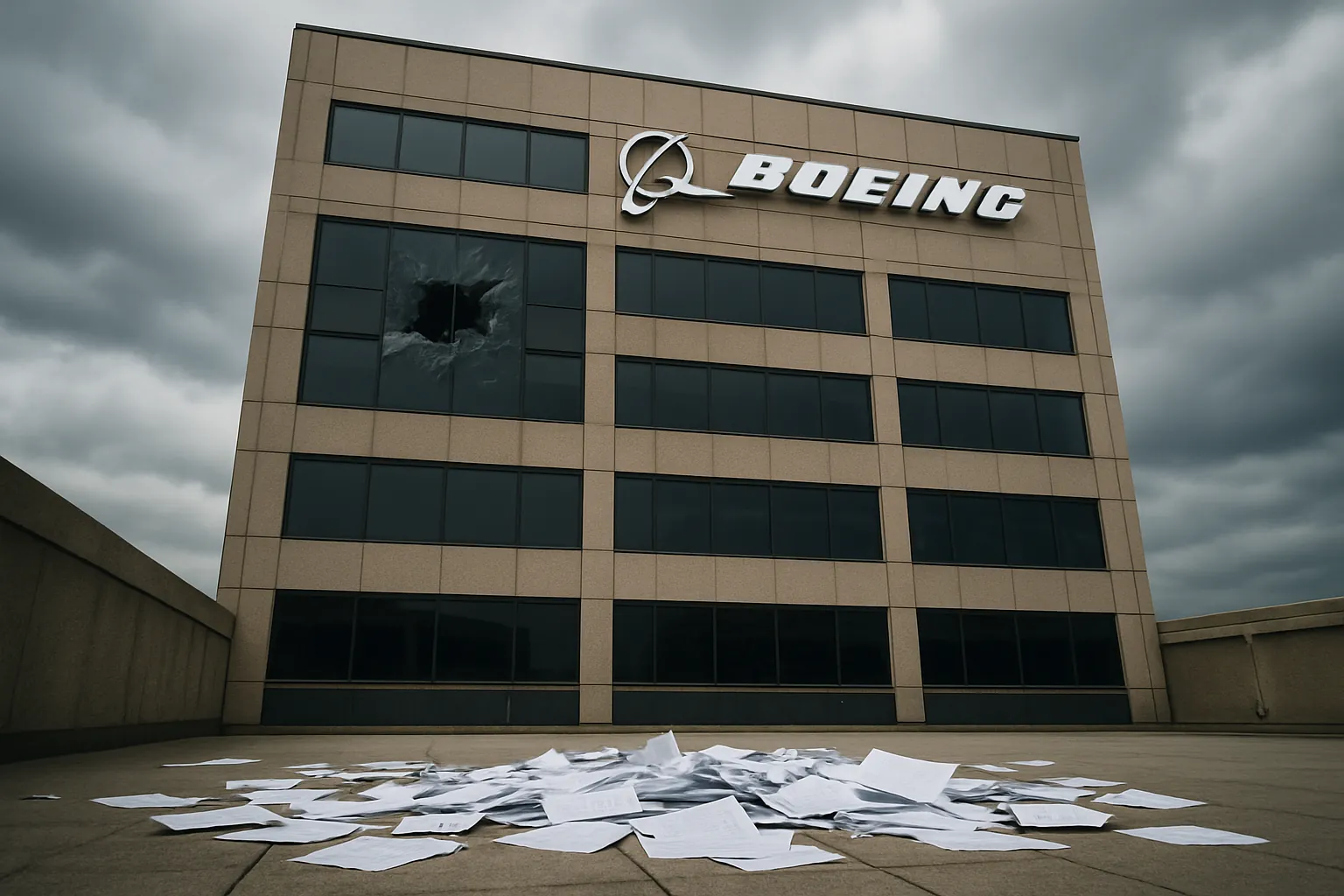
When War Targets the Workplace: Boeing in the Line of Fire
In the pre-dawn hours of June 15, Kyiv’s skyline—long-scarred by months of shelling—saw a new and chilling milestone. As more than 180 drones and a barrage of missiles rained down on Ukraine’s capital, one of the world’s largest American aerospace firms, Boeing, found its local office engulfed in flames and debris. A closer look reveals that this was not a tragic accident or the result of random shelling, but an apparent targeted attack against a symbol of U.S. industry embedded in the Ukrainian defense ecosystem. According to the Financial Times, citing employees, Ukrainian officials, and international business representatives, the assault on the Boeing office was hardly incidental.
No employees were harmed, and operations appear to continue, at least for now. Yet the message from this strike—strategically delivered by Russia amid intensifying battlefield losses—could not be clearer: foreign support for Ukraine is now firmly within the crosshairs.
Boeing, Ukraine, and the Stakes of Transatlantic Partnership
Boeing’s presence in Ukraine isn’t simply logistical or commercial. With more than 1,000 employees, the company represents a vital bridge between American industry and Ukrainian technical know-how. Last year, Boeing and Antonov—Ukraine’s storied aircraft builder—signed a memorandum of understanding to jointly explore emerging defense opportunities, and discussions at the 2025 Munich Security Conference only deepened this partnership. At the conference, Ukrainian Defense Minister Rustem Umerov met directly with Steve Parker, Boeing’s CEO and Defense division leader, highlighting the critical ties at play. (Financial Times; Munich Security Conference press materials.)
The Boeing-Antonov relationship—more than a century of aerospace legacy meeting urgent wartime necessity—has made their collaboration an irritant in Moscow’s eyes. The Kremlin is acutely aware that technologies forged at this junction could influence Ukraine’s battlefield prospects, particularly in the arenas of unmanned aerial vehicles and advanced logistics. Targeting Boeing’s Kyiv office is a clear signal: Western corporate investments in Ukraine’s defense sector come with mounting risk.
“This is no longer just about tanks or howitzers. It’s about telling America’s largest companies: your fingerprints are on the future of Ukraine’s capacity to resist. We’re watching, and now, we’re acting.”—Analyst Michael Bociurkiw, Chatham House Ukraine Forum
Boeing, for its part, has stated unequivocally that employee safety is a priority. Local management responded swiftly: “The safety and security of our staff remains our top concern,” Andriy Koryagin, Boeing’s Deputy General Director for Ukraine, emphasized in public statements. Miraculously, injuries were avoided even as flames swept through the office, and operations—largely remote, given the circumstances—were not disrupted. Yet the symbolic impact of attacking American industry on foreign soil cannot be overstated.
From Boardrooms to Battlefields: Political Implications for the U.S.
This escalation—deliberately targeting the local operation of a Fortune 100 company—further blurs the fragile boundaries between economic support and military engagement. Biden administration officials recognize that such attacks are designed to sow doubt among Western investors who support Ukraine’s civilian and defense infrastructure. Boeing has invested heavily in research, engineering, and technical support offices in Kyiv, reflecting a long-term strategic commitment that extends far beyond profit margins.
Many progressive observers are asking: What are the limits of American engagement in Ukraine, and how do we navigate the fine (and increasingly dangerous) lines between supporting sovereignty and provoking escalation? Especially for those who remember earlier flashpoints—the downing of Malaysia Airlines MH17 in 2014, for example—the implications are chillingly familiar. As Harvard’s Sarah Kreps, an expert on international security, put it: “Escalatory risks often begin with attacks on symbols, not soldiers.”
Meanwhile, there’s a heated debate stateside about the adequacy of U.S. response. The incident fuels calls from both Democratic and moderate Republican circles for the administration to redouble diplomatic efforts while not retreating from support for Ukraine. Ukrainian officials, including Foreign Minister Andriy Sybiha, have taken the opportunity to urge the U.S. to engage more actively in peace negotiations and in the protection of American economic assets overseas.
Yet in certain corners of the U.S. political spectrum, skepticism prevails. Conservative isolationists argue that events like this confirm their warnings about “mission creep”—a term that has too often been abused to justify inaction in the face of blatant aggression. What too many such critics ignore: An attack on an American business abroad is not simply a matter of property damage. It is about the willingness of autocrats to reshape the rules of engagement, economic and otherwise, to punish allies and undermine democratic resolve.
The Broader Meaning: Lines in the Rubble
Boeing’s continued collaboration with Antonov and its commitment to maintain operations in Ukraine, despite active war, speaks volumes about resilience and solidarity. The attack on its Kyiv office isn’t just a footnote in the endless scroll of wartime dispatches—it is a loud, calculated attempt to shape the future of international partnerships and the costs of standing with vulnerable democracies.
If the lesson of this moment is to mean anything, it is that progressives and centrists must push back against the notion that pulling away from difficult allies will somehow insulate us from threats abroad. History—from Pearl Harbor to 9/11—shows that isolation is not security. Corporate collaboration, coupled with ironclad diplomatic engagement, are our surest bulwarks against an increasingly aggressive paradigm of 21st-century warfare, where the targets are as likely to be laptops and contracts as tanks and troops.
Ukrainian officials, American business leaders, and international observers watch closely: Will this strike catalyze a stronger commitment to Ukraine’s sovereignty, or will it intimidate the very partners essential to the country’s survival? The answer will shape not only the trajectory of a war but also the contours of the rules-based order we claim to defend.
