
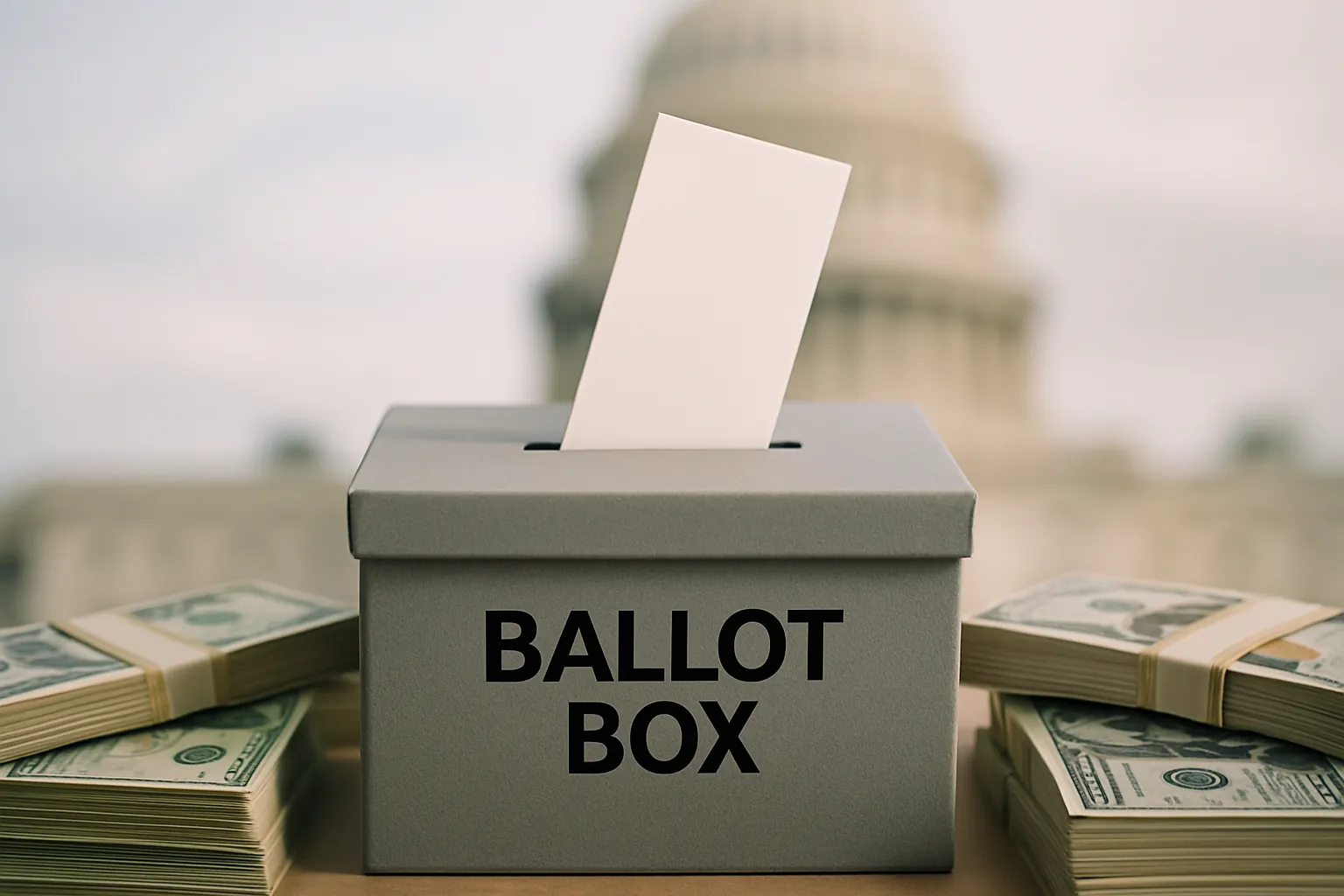
Billionaires in the Back Room: How Influence Shaped the Harris Campaign
Picture a raucous West Virginia union hall, where Senator Bernie Sanders rails against a system “broken and corrupt”—not at the hands of small-town politicians but high atop the food chain, where billionaires whisper in the ears of presidential hopefuls. Sanders’s remarks this past week weren’t merely post-mortems for Kamala Harris’s startling loss to Donald Trump in 2024—they were a clarion call exposing the corrosive grip of major donors on Democratic strategy and American democracy itself.
This wasn’t idle rhetoric. After only a few months as the Democratic presidential candidate—her campaign hastily assembled following a chaotic primary season—Kamala Harris found herself the beneficiary of unprecedented support from roughly 80 billionaires. Big names like Mark Cuban wrote checks and attended fundraisers, a number dwarfing the billionaire backers lined up behind Trump. Yet for Sanders and his progressive colleagues, this windfall was not a badge of pride but a warning sign.
“She had too many billionaires telling her not to speak up for the working class,” Sanders declared. According to multiple interviews and a key stop on his “Fighting Oligarchy” tour, the senator laid bare a dialectic that’s haunted Democrats for decades: Striking a balance between soliciting donor support and championing everyday Americans. Elite money, Sanders insists, too often drowns out the real pain felt by families living paycheck to paycheck.
The Democratic Disconnect: Missing the Working-Class Moment
Why did Harris’s campaign, flush with billionaire backing, falter so dramatically? Look beyond the donor lists and the answer, Sanders argues, is obvious: The campaign’s agenda was “vague” on core issues, recycling buzzwords like affordability without delivering tangible relief on kitchen-table crises. Sanders reminds us, with a touch of exasperation, that a winning political message is neither accidental nor achieved by tiptoeing around the demands of major funders.
“The Democratic Party simply failed to speak unequivocally to the anxieties of the working poor and the middle class,” says Harvard political scientist Jane Eloise. “Billionaire involvement can bring fundraising and visibility, but often results in least-common-denominator messaging. That tends to demobilize the very voters Democrats need most.”
The numbers support this assessment. According to a Pew Research Center post-election survey, a staggering 62% of voters cited economic anxiety and wages as their primary concern—yet few reported believing Harris’s campaign had specific, credible proposals to raise the federal minimum wage or guarantee healthcare. Even when Harris nodded toward progressive planks, her proposals were often watered down or buried under consultant-speak, a pattern Sanders lambasts as the direct result of undue donor influence.
Sanders’s criticism also casts a harsh spotlight on the party’s chronic stumble over populist messaging. Having watched Hillary Clinton’s 2016 campaign founder on similar rocks, many progressive strategists are left asking: Why repeat this mistake? The urgency of this question is amplified against the backdrop of unprecedented wealth concentration, stubborn wage stagnation, and surging right-wing populism. Democrats, Sanders argues, risk irrelevance if they allow billionaires to dictate priorities.
“When Democrats start taking direction from the yachts instead of the union halls, they lose their moral authority—and, increasingly, actual elections.”
“Fighting Oligarchy”: Sanders and the Path to a Working-Class Future
Sanders isn’t issuing his warnings from the political wilderness. Joined by Democratic stars like Rep. Alexandria Ocasio-Cortez and Beto O’Rourke on his high-profile “Fighting Oligarchy” tour, he’s making the case that the future of the party depends on unapologetic advocacy for—and alliance with—the working class. This isn’t mere nostalgia; it’s strategic necessity.
The progressive agenda Sanders rattles off has the ring of common sense in advanced democracies abroad: universal healthcare, a $17 minimum wage, expanded labor rights, and curbs on the runaway influence of tech moguls like Elon Musk, whom Sanders openly scolds for funneling support to Trump and conservative judicial campaigns. While critics on the right deride such measures as radical, global precedents—Scandinavia’s living wage, Canada’s healthcare, Germany’s union protections—prove otherwise.
Central to Sanders’s critique is a deep suspicion of what economists call “oligarchic capture.” When the rules of the game are written and rewritten by the very wealthiest, the outcomes are rigged from the start. Even well-meaning candidates find themselves boxed into corners, tempted to sand down policy ambitions for the sake of another round of contributions.
Does this mean Democrats must reject all big-dollar donors? Not necessarily. But Sanders’s point is unmistakable: If the party ever hopes to regain the trust—and the turnout—of working Americans, it must place their needs, not their benefactors, at the core of every message and measure. Failure to do so opens the door for right-wing opportunists promising, however cynically, to smash an establishment that’s deaf to suffering.
A closer look at post-election narratives reveals a hunger for real alternatives. According to Dr. Leah Greenberg, an organizer behind Democracy Forward, “Authentic engagement with voters’ lived experience cannot be faked; hollow populism or donor-driven soundbites simply will not suffice.” She points to how grassroots action—like the resurgence of organized labor, the Fight for $15, and teachers’ strikes—can galvanize a base that’s felt abandoned.
The lesson is stark: Write off working-class Americans, and Democrats risk writing themselves out of the future. Bold, specific proposals must be the order of the day, not handwringing over how they’ll land with the donor class. The stakes are nothing less than the survival of democracy as a vehicle for the many, not a plaything for the few.
