
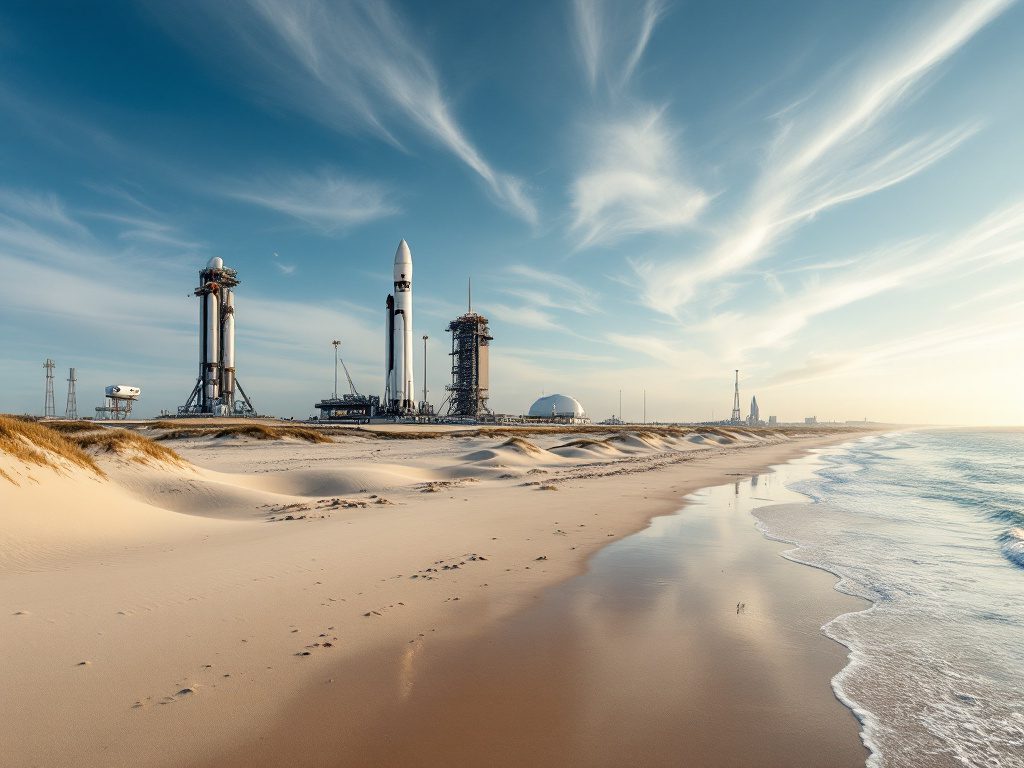
Showdown on the Bay: Starbase’s Corporate City Push
South Texas stands on the edge of a 21st-century experiment—one that has little to do with science fiction and everything to do with power, access, and the fight for the soul of public spaces. On Saturday, a sparse but significant vote will decide whether Elon Musk’s SpaceX can transform its Boca Chica rocket launch site into a new, corporately managed Texas city: Starbase. The outcome is almost a foregone conclusion, given the small and largely SpaceX-affiliated electorate, but the implications are anything but trivial.
Walk the dusty roads surrounding the SpaceX site and you’ll see exactly why the story isn’t about futuristic glass towers or high-speed pods. The would-be city covers just 1.5 square miles, dotted with airstream trailers and mid-century cottages—a far cry from the glitzy visions Musk promotes online. Yet to those invested in the outcome, including generations of working families who consider Boca Chica’s “poor people’s beach” their sanctuary, the stakes feel monumental. As SpaceX takes its moonshot for municipal status, the real tension lies in whether one billionaire’s industrial ambitions should dictate the future of cherished public land.
Beyond that, the polling site itself—a building on “Memes Street,” winking at Musk’s self-styled edginess—marks just how culture, corporate identity, and public governance are blurring in Texas. According to official tallies, nearly 200 of the 283 eligible voters cast early ballots. Musk, for all his visible presence, hadn’t voted in the Starbase election as of early voting, though he appeared at the polls last November, adding yet another layer to the complicated dance between personality and policy.
Democracy Meets the Company Town—Who Really Wins?
Corporate-dominated municipalities are nothing new in American history. Nearly a century ago, company towns from coal-rich Appalachia to the Fordlandia project in Brazil became synonymous with dystopian control: businesses determined housing, policing, even leisure. Starbase’s creation revives these echoes, raising crucial questions about consent and civic ownership in the modern era.
The central flashpoint is access to Boca Chica Beach—a strip of coastline that has served as a vital community resource for swimming, camping, and family gatherings for generations. With the new city, significant control over road and beach closures would shift from Cameron County to a municipality largely run by—and for—SpaceX employees. SpaceX touts this as “streamlining operations,” arguing that autonomy is essential for the rapid testing and launching of Starship rockets, with valuable NASA and Department of Defense contracts on the line.
Yet critics warn this pathway threatens to systematically disempower the very communities that have made the region home long before Musk landed his first Starhopper. “This is not just a legal maneuver; it’s about the privatization of public space and the erasure of democratic oversight,” says Maria Soto, a community organizer with Friends of Boca Chica. National environmental groups have echoed these concerns, citing the precedent this sets for other corporations eyeing public land for private use. Two pending state bills would further cement Starbase’s ability to manage—read: restrict—public access. The sense that this vote is less about grassroots democracy and more about antidemocratic corporate preference is hard to shake.
“If Starbase succeeds, it normalizes a chilling model: corporate governance in which the public’s right to shared spaces falls hostage to the whims of corporate ambition.”
Legal scholars point out that while Texas law technically allows such incorporations, it’s rare—if not unprecedented—for an area so dominated by a single employer to be fast-tracked toward cityhood. According to Harvard urbanist Dr. Rachel Levine, “Company towns collapsed for a reason: democracy fails when there’s a single economic lifeline and no meaningful opposition or recourse.”
Progress, Power, and the Price of the Future
Rocket launches and cosmic ambition undeniably inspire. America’s history of space exploration is a testament to what public investment and collective imagination can achieve. But at what cost—social, environmental, and democratic—should we embrace this new era of ‘company cities’? The SpaceX model prioritizes rapid decision-making and private investment, but it threatens to sideline the marginalized voices that public governance was invented to protect.
The economic argument for Starbase is not frivolous. Texas has benefitted from an influx of jobs and capital as Musk has shifted his business empire from California. Local boosters argue that cityhood will attract tourism, innovation, and yet more high-tech industry—offering a path forward for a region long neglected by both state and federal policymakers. New York University political scientist Dr. Jordan Feldman notes, “There’s a broader question about whether the state should be abdicating its duty to private actors. Partnership is one thing; giving up oversight is another.”
A closer look reveals that the real fight is less about rockets and more about which vision of America will prevail: one ruled by transparency, accountability, and collective stewardship—or one in which those who can afford to shape landscapes do so at the expense of everyone else. As the ballot boxes close on Starbase’s future, there’s reason to ask: are we sacrificing the rights of the many for the convenience of the few?
Starbase’s story is just beginning, but the paradigm it introduces could reverberate far beyond Texas, setting a blueprint for how the next generation of American cities are born—or bought. If democracy is truly to endure amidst the stars, it must not get lost among the launch pads on Earth.
