
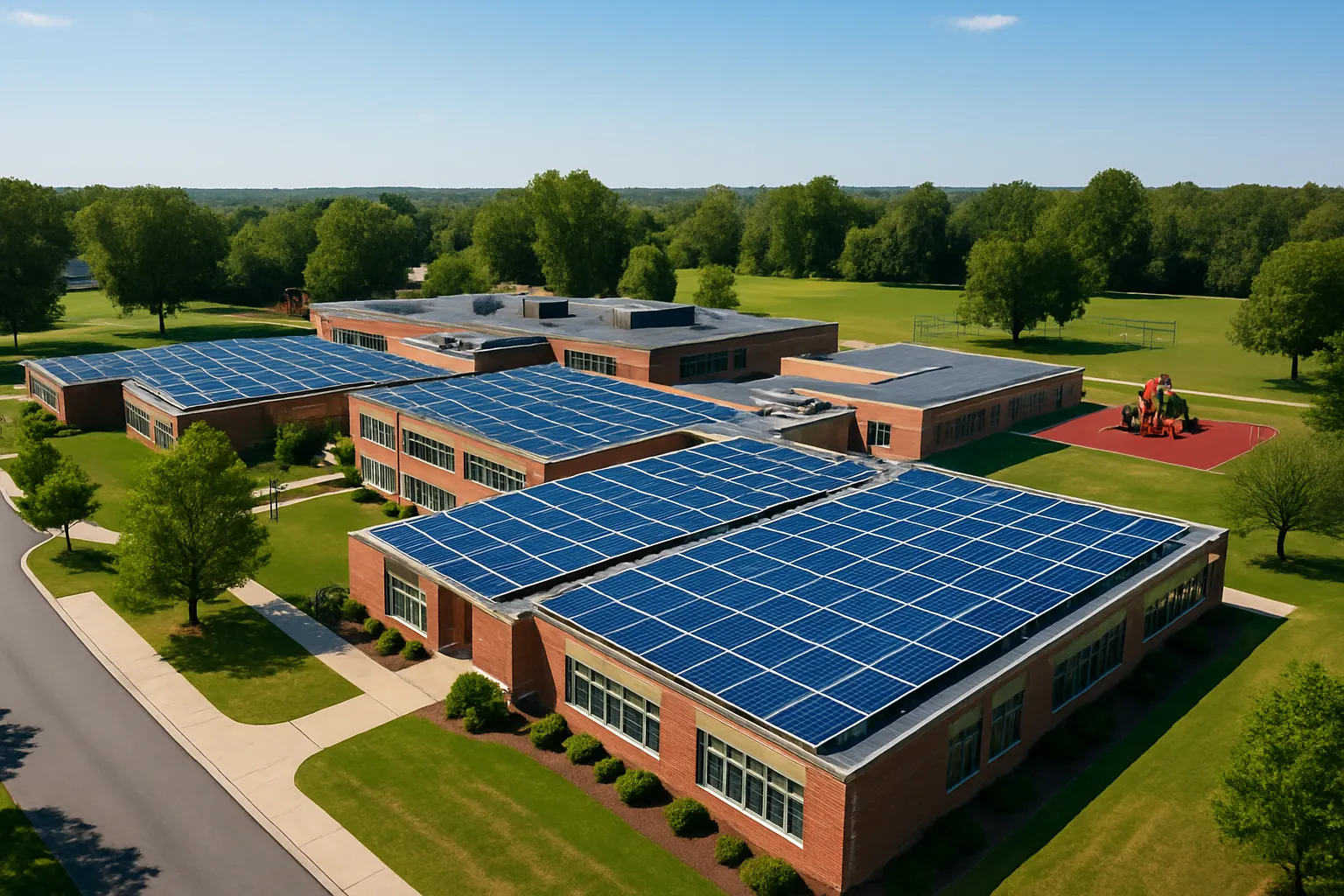
Shining a Light: The Untapped Power on School Rooftops
It’s a typical weekday morning in Pennsylvania. As buses roll up to schools across the state, lights snap on, computers hum to life, and HVAC systems struggle to keep classrooms comfortable. But for most of Pennsylvania’s nearly 5,000 school buildings, there’s an astonishing missed opportunity overhead: vast roofs and open lots perfectly suited for solar panels that could slash energy bills and pollution in one stroke.
Solar energy could radically reshape public education budgets and student health across the state, according to a recent series of reports by the PennEnvironment Research & Policy Center. Their research, summarized in “Solar Schools for Pennsylvania: Repowering Education with Clean Energy,” quantifies both the financial and environmental windfall—while shining a harsh light on political inertia threatening to leave these benefits on the table.
A closer look reveals the stakes: if Pennsylvania schools switched to solar, the cumulative savings could reach $342 million over the lifetime of these systems—a sum that could dramatically rechannel public funds into classrooms, teachers, and much-needed facility upgrades. For the Philadelphia School District alone, the transition could mean almost $20 million in savings, funds that would otherwise flow out the door to utilities rather than back to students. According to PennEnvironment, school solar installations would also reduce carbon emissions by an amount equal to taking almost 300,000 cars off Pennsylvania’s roads.
Dollar and Sense: Cutting Costs and Pollution Simultaneously
Grappling with shrinking budgets, administrators must face the grim reality that utility costs are climbing fast. Pennsylvania’s most recent electric grid auction resulted in a 22% spike in energy costs for schools next summer. This isn’t just a fleeting uptick either. Experts, like Harvard economist James Stock, have warned for years that fossil-fuel-based power will only become more volatile and expensive as global markets react to scarcity, policy shifts, and climate risks.
The report’s timing is no accident: Calls for budgetary reform and education funding have reached a fever pitch nationwide, and many districts are forced to make tough choices between academic programs and basic operations. So why isn’t solar at the heart of more school district strategies?
High upfront costs remain a stumbling block. Installing solar arrays can carry a significant price tag initially, and tight public budgets—often squeezed by conservative calls for “fiscal restraint” and tax cuts—can make such investments appear risky or impractical. Yet, this narrow accounting misses the bigger picture. As Julie Fox, director at the PennEnvironment Research & Policy Center, puts it: “The upfront costs of solar should be compared with the lifetime savings, not just the current year’s budget.” Federal incentives, like the soon-to-vanish Clean Energy Investment Tax Credit, can reduce system costs significantly, but as these incentives phase out, the window for dramatic savings narrows.
To help make the case, PennEnvironment released an interactive map showing each county’s solar potential, offering a compelling, transparent look at the concrete local benefits. Berks County, for instance, could save $12 million and slash pollution by almost 9,800 tons—powering enough homes to fill several small towns.
“The upfront costs of solar should be compared with the lifetime savings, not just the current year’s budget.” — Julie Fox, PennEnvironment Research & Policy Center
Politics, Policy, and the Wholesale Value of Clean Air
Turns out, the barriers to solar aren’t only financial. They’re political—and deeply cultural. Efforts like Pennsylvania’s Solar for Schools grant program, which helped seed projects in several districts, now face an uncertain future as budget debates clash in the state legislature. Despite bipartisan origins, such programs often become casualties of broader conservative reluctance to embrace climate action and invest in public solutions.
Conservative lawmakers frequently argue that market forces should dictate energy transitions, not public investment. But history offers a stark warning: when it comes to public goods—like schools, clean air, and a stable climate—relying solely on the private sector leads to chronic underinvestment and inequality. You don’t need to look further than the Flint water crisis to see the cost of government stepping back from its duty to safeguard community well-being.
Every dollar spent on clean energy in schools doesn’t just cut utility bills; it keeps communities healthier too. According to the American Lung Association, switching to solar for school energy would reduce air pollutants linked to asthma and respiratory illnesses, improving attendance and academic outcomes. In districts like Philadelphia, where pollution and poverty too often overlap, prioritizing solar could become a vital tool in the fight for educational and racial equity.
So why do these win-win solutions still face so much pushback? Political gridlock, a reflexive distrust of government investment, and a continued campaign to undermine climate science all play a role. As Dr. Lisa Patel, a Stanford pediatrician and climate advocate, warns: “We must look past familiar roadblocks and see how clean energy for schools is a lever for both justice and opportunity.”
Recent years have proven that when the political will aligns, state and federal partnerships can bridge funding gaps, support upfront investments, and guarantee ongoing savings for taxpayers. Renewing and expanding Pennsylvania’s Solar for Schools grants—while maximizing soon-to-expire federal tax credits—could ensure that schools aren’t forced to choose between a healthy bottom line and a healthier planet.
Beyond the Balance Sheet: Prioritizing a Sustainable Future for Students
Beyond dollars and kilowatts, what’s at stake here is a vision of education as a force for collective progress. Young people are acutely aware of the climate crisis. Students who walk past gleaming solar panels or learn in sun-powered classrooms see their schools leading by example, signaling that Pennsylvania is willing to invest in both their futures and the planet’s health.
Resisting the false dichotomy between “fiscal responsibility” and environmental progress is essential. The numbers are clear, as are the health and equity benefits. The remaining question is whether Pennsylvania’s lawmakers will rise to the occasion—or continue to let an entire generation pay the price for policy paralysis.
Isn’t it time our public institutions match their rhetoric about “preparing the next generation” with real action—actions that create jobs, save money, and clean the air our children breathe? As we debate this year’s state budget, the answer should be as bright as the sun that shines on those empty rooftops.
