
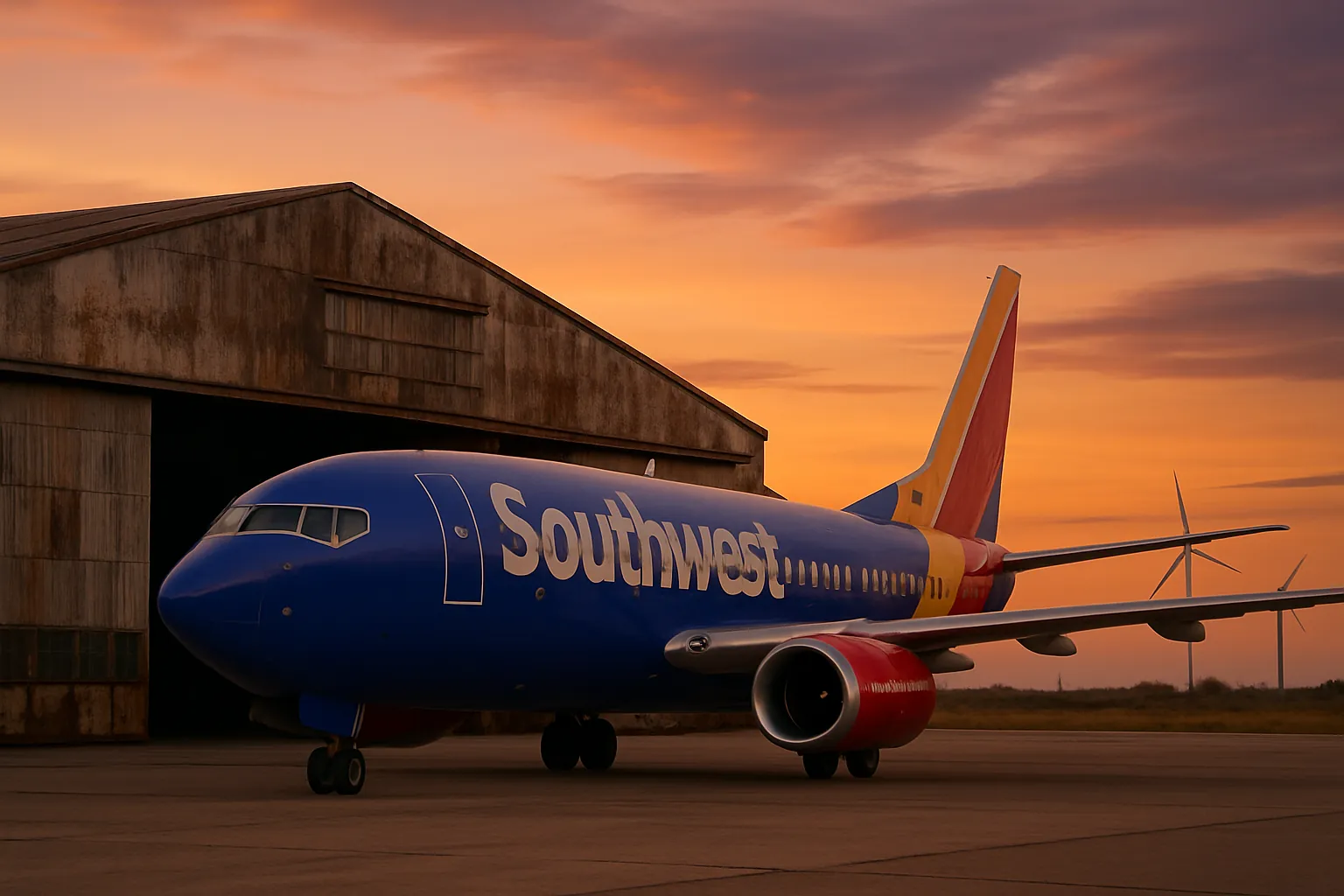
Climate Commitments Grounded: The Sale of Saffire Renewables
It’s a scene that’s played out one too many times: An industry giant trumpets its climate ambitions, only to quietly reverse course once the headlines fade. Southwest Airlines’ recent sale of Saffire Renewables—its once-promising renewable fuels unit—to Conestoga Energy stands as a striking example of corporate retreat from climate responsibility. For a company that only two years ago was leaning in on green solutions, this sudden U-turn raises uncomfortable questions about industry-wide progress and sincerity in fighting climate change.
Southwest first dipped its toe into sustainable aviation fuel (SAF) in 2022 by investing in Saffire Renewables, a startup converting corn stover—those non-edible remnants of corn harvests—into ethanol, and then into low-carbon jet fuel. By 2024, Southwest had acquired the company fully, signaling, at least publicly, a belief that innovation on this front could give the airline a competitive and reputational boost.
Fast forward, and the optimism has dissipated. Now, Conestoga Energy, already an established name in low-carbon biofuels, is scooping up Saffire’s intellectual property, leadership, and a blueprint for a pilot facility in Kansas. For climate advocates, it’s a familiar story: an ambitious sustainability project discarded as soon as profits or patience wear thin.
Why the Retreat? Industry Headwinds and Policy Paralysis
What explains Southwest’s strategic reversal? Company spokespeople cite “industry realities” and “the slow progress” of commercial-scale sustainable fuel production. But a closer look reveals that a perfect storm of political backpedaling and economic short-sightedness is pushing U.S. airlines to deprioritize the climate fight just when momentum ought to be accelerating.
Kansas State University energy policy expert Dr. Vanessa Gorman explains, “The pathway to mainstreaming sustainable aviation fuel requires more than a few high-profile pilot projects. Without robust policy incentives and long-term industry commitment, even the best technologies struggle.” Her assessment echoes conclusions in a recent Pew Research Center analysis, which noted that U.S. government support for SAFs has wavered under pressure from fossil fuel lobbyists and a split Congress, limiting both the scale of subsidies and regulatory clarity.
Southwest’s workforce reductions earlier this year were an early signal of retrenchment. The subsequent sale of Saffire only underscores how quickly companies can discard sustainability when profits slip or the path forward grows uncertain. It’s not just an aviation challenge—it’s a striking indictment of America’s patchwork approach to climate policy, which leaves too much to the vagaries of quarterly earnings reports and CEOs’ personal philosophies.
“Promises of industry transformation ring hollow without steadfast leadership and decisiveness from both corporations and lawmakers.”
Europe, by contrast, has advanced quotas and carbon pricing schemes that force airlines to adopt—and stick with—low-carbon fuels regardless of short-term market volatility. The U.S. lags well behind, and episodes like Southwest’s reversal highlight how voluntary commitments can collapse under the mildest headwinds.
Winners, Losers, and the Future of Sustainable Flight
Who wins when a company like Southwest pulls up the stakes on renewable fuels? At least in the short term, Conestoga Energy appears poised to benefit. The company has signaled plans to integrate Saffire’s ethanol-to-jet-fuel technology into its broader biofuels portfolio, leveraging existing infrastructure and expertise. Optimists hope Conestoga’s experience can compensate for what was—at Southwest—a slow learning curve and shifting priorities.
The broader industry, however, is left with fewer big players actively nurturing homegrown solutions to aviation’s carbon crisis. Airlines account for a relatively small but rapidly growing share of U.S. greenhouse emissions—roughly 3% and climbing, according to the Environmental Protection Agency. Relying on voluntary, market-driven climate action from this sector increasingly appears to be a flawed bet.
A growing chorus of environmentalists, lawmakers, and even forward-thinking business leaders are demanding a reset. “If we want a sustainable future for air travel, we need greater government action—clear mandates, real funding, and penalties for backsliding,” emphasizes Mary Paterson, president of the Green Skies Project, a nonprofit advocating for decarbonized aviation. Yet with Congress paralyzed by partisanship—and with recent attempts at federal climate legislation stalled by conservative opposition and fossil lobbyists—the path forward is anything but easy.
Beneath all these boardroom and legislative dynamics lies a stark truth: The cost of inaction on climate, for communities, workers, and future generations, will not wait for the quarterly earnings cycle. Collective well-being should take precedence over corporate hesitation. Will the next generation of aviation leaders display the courage and vision this moment demands? Or will greenwashing and half-measures remain the status quo as the planet warms?
