
Colonial-Era Laws and a Presidential Power Grab
Imagine, for a moment, the United States in the late 18th century: an anxious young republic, beset by fears of foreign enemies, passes the Alien Enemies Act—a law meant to secure the fledgling nation against wartime threats. Fast-forward to 2025, and this relic from America’s distant past has been catapulted onto the national stage by former President Donald Trump’s attempts to wield it as a tool for sweeping, expedited deportations. The striking part? The very Supreme Court Trump helped to shape stood firm against his effort, signaling a principled commitment to the Constitution over partisan politics—even as Trump himself exploded in outrage.
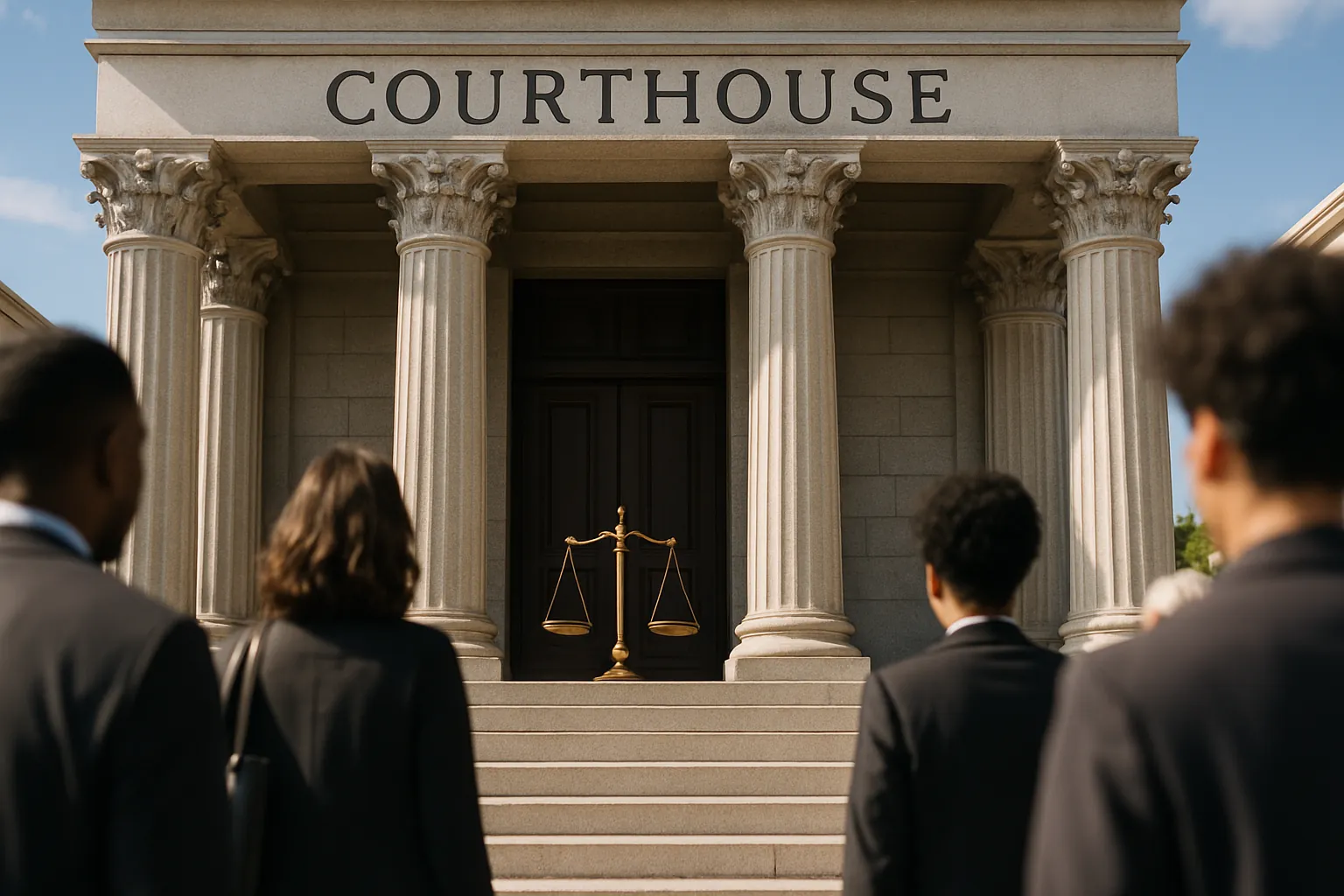
This week, the Supreme Court voted 7-2 to halt the Trump administration’s use of the Alien Enemies Act to deport a group of Venezuelan men, accused—without transparent process—of being gang members. At its core, the Court’s decision isn’t just a technical matter of legal procedure; it’s a principled stand for due process, resisting the temptation to let fear-driven expediency trample fundamental rights. The fact that the law at issue once facilitated mass internments of Japanese-Americans during WWII casts a long, sobering shadow over today’s debate. As Harvard Law historian Mary Dudziak notes, “The lessons of history tell us that unchecked executive power over immigration—especially under the guise of national security—inevitably leads to injustice.”
The White House, predictably, responded with fury. Trump railed against the “bad and dangerous day for America,” casting the Court as a cabal obstructing his quest for order and security. Yet, a closer look reveals something more profound: even a conservative-leaning Supreme Court has limits when the foundational principle of constitutional due process is at stake. As the American Civil Liberties Union has repeatedly warned, shortcuts in immigration enforcement—especially those using antiquated statutes—place vulnerable people at the mercy of unchecked authority.
The Human Cost: When Process Breaks Down
Peel back the rhetoric, and the story deepens. In Maryland, the tragic odyssey of Kilmar Abrego Garcia illustrates what’s at risk when government power goes largely unreviewed. Wrongly deported to El Salvador by an acknowledged administrative error, Garcia remains trapped in legal limbo. Federal judges, faced with repeated stonewalling by the Trump administration and vague responses—”I don’t know”—ordered disclosures about the case, fearing deliberate evasion of their orders.
This is no isolated episode. The administration invoked state secrets privilege, arguing that full disclosure about efforts to return Garcia would endanger national security and foreign relations. The legal maneuver, rarely invoked in immigration cases, has the practical effect of shutting down public scrutiny. But as Judge Paula Xinis bluntly observed, “The American system does not permit executive actors to simply declare something a secret and wash their hands of responsibility.” Have we learned nothing from the long arc of abuses excused in the name of secrecy—from COINTELPRO to the chilling echoes of Japanese internment?
If this administration’s actions demonstrate anything, it’s how easily due process and human dignity can be discarded when leaders cling to fear, nostalgia, and unchecked authority.
Garcia’s case isn’t just a bureaucratic slip—it is evidence of the profound difficulty in holding power to account, especially when that power invokes national security. Judge James Boasberg’s demand for documents relating to U.S.-El Salvador arrangements underlines how fragile the system of checks and balances feels when transparency is absent. And for every high-profile case, hundreds more likely unfold beyond the glare of media attention, reshaping lives without recourse.
The Politics of Fear Versus the Rule of Law
Why does this matter beyond a single presidency or batch of cases? The episode is a stark reminder: fear-driven policy, however well-marketed as “tough on crime” or “protecting Americans,” inevitably threatens the rights of the most vulnerable—and, in due course, the rights of all Americans. Policies justified through historical statutes like the Alien Enemies Act have a checkered history. According to a 2021 Pew Research Center analysis, public trust in government slips further when leaders exploit crisis powers in ways that subvert due process or transparency.
Leaving aside Trump’s social media tirades, the Supreme Court’s rebuke lands as a call for democratic resilience. It wasn’t a ruling on whether every migrant should prevail—it was a damning critique of the shortcutting of constitutional process. You don’t have to be a legal scholar to see the stakes: when executive muscle flexes unchecked, those who lose the most are the people least able to defend themselves. This truth reverberates well beyond the courtroom.
Beyond that, the Court’s decision implicitly asks us to reflect on which values define this era: will we allow historical anxieties and demagoguery to guide our approach to justice, or will we tether policy—immigration or otherwise—to the enduring precepts of fairness and human rights? Progressives have long argued that democracy’s strength is measured by how it treats those at society’s margins, especially during moments of national fear.
This moment should be a catalyst—not just for rethinking our immigration system, but for reinforcing the guardrails that keep American democracy vibrant. The rule of law can’t be the first casualty in the face of expediency or campaign season rhetoric. True security comes from institutions willing to check even the most powerful, and from leaders who recognize that justice is not a privilege reserved for a favored few, but the birthright of all who find themselves within this nation’s reach.
