
After Years of Silence, a Promise to Families
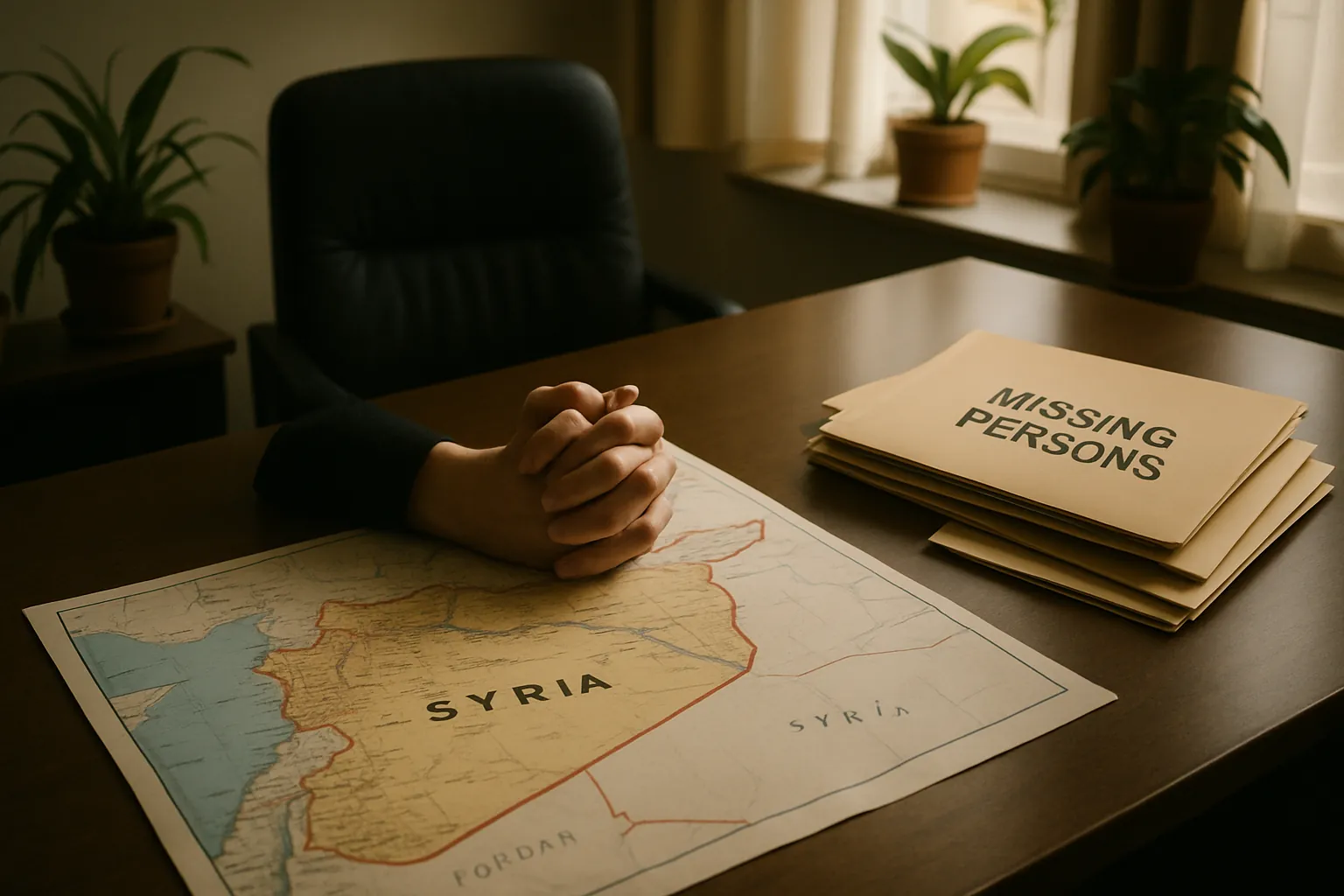
For more than a decade, the families of missing Americans have waited—held in the torturous limbo of uncertainty and hope. Human rights advocates, journalists, and everyday citizens taken amidst Syria’s brutal civil conflict vanished in the chaos of collapse, war, and repression. The world watched, year after year, as their loved ones pleaded for answers. Now, with the sudden fall of Bashar al-Assad’s regime and a rare diplomatic thaw, a dramatic breakthrough has emerged: Syria’s new government says it will actively assist the United States in locating and repatriating missing American citizens.
US Special Envoy Tom Barrack, speaking in Ankara, described the agreement as a “powerful step forward”—not simply for the cases of high-profile hostages like Austin Tice, Majd Kamalmaz, and Kayla Mueller, but for “all families who have suffered unending anguish.” For the first time in years, real diplomatic engagement is shaping the ground for families like Debra Tice, who traveled to Syria herself this January, refusing to surrender either hope or urgency in the search for her son, Austin. Her action is emblematic of the fierce, unyielding resolve that has characterized these campaigns for justice and truth.
Human Faces Behind the Headlines
Step back for a moment and reflect not just on the names, but on the lives disrupted: Austin Tice, a former Marine turned freelance journalist, was seized near Damascus in 2012. Investigators long believed he managed a brief escape weeks after his abduction, only to fall again into the regime’s grip. Reports about recovered remains recently stunned and agonized his family—claims later denied as false, reopening old wounds that never truly healed.
Kayla Mueller went to Syria seeking to help and bear witness. An aid worker lauded for her compassion, she was kidnapped by the so-called Islamic State, with her death in captivity still contested by American authorities. Majd Kamalmaz, a Syrian-American psychologist, disappeared in 2017 while treating refugees fleeing violence—his fate unresolved. These are visible cases, covered by the media, but beneath the headlines lies the chilling truth that, according to a Syrian source, at least “eleven other Syrian-Americans” are officially listed as missing by US authorities. Their families endure the same relentless uncertainty and helplessness.
“If we can bring home the missing—if even just one family finds peace—it will mean the world. Nothing heals until truth emerges from the darkness.”
Why has it taken this long? Conservative policies of isolation, heavy sanctions, and a posture of hardline non-engagement with Syrian officials under Assad did little to free the missing or uncover their fates. Instead, they closed backchannels, shut off diplomatic leverage, and, experts say, contributed to the misery of both Syrians and the families of American hostages. Jane Harman, former chair of the House Intelligence Committee, observed recently in The Atlantic, “If your only tool is a hammer, the world looks like nails. We have to remember that delicate, uncomfortable engagement is sometimes the only path to break logjams.”
From Policy Gridlock to Constructive Engagement
The end of US sanctions on Syria—a move some critics called premature—coincides with the new government’s commitment to fight cross-border crime and reshape its interior ministry. Skeptics worry that lifting sanctions will empower autocrats or reward bad behavior, yet as history repeatedly demonstrates, maximalist pressure alone seldom yields results. Often, it calcifies intransigence. Diplomacy, as evidenced in the Iranian nuclear talks and post-Cold War thawing in Eastern Europe, can nudge even the hardest regimes toward transparency and humanitarian cooperation.
A closer look reveals the stakes go beyond individual cases. Tom Barrack’s focus on reshaping the Syrian interior ministry underscores that the missing Americans represent only part of a broader regional crisis: the flow of refugees, rampant drug trafficking, and lingering instability all pose threats that can only be met through pragmatic, international cooperation. According to Amnesty International, “families of the disappeared—regardless of nationality—deserve more than empty gestures.” That is where progressives must draw the line: engagement is not an endorsement, but a moral obligation to secure answers, dignity, and a measure of justice for those caught in the crosswinds of politics and war.
Never forget that families like Debra Tice and the loved ones of Kamalmaz, Mueller, and countless unnamed victims are forced to navigate a system where politics holds their peace hostage: Closure for these families is a test of America’s commitment to human rights and diplomacy. There should be no confusion—true progress means facing horrors, reconciling with adversaries, and refusing to let fear or vengeance dictate policy.
Harvard’s Dr. Nadine El Sayed, an expert on hostage negotiations, warns policymakers against reducing these cases to “currency for diplomatic theater.” Instead, she urges, “We must make the search for the missing a humanitarian priority, using every viable avenue—including engagement with unsavory actors—if that’s what it takes to bring people home.”
The new willingness from Syria’s leadership gives the Biden administration and progressive lawmakers an opportunity—to prove that measured engagement and values-driven diplomacy can move mountains, even in a region scarred by mistrust and war. Those intent on closing diplomatic doors should look these families in the eye and explain why more years of silence, pain, and ambiguity might serve a greater good.
