
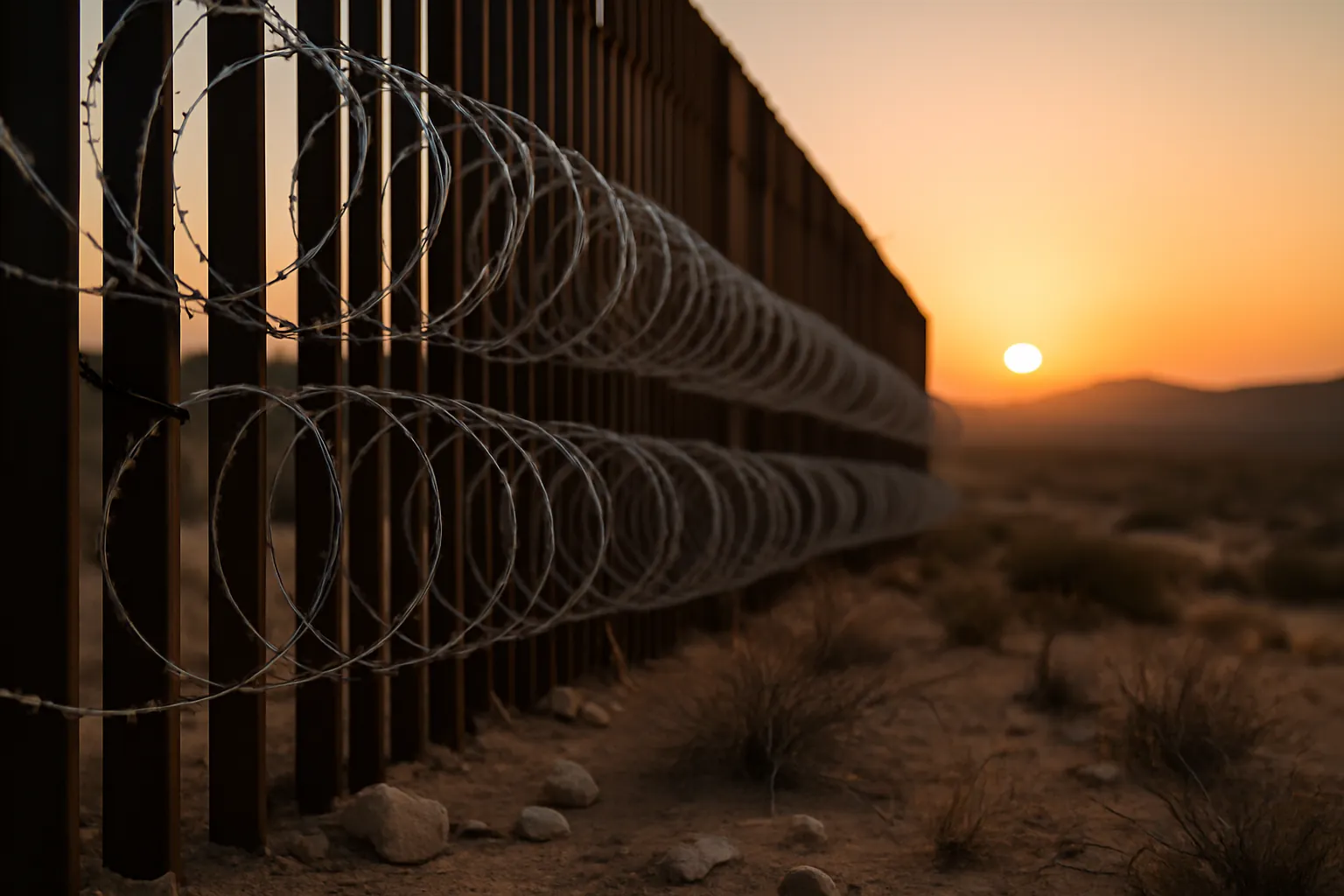
Straining the Boundaries: State vs. Federal Power on Immigration
In an unprecedented move shaking the country’s already volatile immigration debate, the full U.S. Fifth Circuit Court of Appeals has decided to rehear the case on Texas Senate Bill 4 (SB 4), a controversial law granting sweeping authority to Texas law enforcement to arrest and deport undocumented migrants. The stakes are enormous, not just for Texas but for the constitutional balance between federal and state power — an issue dating back over a century and reignited by today’s polarized discourse.
Passed by Republican lawmakers in late 2023 and championed by Governor Greg Abbott, SB 4 blurs the lines between state and federal jurisdictions. The law tasks state officials with enforcing duties traditionally reserved for federal agencies, including arresting individuals they merely suspect have entered the U.S. illegally, and—should a judge or magistrate deem probable cause—deporting them, often with minimal oversight. What’s new is not just Texas’s ambition, but its risky reimagining of the role of local police in federal law—a move that immigrant rights groups warn could set a perilous national precedent.
Governor Abbott and legislative allies consistently frame the measure as “necessary,” pointing to perceived failures in President Biden’s border enforcement and citing historic numbers of undocumented crossings. Yet at its heart, this law raises a pointed constitutional quandary: Is immigration enforcement the domain of Washington or the states? The answer, once considered settled law, is now cloudier than ever.
Legal Whiplash and Human Lives Upended
SB 4’s legal odyssey has been a rollercoaster of injunctions and reversals. After its passage and immediate challenge by civil rights groups and the U.S. Department of Justice, a federal district court ruled the law unconstitutional in early 2024, invoking the longstanding doctrine that immigration is a power vested in the federal government. A three-judge Fifth Circuit panel reinforced this conclusion in July, blocking Texas from implementing the law. Then, in March, the U.S. Supreme Court—by the narrowest 6-3 conservative-liberal split—permitted SB 4 to briefly take effect. But, within days, the Fifth Circuit intervened once more, reinstating the block. The result: continued uncertainty for law enforcement, migrants, and communities along the border.
Beyond that, the contentious nature of SB 4 has fueled widespread fear among Texas’s Hispanic and immigrant populations. Advocates warn of a chilling effect—a situation where law-abiding residents withdraw from public life, terrified that a routine traffic stop could end in deportation. The American Civil Liberties Union and other groups draw damning comparisons to Arizona’s infamous ‘show me your papers’ law, which the Supreme Court gutted in 2012 after evidence showed it encouraged racial profiling against Latinos regardless of citizenship status.
History provides a clear warning: When state and local officers are deputized for federal enforcement—absent the rigorous training and accountability of federal agencies—civil liberties can swiftly erode. Even if supporters tout the intent as targeting only unlawful crossers, the law’s text is broad and vague. According to University of Texas law professor Denise Gilman, “SB 4 gives extraordinary power to police officers to decide who looks like a migrant, with scant accountability if lines are crossed or mistakes are made.”
“When states are permitted to craft their own immigration regimes, chaos and confusion follow for families, local agencies, and the federal system itself.” — Migration Policy Institute analyst Muzaffar Chishti
What’s most striking? Despite clear constitutional dangers and the law’s dramatic human impact, the Texas GOP doubled down, seeking a full-court rehearing. Their gamble reflects a broader conservative effort to recast the federal-state relationship on immigration, and to stoke political pressure around border—and demographic—anxieties.
The Road Ahead: A Test of Democracy and Justice
The Fifth Circuit’s decision to grant a rehearing—effectively wiping out its own 2-1 panel ruling against SB 4—ushers in a period of deepening legal uncertainty for migrants and law enforcement alike. With a majority-conservative court now weighing the fate of the law, national eyes are fixed on a judiciary that has become a battleground for these profound constitutional questions.
What is at stake goes beyond headlines or partisan victories. The federal government’s exclusive authority to determine immigration policy—affirmed by precedents like Arizona v. United States—was designed to preserve national unity, protect civil rights, and prevent a patchwork of localist laws that threaten the very notion of equal protection. If states begin crafting their own enforcement regimes, observers worry the door will be open to a “race to the bottom,” where civil rights protections vary wildly by geography. The Supreme Court, after all, has repeatedly warned against this balkanization.
Yet the real impact isn’t only theoretical. For countless mixed-status families in Texas, every news cycle brings new panic. Children fear that a parent may never return home after a traffic stop. Essential community trust in police, already fragile, stands to be eroded further. Firsthand accounts from the border offer a sobering reminder: policies written in state capitols reverberate through the everyday realities of American neighborhoods.
Harvard immigration law scholar Gerald Neuman points out, “When political opportunism trumps settled law, it’s the vulnerable—refugees, families, and workers—who pay the steepest price.” The simple question remains: Is state-driven immigration law a just strategy, or does it cross lines Americans have drawn for good reason?
As the Fifth Circuit’s 17 judges begin their deliberations, the eyes of the nation—and the hopes of families—hang in the balance. Progressive voices argue that this moment demands more than legalistic debate; it’s a test of America’s core commitments to diversity, dignity, and justice for all.
