
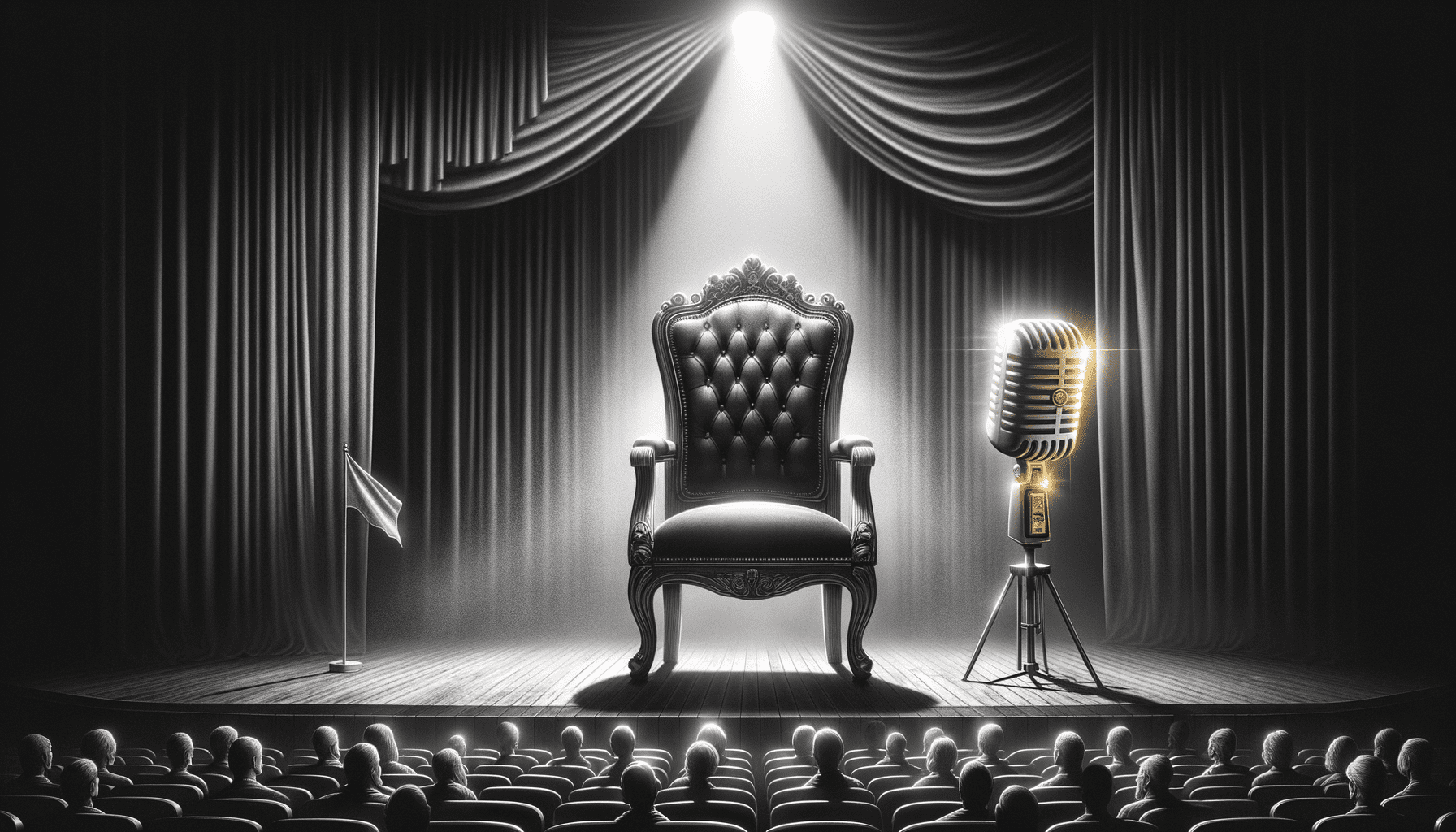
President Donald Trump has once again taken center stage, this time involving himself in a bold political maneuver that reshapes the illustrious Kennedy Center for the Performing Arts in Washington, D.C. Rooted in controversy, Trump’s intervention resonates with many who question whether his approach respects the solemn legacy of an institution historically defined by its bipartisan embrace.
Reshaping the Arts: Trump’s New Vision
For many arts advocates, Trump’s hand in ousting the arts venue’s former leadership seems intrusive, if not outright troubling. He replaced long-time president Deborah Rutter with Richard Grenell, known for his Republican affiliations and stints in diplomatic roles. Trump articulated a decisive, albeit dramatic change with his declaration on Truth Social: “Together, we will Make the Arts Great Again!” This declaration raises eyebrows, particularly among those deeply embedded in the arts community who are skeptical of the cultural objectives outlined by conservative policymakers.
History shows us that the Kennedy Center has functioned as a flagship for American artistic celebration since its establishment in 1971. Critics assert that Trump’s oversight risks politicizing a realm that ideally should remain above the political fray. What does this mean for the generations of artists who call the Kennedy Center a temple of their craft?
The varying structure of the board, now populated by 31 Trump-aligned figures, further highlights this shift. The addition of his chief of staff Susie Wiles, second lady Usha Vance, and Fox News anchor Laura Ingraham underscores a distinct deviation from traditional artistic leadership. Instead of figures renowned in arts and culture holding sway, political operatives are at the helm. Are we witnessing a return to political patronage, substituting artistic meritocracy with partisanship?
Financial Struggles and New Directives
Before Trump’s intervention, Grenell reported a lack of financial reserves at the Kennedy Center—a point leveraged by Trump to justify his unprecedented move. Declaring while aboard Air Force One that they must “straighten it out,” Trump presented his formula for change as essential for financial reclamation. Yet, is this approach too politically motivated to address the fundamental fiscal issues?
While financial rescue plans can be meritorious, the concern lies in their application. The potential replacement of objective financial strategy with partisan objectives might not only undermine current stewardship but could detract from the Kennedy Center’s essential mission to foster cultural enrichment for all. As celebrities and performers cancel shows in protest, the impact of this leadership shift extends beyond the center’s fiscal health, permeating its artistic credibility and cultural relevance.
What does it take to balance fiscal sustainability with artistic purity? Trump’s strategy must answer this question, ideally with fewer politically-motivated strings attached.
The Broader Cultural Implications
In distinct contrast to the Kennedy Center’s mission—to cultivate American arts in a space democratized for public participation—Trump’s redirection carries possible consequences for its future. Highlighting this was the reaction to Vice-President JD Vance being met with audience boos amid the political tensions—a mirrored rebuke of the broader sentiment felt by some in the arts community.
Much like the challenging early years of the Kennedy Center—a time marked by debates and political squabbles—the hope for a rescue lies in a nonpartisan commitment to its mission. Direct interventions by any political entity, especially those skirting traditional roles, could jeopardize an institution’s ability to remain a neutral lap for artistic thought and expression.
“The arts cannot be great when they are reduced to political chess pieces,” an attendee remarked at a recent Kennedy event. Is there truth in this? Trump’s recent moves expose the tension between political influence and cultural autonomy. His quest to showcase an American “Golden Age” within the arts must grapple with these conflicts.
America’s history is marked by rich artistic narratives born out of struggle and evolution—stories that transcend simple policy and governmental sway. To align the Kennedy Center with this history, Trump’s leadership will need a canvas painted with a respect for voices across the cultural spectrum, rather than a monochromatic, partisan lens.
Residing as mere spectators or actors on this stage of change, we must ask ourselves if this new direction cherishes the collective voice or diminishes it under the weight of partisan endeavor. Are we, perhaps, witnessing only the first act of a performance that is yet to articulate its climax?
Reflecting on Trump’s sweeping changes provokes more questions than answers, illuminating broader themes of power, culture, and public stewardship. Now, as the curtain rises on this new era of the Kennedy Center, audiences await, hopeful yet wary, pondering how this storied institution will navigate the storm.
