
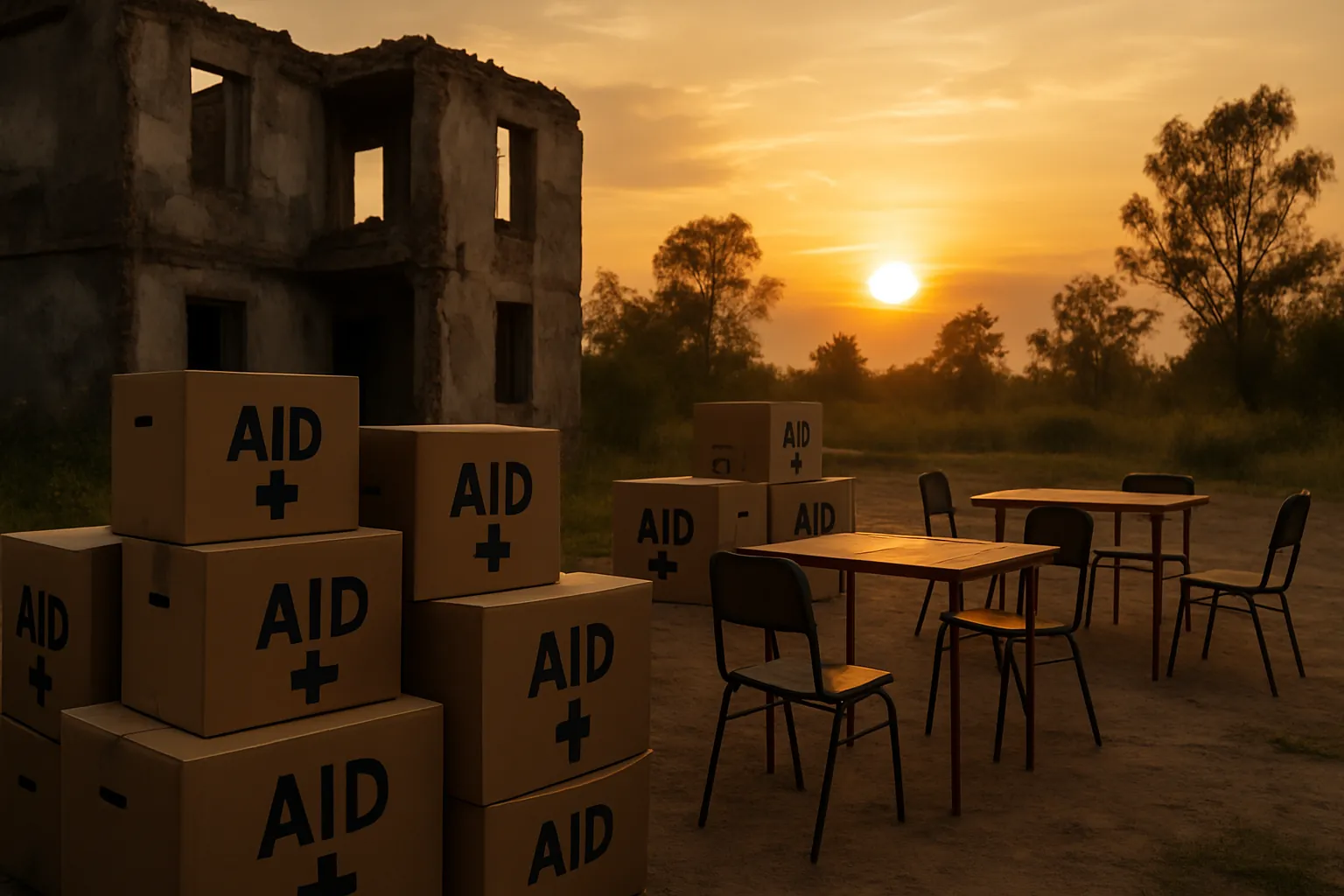
Scenes of Desperation: When Help Becomes Hazardous
One might expect food aid distribution sites to be a sanctuary—a lifeline amid chaos, not a scene of carnage. Yet, for many Palestinians in southern Gaza, the journey to receive rations is increasingly fraught with lethal risk. Over the past two weeks, more than 80 people have died and dozens more have been wounded near distribution points, according to local health authorities and repeated eyewitness accounts. Most recently, at least five Palestinians were killed near Gaza aid sites, fueling outrage and a sense of betrayal within a population already traumatized by war and deprivation.
In the landscape of Gaza’s humanitarian crisis, the Gaza Humanitarian Foundation (GHF) has emerged as a central player—one backed by Israel and the United States yet dogged by controversy. The GHF claims it has distributed over one million meals, but detractors point to the violence that seems inevitable wherever aid queues form. In Rafah and Khan Younis, men and women recounted hoping for food and safety, only to find themselves amid gunfire. Official Israeli statements describe warning shots at crowds deemed threatening, typically at night when, according to the army, areas become “active combat zones.” But survivors insist they complied with every directive—many were within the designated daylight hours.
“It feels like a trap,” said one resident in central Gaza who lost a cousin during an aid run—a perspective echoed by many across social media and local coverage. As distribution points become choke points, their very existence now raises the specter of further violence rather than hope.
Conflicting Accounts and Mounting Distrust
A closer look reveals a widening gulf between official narratives and on-the-ground reality. The Israeli military insists incidents occur because individuals approach forces in closed military zones, ignoring both posted warnings and verbal commands. Yet, GHF spokespersons maintain their sites themselves have not been scenes of violence, insisting that all fatal encounters have transpired outside officially sanctioned routes or during hours when the area is strictly off limits.
This bureaucratic parsing offers little comfort to the families of the dead. Desperation in Gaza has reached such a pitch that distinctions about access routes or opening hours mean little: hunger will not wait. Global advocacy groups, including Human Rights Watch and Oxfam, have sharply criticized the procedures around aid dispersal, contending that Israel’s restrictions and security measures are so stringent that they render humanitarian relief both insufficient and unsafe. According to UNRWA, Gaza’s lead relief agency, forced relocation to these sites by the occupying power may itself violate international humanitarian law.
Some Palestinians accuse the GHF of complicity in a broader agenda to depopulate parts of Gaza and undermine existing civil infrastructures—a charge reinforced by statements from Palestinian Resistance Factions, who warned that cooperation with Israeli- and US-backed aid operations could make individuals targets. A joint statement from the factions accused Israel of using aid as a “weapon of control and displacement,” echoing historic patterns seen in conflicts where humanitarian aid has been used to manipulate population movements.
“It feels like a trap. We came for bread and returned with funerals,” said Amal, a mother of three who described scrambling for cover next to a distribution truck as gunfire erupted in the supposed safety of daylight.
Beyond that, critics argue the GHF’s operations, lacking transparency and robust oversight from neutral bodies like the UN, worsen tensions and breed mistrust. As Harvard’s Sara Roy, an expert on Gaza’s economy and civil society, has noted, “Achievement of food distribution under military control rarely produces feelings of safety or transparency; it more often signals the breakdown of lawful humanitarian guarantees.”
The Bruising Politics of Humanitarian Access
Behind the headlines, the latest bloodshed at Gaza’s aid sites exposes a profound crisis of accountability and the persistent weaponization of humanitarian needs. Israel and its allies cast blame on Hamas, alleging systematic diversion of food and resources; UN agencies counter that aid theft is not pervasive and point to the chokehold of Israeli restrictions as the main obstacle. As international agencies wrangle over mandates, ordinary Gazans are left to navigate a hazard-strewn gauntlet for survival.
Humanitarian corridors have long posed both logistical and ethical dilemmas during wartime. Recall similar crises during the Balkan conflicts of the 1990s, where UN-protected zones repeatedly failed to shield civilians from violence, resulting in international outcry and damning reviews of Western aid strategies. Today, Gaza’s aid drama carries haunting echoes of those failures. The peril at aid points demands not just urgent logistics but political courage: to wrest control from belligerents and empower neutral actors, mainly the United Nations, to oversee distribution.
A solution may seem simple—safe, monitored aid sites, clearly outside combat zones, managed transparently by the UN. Yet such a model faces resistance from states that see strategic value in controlling food, hunger, and movement. Until that changes, every bag of flour or meal distributed under current arrangements risks not just failing to heal but deepening wounds. International legal principles, such as those enshrined in the Fourth Geneva Convention, mandate the protection of civilians and the impartial delivery of aid. Failing this, the world watches—again—as policy missteps turn hope into tragedy on an almost industrial scale.
For those who would see humanitarianism as more than a talking point, the call is clear: the global community must demand a framework rooted in accountability, dignity, and civilian protection. No meal, no matter how needed, should come at the price of another life lost needlessly in crossfire.
