
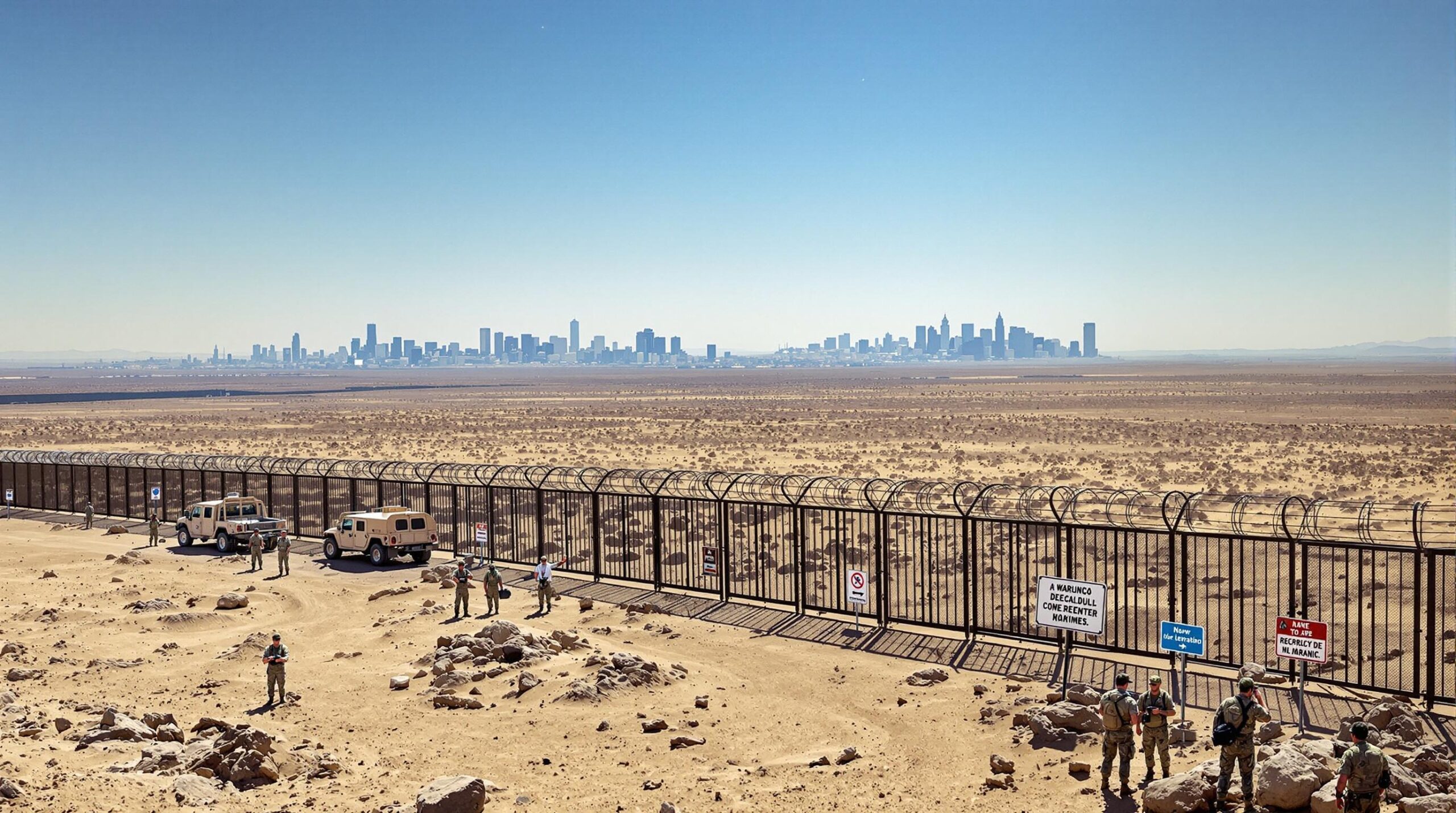
As the nation engages fervently in debates around immigration policy, recent revelations about the Trump administration’s potential plans to establish a military-controlled buffer zone along the U.S.-Mexico border have sparked a storm of both political and legal controversy.
The core of President Trump’s immigration platform has long revolved around intensified border security. However, the administration’s latest prospective approach—a buffer zone controlled by active-duty military—represents an unprecedented escalation. This provocative idea, aimed supposedly at curtailing illegal crossings, proposes deploying U.S. troops to “hold” migrants within a newly created area reaching from west Texas across New Mexico all the way to the Pacific Ocean in Southern California.
Questioning the Legality of Military Deployment
Central to the debate is the Posse Comitatus Act of 1878, a critical statute that prohibits the military from engaging in domestic law enforcement activities. Historically designed to prevent armed forces from becoming a politicized domestic police force, this Act is now under scrutiny as the administration pushes the boundaries of executive authority.
Experts and legal analysts have highlighted troubling echoes of past policy missteps. “This isn’t the first time Trump tested the limits of military involvement,” observed one senior Pentagon official, who requested to remain anonymous. “Potentially holding migrants on military-controlled territory skirts a fine, dangerous line. Utilizing military resources for essentially civilian immigration issues opens the door for troubling precedents.”
The Pentagon, cautious of legal repercussions, is taking care to frame these military roles as “holding” migrants rather than “detaining” them to sidestep accusations of violating Posse Comitatus. But such semantic maneuvers raise ethical questions and do little to assuage apprehensions about military overreach into civilian affairs.
The Financial and Ethical Costs
A substantial portion of an $800 billion Pentagon budget could potentially be directed toward this militarized approach to border security. While proponents argue this expensive measure will bolster national safety, opponents criticize the allocation as excessive, ineffective, and riddled with ethical dilemmas.
For many, the administration’s eagerness to allocate nearly unlimited funding to militarizing the border contrasts sharply with perceived hesitance to fund educational programs, healthcare, infrastructure, and social services critical to addressing systemic roots of migration.
Furthermore, citizens and officials alike express worry regarding human rights implications. History reminds us of grim episodes—like the internment of Japanese-Americans during World War II—that caution against military entanglements in domestic detentions. The living conditions, oversight standards, and accountability measures for these proposed holding zones remain disturbingly unclear.
“We should be wary of permitting our military to become a police force for immigration,” said Sylvia Martinez, founder of a border human rights organization. “The moral cost far surpasses financial calculations. Historically, militarization within humanitarian spaces has led to abuses, suffering, and lasting scars on our national conscience.”
Echoes of Past Resistance Within Military Circles
Internal opposition within the Pentagon has emerged before, notably from former Defense Secretary Jim Mattis, who asserted during prior attempts at border militarization that the military should not engage in “stunts” or politicized deployments. Mattis’s early and unequivocal rejection of similar proposals emphasized upholding military ethics against perceived abuses of power for political spectacle.
The current proposition has already reportedly faced pushback within the Pentagon. Senior military leaders, committed to preserving the non-political status of the armed forces, appear wary of the proposal, insisting official deployments must remain rigorously non-partisan and compliant with established legal frameworks.
Citizen activists and human rights organizations have been quick to express alarm, mobilizing efforts intending to check the administration’s proposed actions. Such advocacy highlights continuing national concerns, reflecting broader dismay surrounding Trump administration migrations policies long perceived by critics as unempathetic, draconian, and often legally questionable.
Amid the debate, the administration’s ships seem to sail onward—carefully but determinedly navigating toward implementation despite resistance and controversy. This particular push underscores ongoing tensions between the administration’s aggressive immigration stance and fundamental American principles of empathy, humanitarianism, and adherence to rule-of-law standards.
The outcome remains uncertain, and the battle lines over America’s immigration future increasingly stark. As policy disagreements grow sharper, one thing appears evident: Stakes over border security policy decisions have never been higher for the nation’s civic conscience and collective identity.
