
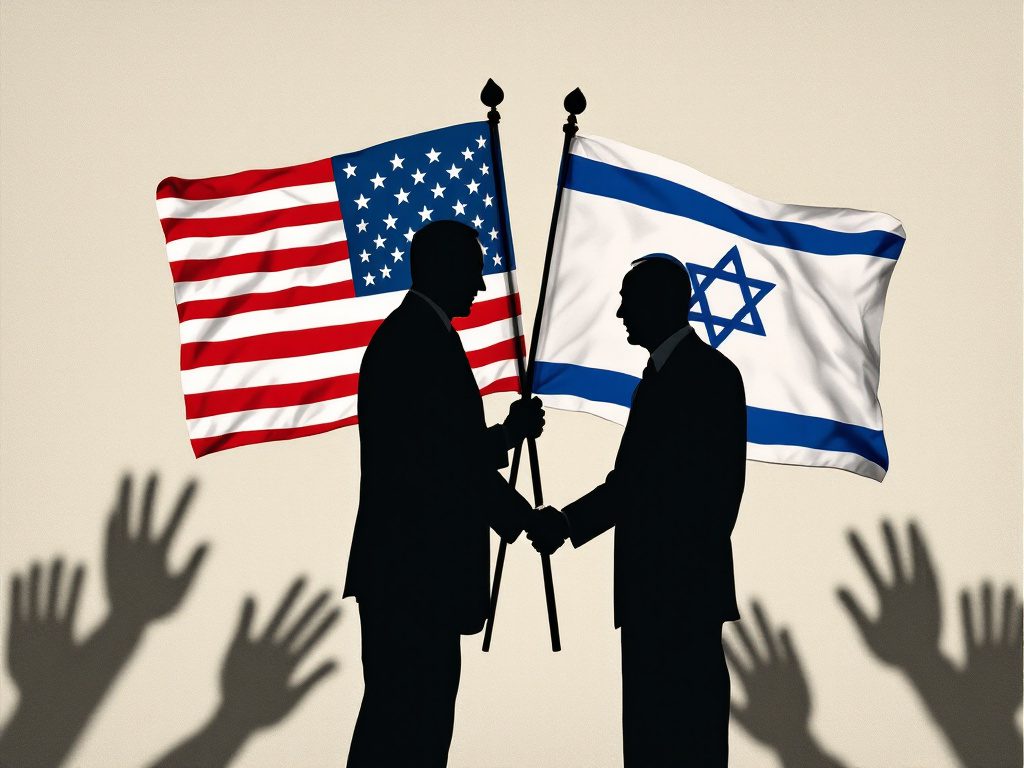
The Choreographed Dance of Alignments: Trump, Netanyahu, and Selective Solidarity
Imagine you’re a family member of one of the 59 hostages still held by Hamas. News breaks that Donald Trump, the former U.S. president and a likely Republican nominee, has spoken directly with Israeli Prime Minister Benjamin Netanyahu. With regional tensions white-hot and world leaders watching, you listen for mention of those left behind in Gaza. Instead—all you hear is a triumphal chorus around trade, Iran, and diplomatic alignment. No word for those desperately waiting for release.
This glaring omission isn’t just a matter of diplomatic oversight. It points to a deeper problem with conservative foreign policy, where rhetorical unity often overshadows urgent human needs. When Trump resurfaced onto the international stage—boasting of complete alignment with Netanyahu on “every issue” after their call—he painted a picture of unwavering U.S.-Israel partnership. The message: no daylight between two embattled leaders, both facing reelection pressures and local hardliner constituencies.
According to a Pew Research study from 2023, American public opinion on Middle East policy is increasingly split along partisan lines. While a large segment of Republican voters regard the U.S.-Israel alliance as sacrosanct, Democratic voters—and independents—see the dilemma as more complicated: support for Israel must be balanced with calls for humanitarian action, human rights, and an honest reckoning with the region’s shifting realities.
The Iran Dilemma: Déjà Vu With a Twist
For those who followed the Obama administration’s painstaking orchestration of the 2015 Iran nuclear agreement, the current situation unfolds like an unwelcome rerun. Netanyahu has long decried any negotiation with Tehran that allows Iran to retain even vestiges of its nuclear infrastructure, while Trump has made swings—from extreme saber-rattling to sudden openness to a restarted deal under his administration, provided there’s tight scrutiny on uranium enrichment.
This muddled stance underscores how easily partisan posturing substitutes for pragmatic security solutions. Harvard political scientist Shibley Telhami observes, “Every time the U.S. returns to the Iran question, it becomes a Rorschach test for American credibility in the region—and too often, that credibility is sacrificed to rhetorical bravado rather than steady diplomacy.”
Beyond that, both Trump and Netanyahu have mastered the art of public unity for domestic consumption, what some Israeli analysts call “cosmetic consensus.” Trump’s Truth Social post, boasting of shared purpose, ticks every box for his electoral base: strong on Iran, tough on trade, unwavering on Israel. What goes conspicuously unmentioned? The fragile negotiations that might end the suffering for both Israeli hostages and countless Gazan civilians. As historians like Michael Oren, a former Israeli ambassador to the U.S., caution, “These kinds of statements play well to certain voters, but they do not actually resolve the security dilemmas facing Israel.”
“When leaders only spotlight the issues they agree on, they ignore the people swept under the rug. Real diplomacy requires confronting difficult realities, not just repeating talking points.”
Hostages, Hardliners, and the Erosion of Empathy
For families like Lishi Miran-Levi’s, who lost contact with their loved ones after the October 7 attacks, the deafening silence from both Trump and Netanyahu on hostage diplomacy stings as a profound betrayal. In the aftermath of the call, Miran-Levi urged Israeli citizens to join visible acts of solidarity during Independence Day—a poignant contrast to the transactional language of power wielded by the two political leaders.
This isn’t a mere matter of protocol. The Biden administration and European allies have repeatedly argued that the truest measure of leadership lies not in rhetorical solidarity, but in moral courage to address the suffering of innocents. According to a 2024 survey by the International Crisis Group, public trust in both U.S. and Israeli leadership is eroding, especially on issues involving hostages and proportional response.
Why do conservative leaders persist in sidelining these human stakes? A closer look reveals that their calculus is dictated by hardline supporters and the optics of “decisiveness.” As members of Israel’s national security cabinet argue for a “decisive phase”—some urging mass mobilization and escalation in Gaza—progressive voices are pushing back harder. Veteran peace activist Avner Gvaryahu notes, “If policy is written only for the loudest in the room, we risk repeating history’s darkest mistakes.” The lessons of past Middle East negotiations, from Camp David to Oslo, show that deals conceived without empathy for all sides often collapse under the weight of their own exclusions.
American Stakes: The Crossroads of Values and Interests
It’s easy to equate strong U.S.-Israel relations with uncritical consensus. Yet, the real strength of a democratic alliance comes from honest, sometimes uncomfortable, conversations. With the world more interconnected than ever, progressive foreign policy thinkers argue that unwavering alignment at the expense of humanitarian values weakens long-term U.S. credibility and influence. Princeton’s Amaney Jamal writes: “Solidarity with Israel matters, but so do universal principles—especially when the eyes of the world are on us.”
So when Trump claims he and Netanyahu are “on the same side of every issue,” the applause rings hollow for anyone who believes America’s role isn’t just to reinforce power, but to demand justice. Voices from both sides of the Atlantic are increasingly challenging leaders to broaden the definition of what counts as a “key issue.” For many, those left unspoken—the hostages, the civilian casualties, the battered dreams of peace—are the most urgent issues of all.
