
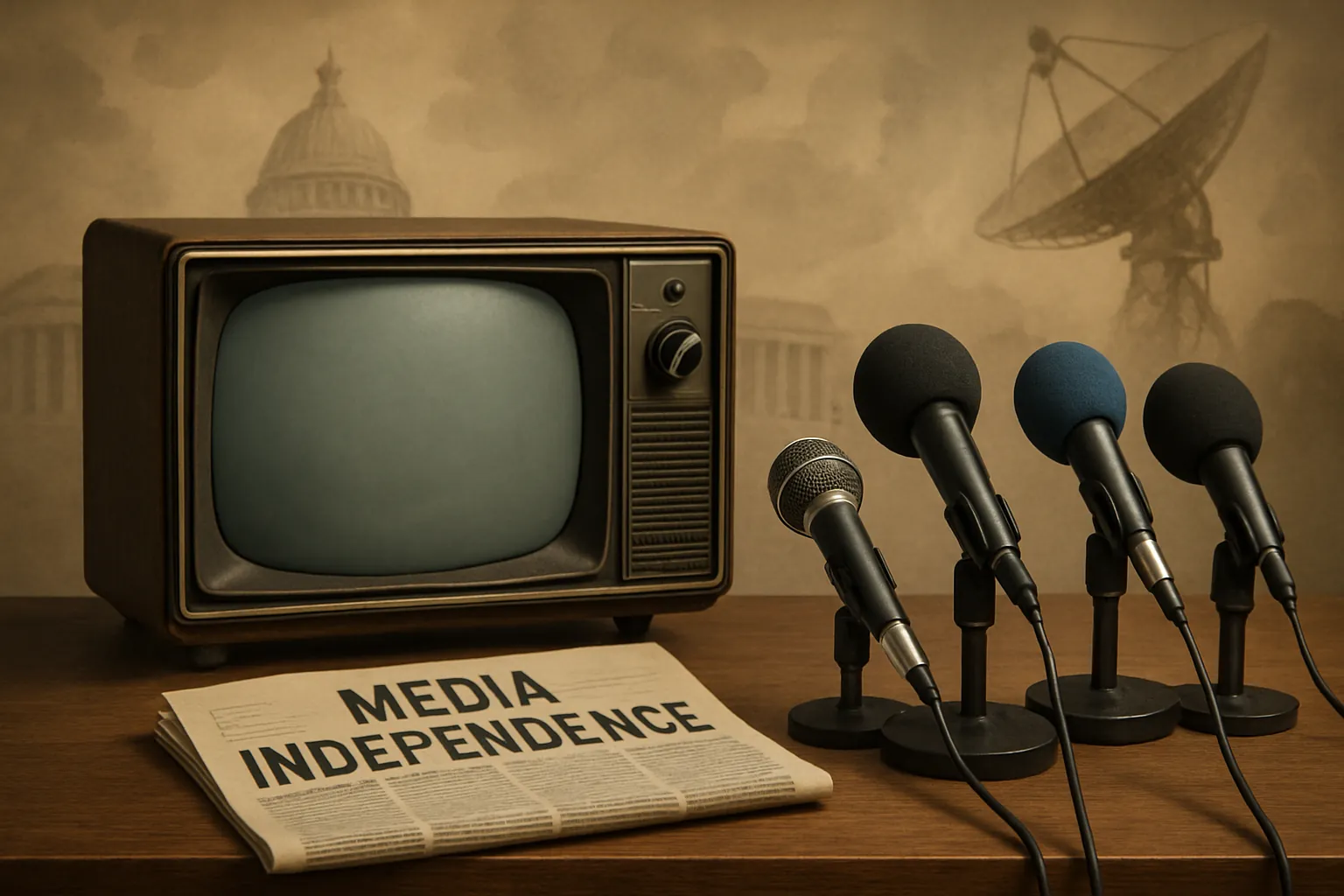
FCC Power Shift: A Catalyst for Deregulation and Controversy
It all changed with a single Senate vote. In a swift and deeply consequential decision, the U.S. Senate confirmed Olivia Trusty as Commissioner of the Federal Communications Commission (FCC) by a 53-45 margin, breaking a month-long deadlock at the powerful agency. The confirmation saw Republican Nathan Simington’s recent departure swiftly replaced, thanks to an expedited process led by Senate Majority Leader John Thune. Now, with Trusty’s swearing-in imminent, Republicans seize a 2-1 majority and emboldened FCC Chairman Brendan Carr stands ready to implement a long-awaited deregulatory crusade.
This development portends a new era for America’s airwaves and digital frontiers—one in which the independence of the FCC has rarely felt more precarious.
Chairman Carr’s agenda is neither obscure nor modest. Proposals to accelerate broadcast deregulation, scrutinize and even investigate major news outlets, and bless a new wave of multibillion-dollar media mergers were previously stymied by the deadlocked commission. According to policy experts at Free Press Action, this new balance gives Carr and his allies carte blanche to advance measures that critics warn could undermine press freedom and favor corporate consolidation at the expense of diverse, local, and independent voices.
Democrat John Fetterman’s surprise vote alongside Republicans underscores the political complexity of this shift. The vote fell largely along party lines, yet the ramifications extend beyond straightforward partisan battles, threatening the very principles that have long underpinned the FCC’s status as an independent, nonpartisan regulator.
Who is Olivia Trusty? Experience Meets Political Reality
A closer look at Trusty’s background reveals both impressive credentials and the outsized influence of Capitol Hill politics. Her years spent as a top aide for Republican Senators Roger Wicker and Bob Latta shaped her formidable grasp on communications law and policy. Trade groups like NCTA and the National Association of Broadcasters were quick to herald Trusty’s appointment, characterizing her as a pragmatic and knowledgeable leader poised to “expand access to spectrum and foster broadband investment.” Her Capitol Hill tenure, they claim, makes her uniquely qualified to navigate today’s technologically intense regulatory challenges.
But underneath the bipartisan platitudes, there’s no mistaking the ideological stakes. Trusty’s confirmation marks the first time since Trump’s original term that the FCC’s majority will be able to pursue his deeply conservative vision unimpeded. Chair Carr’s recent rhetoric on media “censorship” and focus on rooting out so-called “bias” in newsrooms indicates a willingness to wield regulatory authority in ways progressives fear could chill editorial independence and, paradoxically, threaten cherished First Amendment values.
Free Press Action, a leading public interest watchdog, did not mince words in its post-confirmation statement: “Commissioner Trusty must now decide whether her allegiance lies with the American public or a White House bent on silencing criticism and undermining media accountability. The fate of open, factual, diverse media hangs in the balance.”
Historically, the FCC—an agency founded to insulate American communications from raw political control—has prided itself on ensuring competition, fair access, and the protection of local voices. The Trusty confirmation, however, pulls the agency into uncharted territory, risking not just industry transformation but a potential erosion of democratic norms at the heart of U.S. media oversight.
The Policy Stakes: Deregulation, Mergers, and a Chilling Effect
Big questions now loom: What specific changes are on the horizon, and how will they affect the information ecosystem you rely on?
Chairman Carr, with Trusty’s support, is poised to finally green-light a series of blockbuster transactions—deals like Skydance Media’s merger with Paramount Global, Charter’s tie-up with Cox, AT&T’s consolidation with Lumen, and T-Mobile’s acquisition of UScellular. These aren’t mere business matters; they could fundamentally reshape access, competition, and the diversity of viewpoints in American media.
“Every time the FCC tips the scale in favor of corporate consolidation, local journalism suffers and news deserts expand,” warns Harvard media scholar Dr. Sarah Doyle. She points to research from the Pew Research Center indicating a 36% drop in newsroom employment over the past decade as a direct result of mergers and cost-cutting fueled by deregulation.
Beyond that, Carr’s stated desire to investigate newsrooms for alleged “censorship” or “political bias” sets a dangerous precedent. Legal experts argue that such moves—rare in modern American history—risk weaponizing regulatory powers to reward allies and intimidate adversaries. Remember the Red Scare of the 1950s, when McCarthyism led to government blacklists of media figures and writers? The fear is that history may not repeat, but it certainly rhymes, as government scrutiny once again targets those who dare criticize powerful interests.
“This is not a fight about procedural rules or technicalities. It’s about the soul of American democracy. A free press cannot survive if those in power stack the deck to silence dissent and concentrate control in the hands of a well-connected few.”
Public interest groups aren’t the only ones concerned. Private sector innovation itself could suffer when a handful of companies control the broadband, airwaves, and content delivery that power American life. As Stanford law professor Jennifer Urban notes, “Open networks depend on robust, independent oversight. The more partisan the FCC becomes, the less likely we’ll see the sort of neutral, consumer-focused policymaking needed to bridge the digital divide.”
So where does this leave ordinary Americans? With the FCC’s new majority in place, everything from your broadband bills to the variety of local news available in your community is at stake. A regulatory agency originally designed to be the public’s bulwark against monopoly and censorship now risks becoming a tool of those very forces.
The fight for the FCC’s soul is not over—it’s only just begun. For progressives, the challenge is steep, but not insurmountable: vigilant oversight, public advocacy, and relentless pressure on lawmakers remain essential to ensuring America’s digital future serves the many, not just the privileged few at the top.
