
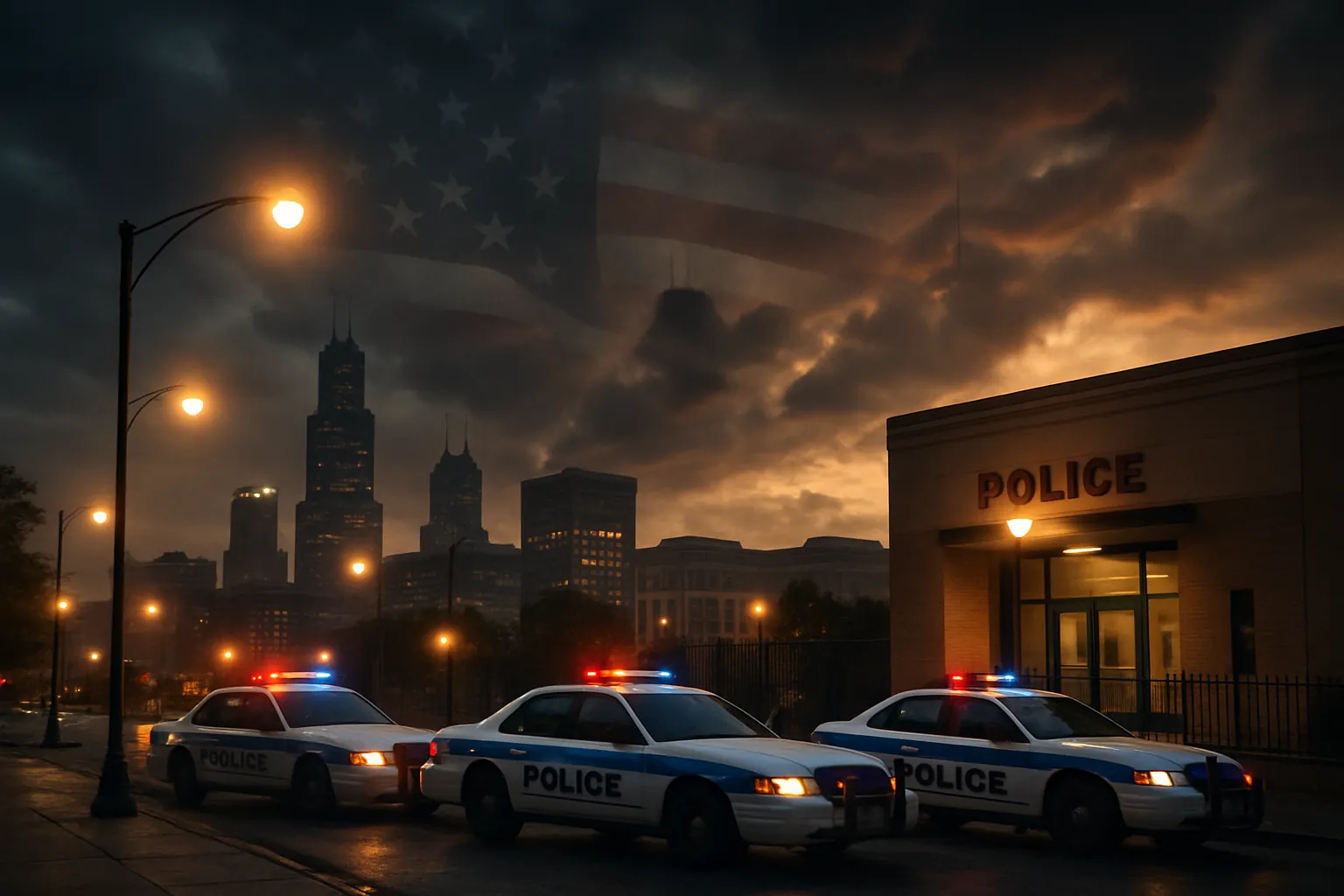
Fighting Over Chicago: Crime, Politics, and Presidential Power
Chicago’s crime has become a political battleground once more, thrust onto the national stage not by tragedy alone, but by the latest round of political theater between former President Donald Trump and Illinois Governor J.B. Pritzker. Over a single weekend, as six lives were tragically lost and over two dozen more wounded, Trump seized the moment—not to unite a grieving city, but to launch a series of caustic attacks and warnings. As he declared, “We’re coming!” conservative America was treated to the familiar campaign refrain that ‘only federal muscle can save America’s cities.’
A closer look reveals deep divides in approaches to law enforcement and civil liberties, with implications that reach far beyond city limits. Governor Pritzker, buoyed by improving crime statistics and vocal city leadership, hit back: “We want real solutions, not authoritarian threats.” This conflict isn’t merely a personal spat; it’s a fundamental debate about how much power the federal government should wield over local issues, and what kind of America we want to be.
Statistics vs. Sensationalism: What’s Really Happening to Crime in Chicago?
You’ve no doubt heard the headlines: Chicago is under siege, chaos reigns, and only a heavy federal hand can beat back the tide. But let’s place the rhetoric under the glare of reality. Despite Trump’s dire warnings, official Chicago Police Department figures paint a sharply different portrait. Year-to-date, homicides have fallen 32.3%, and violent crime overall has dropped 21.6%, according to data cited by city officials. These aren’t small improvements. They’re the direct result, Mayor Brandon Johnson argues, of investments in youth employment, mental health services, and affordable housing—measures famously eschewed by hardline conservatives who favor more police, harsher sentences, and a militant posture toward crime and protest alike.
Why, then, does the myth of a crime-ravaged Chicago endure—especially in conservative talking points? According to Dr. Cedric Alexander, a veteran law enforcement leader and criminologist, “Crime statistics have always been weaponized for politics, especially when they fit popular narratives that drive division.” Political opportunists focus on singular, horrific weekends, amplifying fear while ignoring broader positive trends. As Alexander points out, “No city in America is free from violent weekends, but punishing entire communities or threatening their local autonomy runs counter to decades of policing best practices.”
“Deploying federal troops as a first response, instead of as a last resort, fundamentally reshapes our democracy—and not for the better.” — Professor Lisa Monaco, NYU Law, in a 2023 interview
Paired with these data are the actions of local leaders: Mayor Johnson recently signed an executive order walling off city cooperation with federal immigration agents and requiring any federal officers in Chicago to wear body cameras and prominent identification. This bold move, met with both praise from civil rights groups and condemnation from the White House, aims to ensure transparency and protect Chicago’s immigrant communities from sudden sweeps or overreach—a stance experts consider not only principled, but effective at building trust between police and the neighborhoods they serve.
The battle over Chicago is, at its core, a test of values: Should we double down on militarized policing and federal crackdowns, or invest in the social fabric of our communities to truly prevent crime at its roots?
Who Really Decides? The Limits of Federal Power and the Politics of Threats
Beyond the crime numbers and Twitter tirades, the heart of this showdown is constitutional: Does the President have the right to federalize local law enforcement at will, or can cities and states defend their own approach, especially if it’s showing results? Scholars like Harvard’s Martha Minow remind us that “local control is a bedrock of American federalism,” and that the Supreme Court has repeatedly affirmed limits on federal intervention, except in the rarest circumstances—namely, when civil rights are directly threatened and local authorities refuse to protect citizens.
Trump’s recent boasts about his earlier moves in Washington, D.C.—where he invoked Section 740 of the Home Rule Act to take command of the Metropolitan Police and deployed National Guard units—provide an instructive parallel. While some point to temporary declines in violent crime, others, including the American Civil Liberties Union, call such action “a dangerous overreach that risks chilling lawful protest and blurring vital lines of authority.” When it comes to Chicago, Trump’s threats to repeat this playbook have, thus far, been met by a united Democratic front drawing a constitutional red line.
There’s also the crude personal edge: Trump has mocked Pritzker’s recent weight loss, speculating about presidential ambitions for 2028—a calculated distraction that speaks volumes about this era’s political discourse. Pritzker, Johnson, and their allies are right to dismiss such jabs as unserious, focusing instead on the practical work of building safer communities through economic and social policy. “The true test,” says Dr. Rebecca Lopez, director of the Urban Policy Institute, “is whether we invest with compassion and data, or double down on failed policing dogma.”
Plans by federal officials to utilize Chicago’s Great Lakes Naval Station for logistical support during potential operations have ignited anxieties among civil rights activists and local leaders, who remember the disastrous deployment of troops during Black Lives Matter protests in 2020. Memories linger of crackdowns that did more to inflame tensions than to heal neighborhoods or curb violence.
The Choice Before Us: Authoritarian Muscle or Community Investment?
For progressive readers who have watched these stories unfold for decades, the lessons remain urgent. Reactive, militarized interventions might generate short-term headlines and satisfy a base hungry for action, but history—and rigorous social science research—show they rarely provide sustainable safety. Real change comes from community buy-in, smart prevention, and tackling the root causes of violence—poverty, trauma, and structural inequality.
Which story do you choose to believe? That America’s cities are lost unless rescued by a show of force out of Washington—or that local innovation, guided by progressive policy, is already proving what works? If the current downward trend in Chicago’s homicides and violent crime holds, it’s not just a rebuke to Trump’s rhetoric. It’s evidence that solutions grounded in justice, equity, and compassion can, in fact, lead the way.
Chicago’s struggle is America’s struggle, and the answer will come not from outside threats, but from our collective commitment to democracy, fair policing, and the work of healing our communities—together.
