
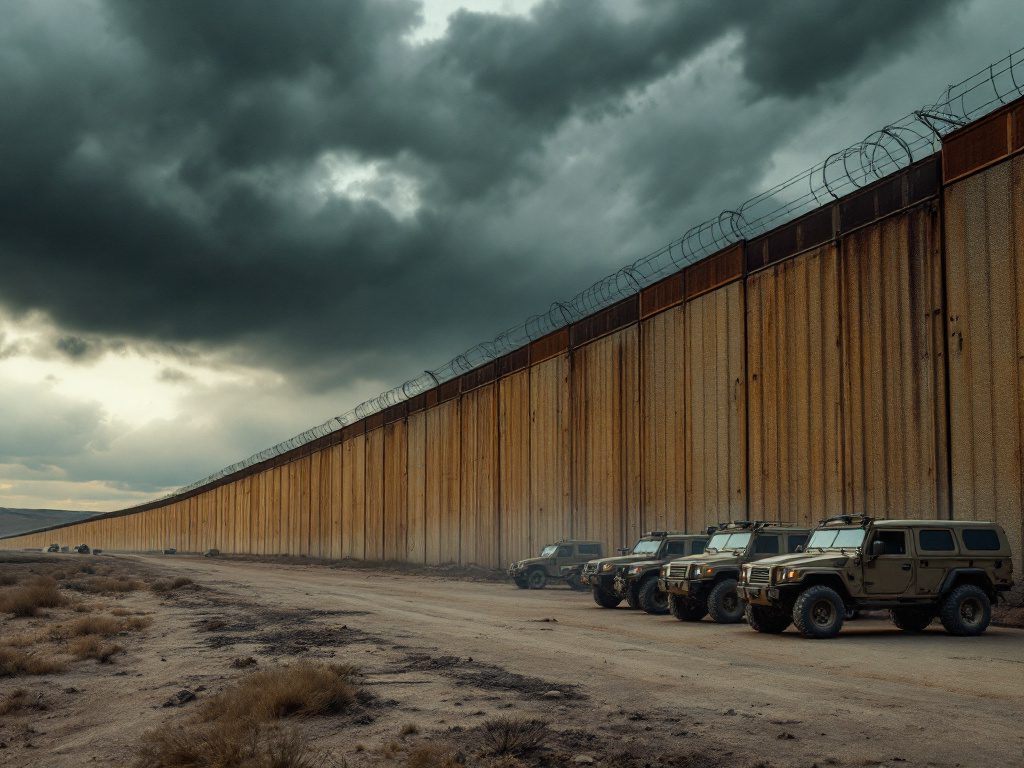
Late last Friday, a new directive from President Donald Trump amplified the military’s role in his escalating quest for tighter immigration control. The memorandum, provocatively entitled “Military Mission for Sealing the Southern Border of the United States and Repelling Invasion,” grants unprecedented jurisdiction to the U.S. military over designated federal lands along the Mexican border. Analysts and experts have voiced concern, suggesting that this move could tread dangerously close to circumventing the Posse Comitatus Act, the landmark 1878 law barring active-duty U.S. military from regular domestic law enforcement roles.
An Unusual and Contentious Strategy
In the administration’s boldest step toward militarizing the border, Trump authorized the Department of Defense to take control over sections known as the Roosevelt Reservation, a federally-owned strip of approximately 60 feet stretching across California, Arizona, and New Mexico along the Mexican boundary. This land, newly classified as “National Defense Areas,” effectively places military jurisdiction directly alongside traditional civilian-managed zones.
The narrow width of the Roosevelt Reservation raises practical questions about this policy’s efficacy. As some military and strategic experts wonder aloud, what realistic security objectives can be accomplished within a mere 60-foot-wide corridor? Critics argue that the true intent of this maneuver revolves around providing a legal basis to prosecute migrants under stricter military trespassing laws, which could lead to harsher enforcement actions at the border.
“This is potentially less about security and more about redefining the legal battleground,” remarked immigration policy expert Patricia Reyes. “Charging migrants with trespassing on military property carries far heavier implications than civilian charges.”
Challenging Historic Boundaries of Military Involvement
The fears of those wary about civil liberties are not unfounded. According to the signed memorandum, the military will follow specific rules for the use of force, rules that the Secretary of Defense is tasked to detail. This mandate carries troubling echoes from America’s complicated history, such as the federal mobilizations during strikes in the late 1800s or the contentious use of troops for civilian control during the civil rights era.
Just recently, legal scholars highlighted the possibility that Trump’s administration might invoke the Insurrection Act of 1807, a rarely used act that permits the President significant leeway to deploy military units for law enforcement within U.S. borders. Historically reserved for emergencies—like widespread civil unrest or natural disasters—its consideration in the immigration context marks a moment of deep concern, particularly for civil rights advocates.
Looking Ahead: Assessing the Implementation
Implementing this sweeping military jurisdiction is set to be evaluated rigorously, according to the memorandum itself, scheduled for initial assessment in just 45 days. Structurally sound or not, observers caution about potential consequences, as direct contact with migrants by military personnel might quickly escalate confrontations.
The administration continues to contend that these robust measures are necessary responses to national threats, referring to illegal border crossings as an “invasion” compromising U.S. sovereignty. Yet, data from border authorities shows that unauthorized migration has already significantly declined since Trump’s ascendancy into office, shaking the foundation of the national security narrative driving these moves. Could this extreme response be disproportionate to the actuality at the border? Moreover, by positioning immigration as a military security threat, the White House risks inflaming tensions and complicating already fraught border dynamics.
It is clear Trump’s directive marks a new and troubling chapter in America’s immigration and military policy landscape. Experts and citizenry alike must remain vigilant and ask probing questions about the true nature—and potential consequences—of this unprecedented escalation. Trump’s strategy represents not only a legal shift but also a paradigm alteration, redefining border policing and national defense in a single decisive stroke.
