
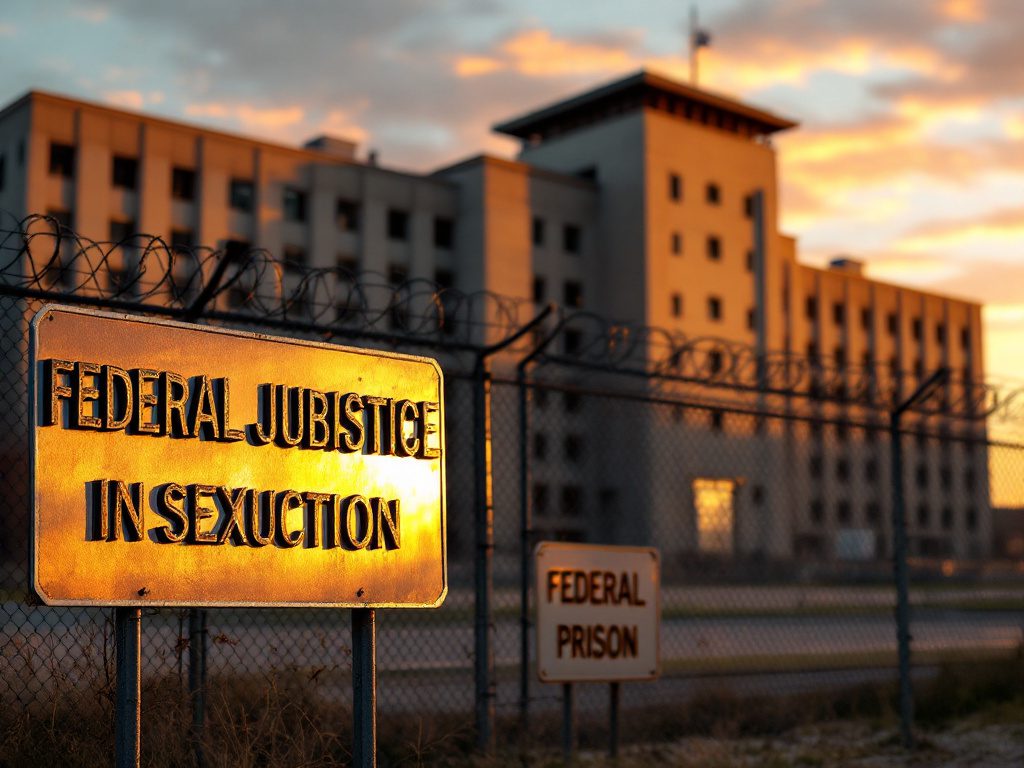
When President Donald Trump announced his choice of William “Billy” K. Marshall III to take command at the Federal Bureau of Prisons, the decision caught many outside of West Virginia off-guard. Yet for those familiar with Marshall’s quick rise through the state’s correctional ranks, this pick aligns precisely with the president’s tough-on-crime stance. Marshall, currently Commissioner of the West Virginia Division of Corrections and Rehabilitation, brings decades of law enforcement experience to the role—experience Trump himself emphasized when he stated that Marshall “understands the struggles of our prisons better than anyone.”
Marshall’s Rapid Rise to Leadership
Marshall’s ascent has been notably swift, reflecting a career dedication to corrections and criminal justice in a state deeply afflicted by drug epidemics and overcrowded prison systems. Appointed Commissioner of West Virginia’s Division of Corrections and Rehabilitation just earlier in 2023 by then-governor—and now Senator—Jim Justice, Marshall demonstrated an aptitude for addressing challenging institutional improvements. Justice’s own vocal support for Marshall underscores bipartisan encouragement for this move, highlighting a rare area of political commonality within corrections and law enforcement.
Before his commissioner role, Marshall served as Assistant Commissioner for both the Division of Corrections and Rehabilitation and the Bureau of Juvenile Services, establishing a well-rounded profile in criminal justice management. His breadth of experience across juvenile and adult correctional settings offers a distinction that could be crucial at the federal level, where prison system complexities are amplified.
The significance of Marshall’s educational roots cannot be overlooked either. A graduate of Marshall University and a product of the Wahama High School community, Marshall carries with him a localized understanding of community and correctional challenges, arguably giving him the perspective needed to make grounded reformative decisions at a national level.
The Implications for Federal Corrections
Federal prisons in the United States face systemic issues, including overcrowding, staffing shortages, and chronic challenges related to prisoner mental health and rehabilitation. At a moment when correctional reform is hotly debated in political circles, Marshall’s reputation as a law-and-order administrator hints at the course corrections are likely to take under his management. But does this conservative approach truly address the inherent systemic flaws troubling the Bureau for decades?
Marshall’s appointment, notably, does not require Senate confirmation, highlighting how potent executive branch influence can sway the feel and focus of corrections policy overnight. This direct pathway to leadership, outside of Senate checks, positions Marshall’s role as fundamentally critical to how the federal government addresses both chronic and acute prison management crises.
“He understands the struggles of our prisons better than anyone,” Trump emphasized, raising expectations significantly.
While President Trump’s firm endorsement undoubtedly gives Marshall license to impose strict law-and-order approaches, history teaches us tough measures alone rarely remedy structural issues. Harvard criminologist Dr. Angela Carter points out a frequent pattern: “We see repeatedly in corrections leaders who rely heavily on a discipline-first approach struggle to address more subtle yet impactful systemic issues.” This insight casts immediate scrutiny over Marshall’s leadership in upcoming months.
A Testing Ground for Criminal Justice Values
Trump’s selection of Marshall symbolizes the broader ideological battle over criminal justice reform. Marshall’s West Virginia track record, lauded by state officials, seems impressive from a management standpoint. However, it also begs a crucial question: Are stringent punitive policies enough to rehabilitate and rebuild a fractured federal prison system? Liberal criminal justice advocates argue that policies focusing primarily on discipline or incarceration length are insufficient without concurrent meaningful investments in mental health resources, reintegration programs, and workforce education.
It’s essential for voters and policymakers alike to remain critically engaged as Marshall commences his term. With the Bureau of Prisons housing over 150,000 federal inmates, decisions made at this level ripple outward, affecting communities nationwide. Marshall’s ability—or inability—to manage transparently, compassionately, and effectively becomes not merely a barometer for him personally, but for conservative corrections strategies nationwide.
Robert Greene, from the Prison Policy Initiative, emphasizes, “What reformers need most right now is a federal leader who prioritizes reducing recidivism through rehabilitative programming—not just cracking down harder on prisoners.” Whether Marshall’s leadership aligns at all with this progressive vision or veers sharply toward outdated punitive paradigms remains an open and consequential question.
Marshall’s leadership of the U.S. Federal Bureau of Prisons will undoubtedly serve as a lightning rod, potentially illuminating broader conversations on America’s future in criminal justice policy. It remains to be seen whether he will champion a future-oriented, restorative justice approach, or epitomize a politically expedient “law-and-order” model proven insufficient historically to address core systemic failings within the American prison system.
