
The Collision of Business and National Security
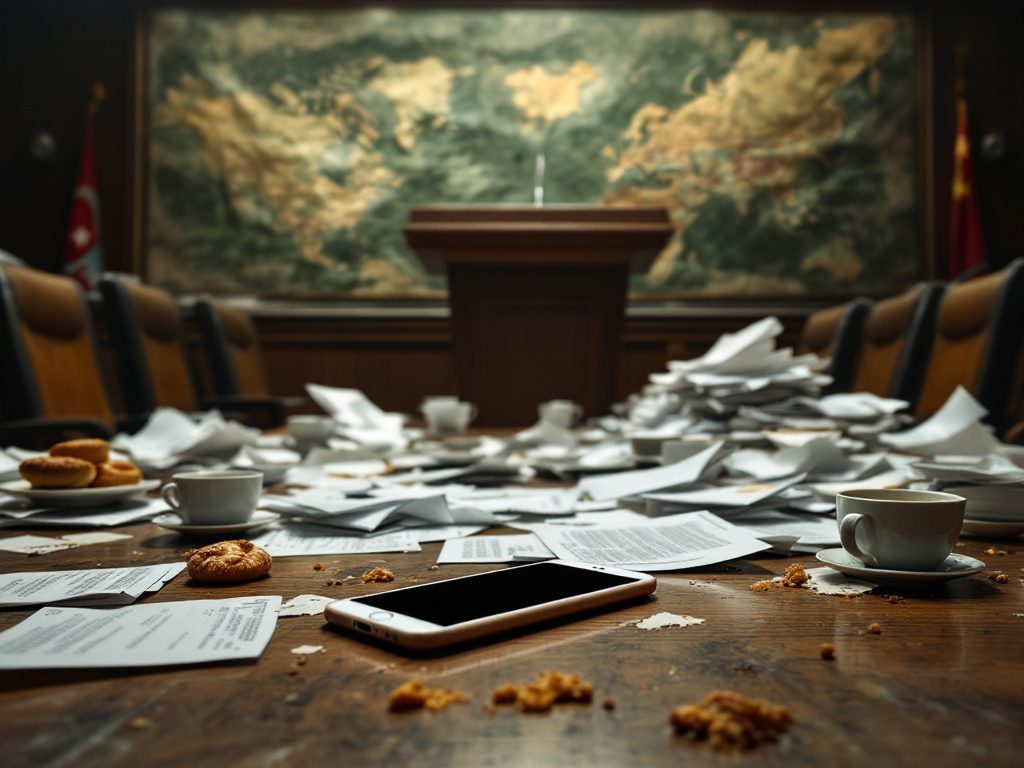
Picture this: the world’s richest entrepreneur, Elon Musk, standing at the intersection of global business and U.S. national security, is moments away from a top-secret Pentagon briefing. The topic? Contingency plans for a possible war with China. Then, with almost cinematic swiftness, news of the meeting is leaked to The New York Times. President Donald Trump’s fury is immediate and public: “What the f**k is Elon doing there? Make sure he doesn’t go.” Axios and Politico confirm Trump pulled the plug. Security and capitalism collide, and the stakes could hardly be higher.
Beyond Trump’s legendary volatility, the incident exposes a fault line running through the current American political landscape: What role should powerful private sector leaders with significant international entanglements play in the heart of U.S. defense strategy? Trump’s decision to exclude Musk wasn’t arbitrary. Musk serves as President Trump’s own head of the Department of Government Efficiency (DOGE), but he’s also CEO of Tesla and SpaceX. Tesla’s Shanghai Gigafactory produces roughly half of all Teslas globally, signifying the extent of Musk’s commercial nexus with Beijing. According to the Wall Street Journal, no other American industrialist rivals Musk’s reliance on Chinese supply chains.
Is it ideal for someone tethered so closely to a foreign power—especially an authoritarian competitor—to participate in a war scenario briefing? As Senator Elizabeth Warren has long argued, billionaire technocrats often have cross-border incentives that conflict with U.S. public interest (see her 2022 remarks following revelations of Big Tech’s lobbying in Europe). Trump’s defenders may call his move pragmatic, but it also raises questions about why Musk was nearly briefed at all—and why national security vetting wasn’t stricter in the first place.
Leaks, Loyalty, and the Cost of Transparency
Public trust in institutions teeters when leaks lay bare internal chaos and political favoritism.
After news of Musk’s Pentagon briefing surfaced, the Pentagon entered triage mode. Secretary of Defense Pete Hegseth placed two senior officials, Dan Caldwell and Darin Selnick, on leave. As Politico and Newsmax both confirmed, they were physically escorted out of the Pentagon—an act reminiscent of the tumult following Edward Snowden’s NSA revelations, when whistleblowers and leakers were cast as both traitors and truth-tellers, depending on which side of the political aisle you stood.
Trump’s White House, meanwhile, scrambled. The president derided the story as “fake news” and insisted Musk would never have received a China-focused briefing. Yet the timing of these denials suggested otherwise. The original meeting was scheduled for March 21 with China on the agenda; the replacement meeting Musk did attend conspicuously avoided the topic. The quick shuffle hints at a teachable moment: even in the most secretive government circles, leaks can reroute national policy—and expose the precarious balancing act between transparency and the need for discretion in matters of security.
“I look forward to the prosecutions of those at the Pentagon who are leaking maliciously false information to NYT. They will be found.” — Elon Musk, on X (formerly Twitter)
Musk’s public fury is telling. A Silicon Valley titan and high-level presidential advisor—his voice amplified through X/Twitter—accusing government officials of betrayal. Yet critics note Musk’s indignation reveals his desire to operate in both the government and private sectors with impunity and minimal scrutiny. National security experts like former Obama Defense official Michèle Flournoy warn that such conflicts of interest “threaten to undermine American security at precisely the moment when China is expanding both economically and militarily.”
Business, Politics, and the Modern American Dilemma
The scuffle over Musk’s Pentagon exclusion is more than a Beltway melodrama—it’s emblematic of the tensions between state power and private enterprise in an era of globalized capitalism.
Unfettered corporate influence on U.S. policy is no conspiracy theory; it’s a daily reality. The revolving door of high-level government service and private sector boardrooms is well documented by organizations like Open Secrets. Yet this case spotlights an additional peril: What happens when a politically connected billionaire’s prosperity depends directly on the very nation that might, in a crisis, become America’s adversary?
Historical parallels abound. Recall the uproar when IBM sold computing technology to Nazi Germany, or the tightrope act U.S. oil barons played with the Soviet Union during the Cold War. Congressional investigators and defense watchdogs have since set out ethics rules to mitigate such risks, but the rise of multinational tech giants—with our democracy tethered to their platforms and our military reliant on their rockets—has outpaced the regulatory frameworks intended to keep government honest and independent.
Harvard political scientist Graham Allison once wrote, “Where business interests dominate, national interests follow,” warning that unchecked plutocrats can leverage their power to tip the balance in favor of personal profit, not collective well-being.
An honest reckoning is needed: Accountability must stretch beyond the leakers at the Pentagon. The American people deserve to know why Musk was given access to the highest echelons of national security planning in the first place. Who benefits? Who loses? And at what cost do we allow billionaires—however brilliant—to moonlight in government while keeping half their fortune parked in foreign economies?
Progressives will see this episode as a clarion call to reaffirm boundaries between private profit and public responsibility. A flourishing democracy demands nothing less. Matters of war, peace, and survival cannot be left to those with the most lucrative foreign contracts or the flashiest self-promotion. Accountability, not celebrity, should chart the nation’s path.
