
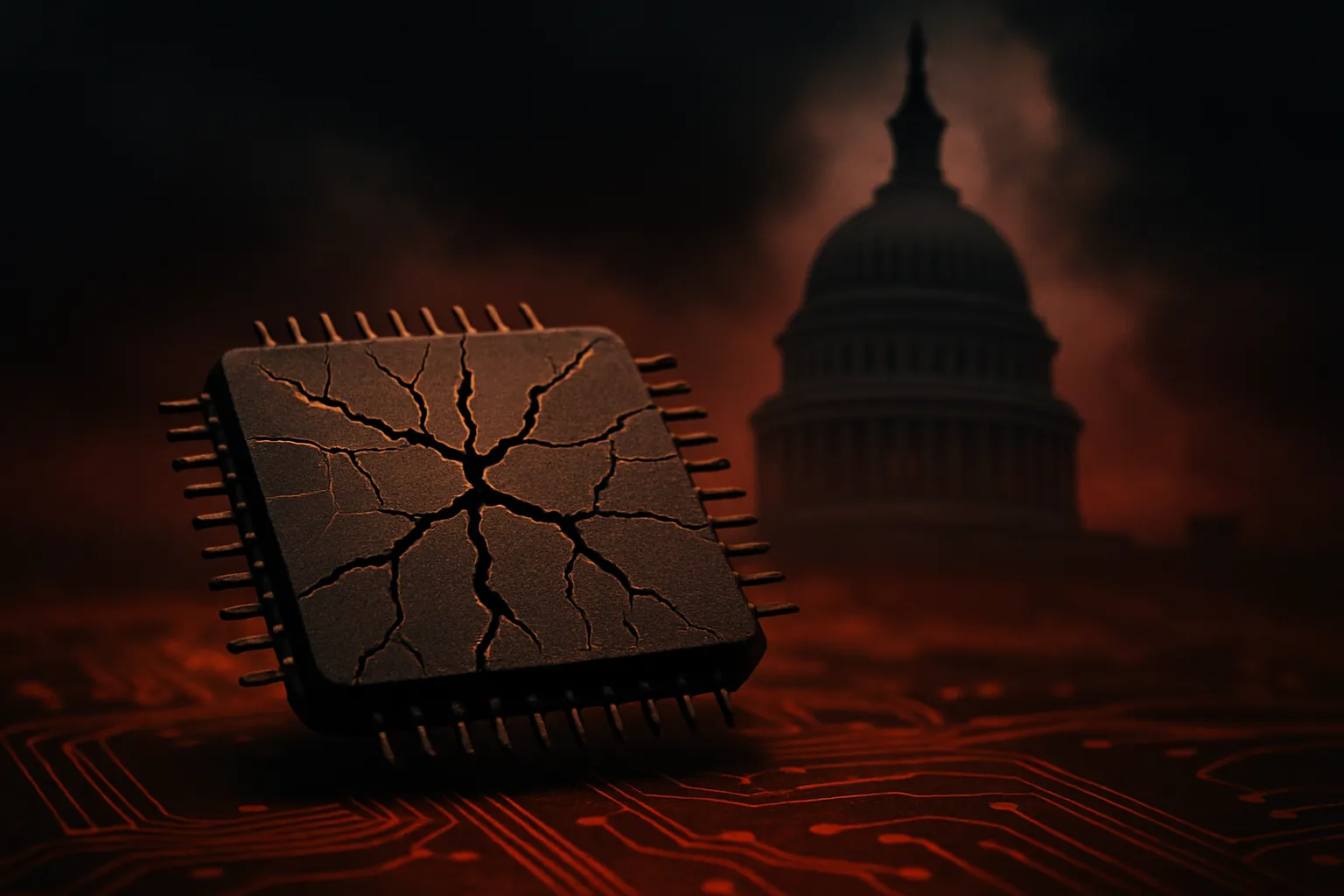
The Eerie Theater of Trump’s ‘Chipocalypse’ Post
Picture this: An AI-crafted image splashes across Truth Social, depicting Donald Trump as Lt. Col. Kilgore from Apocalypse Now, outfitted in a US Army uniform, steely-eyed in front of a torched Chicago skyline—emblazoned with the phrase, “I love the smell of deportations in the morning.” In the crowded playhouse of American politics, this is not mere showmanship. This is a president, leveraging pop culture’s most infamous vision of wartime chaos, to send a brash message to an American city: Prepare for a federal crackdown, and maybe worse.
The social media stunt, dubbed “Chipocalypse Now,” conjures visceral memories of military overreach and authoritarian power. Trump’s open threat to deploy federal troops and “go to war” with Chicago was not delivered in the sober confines of the Oval Office, but through an AI parody—blurring the line between reality and dangerous cosplay. The disturbing overture quickly set off alarms among Illinois leaders and national observers alike. Governor JB Pritzker excoriated the post, calling Trump a “scared man” issuing not-so-veiled threats against his own people, while Chicago Mayor Brandon Johnson denounced what he labeled a “disgusting display of authoritarianism.”
Tellingly, the White House made this public threat with less than 72 hours’ notice to state officials, underscoring the willingness to bypass democratic norms and coordination with local governments. According to a recent report from the Chicago Tribune, city and state leaders were left scrambling to address community fears and brace for possible federal intervention before they had even received a direct briefing.
Playing with Fire: Renaming the Department of Defense
Beyond saber-rattling on social media, Trump’s ambitions manifest in his recent executive order: renaming the Defense Department as the Department of War. Though the change lacks Congressional approval and carries only symbolic weight (allowing the Defense Secretary to use the archaic title ‘Secretary of War’), the move has sparked outrage within the Pentagon and among America’s global partners. Critics warn this revisionism is not an innocuous branding tweak, but a calculated effort to restore a belligerent posture for America—one that risks unraveling delicate alliances and deepening international suspicion.
Harvard historian Stephanie McCurry observes, “Words matter. Changing ‘defense’ to ‘war’ telegraphs a shift away from restraint and projects aggression at a fragile geopolitical moment.” Pentagon insiders, speaking to NPR on condition of anonymity, have voiced concern that such rhetoric could embolden hawks at home and stoke instability abroad. It’s easy to dismiss Trump’s rebranding as political theater, but these signals influence military planning, diplomatic priorities, and global perceptions. For allies already rattled by the capriciousness of Trump-era foreign policy, this move sounds like an alarm.
“To threaten an American city—one with a proud legacy of welcoming immigrants—with mass deportations and military might, all while repackaging the guardians of democracy as a Department of War, is both chilling and unprecedented.”
Why return to such loaded language and imagery? A closer look reveals a deeper strategy: harnessing fear, stoking division, and framing urban bastions of diversity and progressivism as enemy territory. In doing so, the administration not only undermines local leadership and federalism, but also erodes the social contract underpinning American pluralism.
The Real Costs: Democracy, Safety, and Trust
Underneath Trump’s bravado lies a far more insidious reality. The targeting of Chicago, with promises of military intervention and mass deportations, is not just about crime—a topic that, incidentally, local officials argue has seen improvement. Instead, it’s about manufacturing crises to justify federal overreach. University of Chicago criminologist Jens Ludwig notes, “Chicago’s crime rate has been exaggerated by political actors seeking to score points, not solve problems.” The threat is not simply to one city, but to the principle of local governance itself.
Historically, dispatching federal troops into American cities is a measure reserved for moments of true emergency: Eisenhower’s intervention in Little Rock to enforce desegregation, or Johnson’s use during the Detroit riots of 1967. Rarely, if ever, has a president wielded this kind of threat so flippantly, or for such explicitly political aims. The fear among Illinois officials isn’t just that Trump might overstep his bounds, but that he is deliberately pulling America toward a cliff-edge—testing how far the executive branch can reach before checks and balances collapse.
Stoking fear of immigrants and conjuring “war” against cities undermines the hard-won progress toward inclusion and justice that Chicago—and countless other American cities—represent. According to Pew Research, two-thirds of Americans support pathways to citizenship for immigrants and trust local governments over federal edicts in policing community safety. Trump’s attempts to pit the federal government against urban centers are wildly out of step with not just moral reality, but democratic consensus.
As officials warn, the trauma is not hypothetical. After Trump’s incendiary post, Chicago saw the cancellation of cultural events, such as Mexican Independence Day celebrations, as residents feared becoming targets in a newly militarized zone. That’s not law and order—that’s terror and uncertainty, imposed on people who simply want to belong.
The real work of a nation that values equality, justice, and collective well-being is to lift up communities, not threaten them. Progressive governance means investing in violence prevention, education, and economic opportunity—not sending in troops and stoking paranoia. Chicagoans have stood tall through waves of change and challenge: to treat them now as insurgents for political sport betrays the very ideals America claims to champion.
