
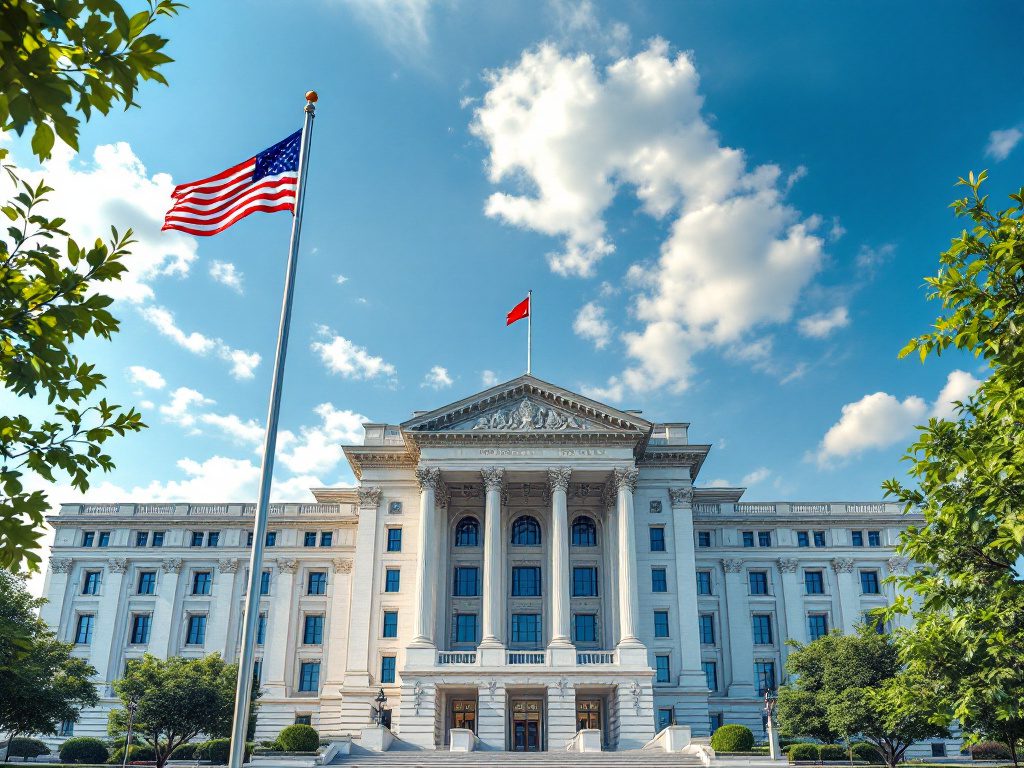
Diplomacy at a Crossroads: The Stakes of Gutting the State Department
On a cold, crowded Monday morning at the State Department’s C Street lobby, diplomats scanned their phones, stunned by rumors swirling through the marble halls: the administration was considering the most radical shake-up in the agency’s history. The draft executive order—leaked and quickly circulated among embassies worldwide—called for an unprecedented reorganization: eliminating almost the entirety of Africa operations, closing consulates, and slashing key policy bureaus. To many veteran diplomats, this move conjured memories of past threats to dismantle American foreign policy infrastructure—but never at this scale.
The proposed cuts reflect a philosophy long championed by President Trump and conservative allies: that government, especially when it comes to international initiatives, is ripe with “waste, fraud, and abuse.” According to the administration’s talking points, the plan would deliver a “disciplined reorganization,” making America’s mission delivery more efficient. Yet the reality is far more nuanced—and far more troubling—for both America’s global standing and the health of democracy worldwide.
Dr. Rachel Kleinfeld, a senior fellow at the Carnegie Endowment for International Peace, observes, “Diplomacy is not just about crisis management; it’s about building relationships, investing long-term in stability. Dismantling our global presence hollows out America’s most potent non-military tool.” Many of the endangered offices—including bureaus for climate, refugees, women’s issues, and democracy—champion progressive values on the world stage, often offering hope and resources to communities where they’re needed most.
From Africa to Ottawa: Shrinking America’s Reach
The Africa-focused portion of the draft order stuns even seasoned policy veterans. Eliminating nearly all U.S. diplomatic posts across the continent would upend decades of relationship-building, undercutting anti-corruption efforts, pandemic cooperation, anti-terror initiatives, and trade development. The reputational cost to shutting down embassies isn’t abstract: as former U.S. Ambassador Johnnie Carson points out, “The absence of an American presence leaves a vacuum, one that others—often authoritarian powers—will be eager to fill.”
Reducing America’s footprint isn’t limited to Africa. The draft also proposes a major “reduction in staffing” at the U.S. Embassy in Ottawa, moving oversight of Canadian relations to a new North American Affairs Office. Such a move not only risks fraying economic ties with America’s most crucial partner but raises questions about the nation’s commitment to its neighbors. Do fewer diplomats make us safer, or do they simply diminish our ability to influence events before crises erupt?
Beyond that, the order seeks to dismantle bureaus overseeing vital issues: climate, refugee coordination, United Nations affairs, international organizations, global women’s issues, and democracy promotion. Offices devoted to these arenas represent the soul of America’s soft power. Harvard historian Samantha Power, a former U.N. ambassador, notes, “When we walk away from climate or refugee coordination, we’re not just shrinking government—we’re closing down the future for millions who look to the United States for partnership, not paternalism.”
“When we walk away from climate or refugee coordination, we’re not just shrinking government—we’re closing down the future for millions who look to the United States for partnership, not paternalism.” — Samantha Power
Replacing Merit with Political Loyalty—and the Rise of AI Bureaucracy
Another cornerstone of the reorganization: abolishing the diplomatic service exam, a centuries-old test designed to select the most qualified, culturally adept individuals to represent America abroad. Under the draft order, new hiring would prioritize “alignment with the president’s foreign policy vision”—a seismic shift from merit to political loyalty. Such an approach not only tilts the scales toward partisanship but risks undercutting hard-won traditions of expertise, nonpartisan service, and global cultural competence.
Imagine a world where ideological enthusiasm trumps language proficiency or regional experience. That’s not just theoretical: civil service veteran Anne Witkowski recalls how, “When partisan appointees were fast-tracked in Iraq in the early 2000s, diplomacy—and credibility—suffered.” History teaches that dismantling the nonpartisan backbone of the diplomatic corps in favor of political hacks courts disaster.
But the shakeup doesn’t end there. The proposed restructuring also calls for “greatly expanding” artificial intelligence to draft documents, develop policy, and manage operations—a Silicon Valley fever dream transplanted to Foggy Bottom. Is algorithmic efficiency a substitute for deep cultural understanding? Expert consensus says no. As technology policy analyst Dr. Amira Chaudhry at Brookings warns, “AI can streamline paperwork, but it cannot negotiate a peace agreement or read a room halfway around the world.” There’s immense risk in assuming that sophisticated software can replace seasoned judgment in matters as delicate as nuclear negotiations or humanitarian aid.
Chilling Impact: What’s at Stake for American Values and Global Stability
Job losses for career diplomats and civil servants, already rumored, are just the tip of the iceberg. The reorganization would replace a generalist global rotation model—which builds broad, flexible expertise—with regionally confined careers. The U.S. diplomatic corps, once prized for its adaptability and nimbleness, would become more insular, less cross-pollinated, and less innovative.
America’s greatest diplomatic legacy is not just its military power but its principled advocacy for democracy, human rights, equality, and environmental stewardship. Sidelining those pillars doesn’t just shrink government, it shrinks the vision of what America can be to the world. As noted by Columbia University’s Professor Stephen Wertheim, “Narrowing our international engagement doesn’t just weaken alliances, it emboldens authoritarian actors, who are watching and waiting to fill the void.”
Complexity shouldn’t be a pretext for disengagement. While government reform is often necessary—yes, even long overdue in some corners—it must be guided by evidence, not ideology, and by a commitment to shared values, not unilateralism. In this moment, Americans face more than bureaucratic reshuffling. They face a stark choice: Will the United States lead with openness, partnership, and compassion, or retreat behind walls of indifference and political expedience?
