
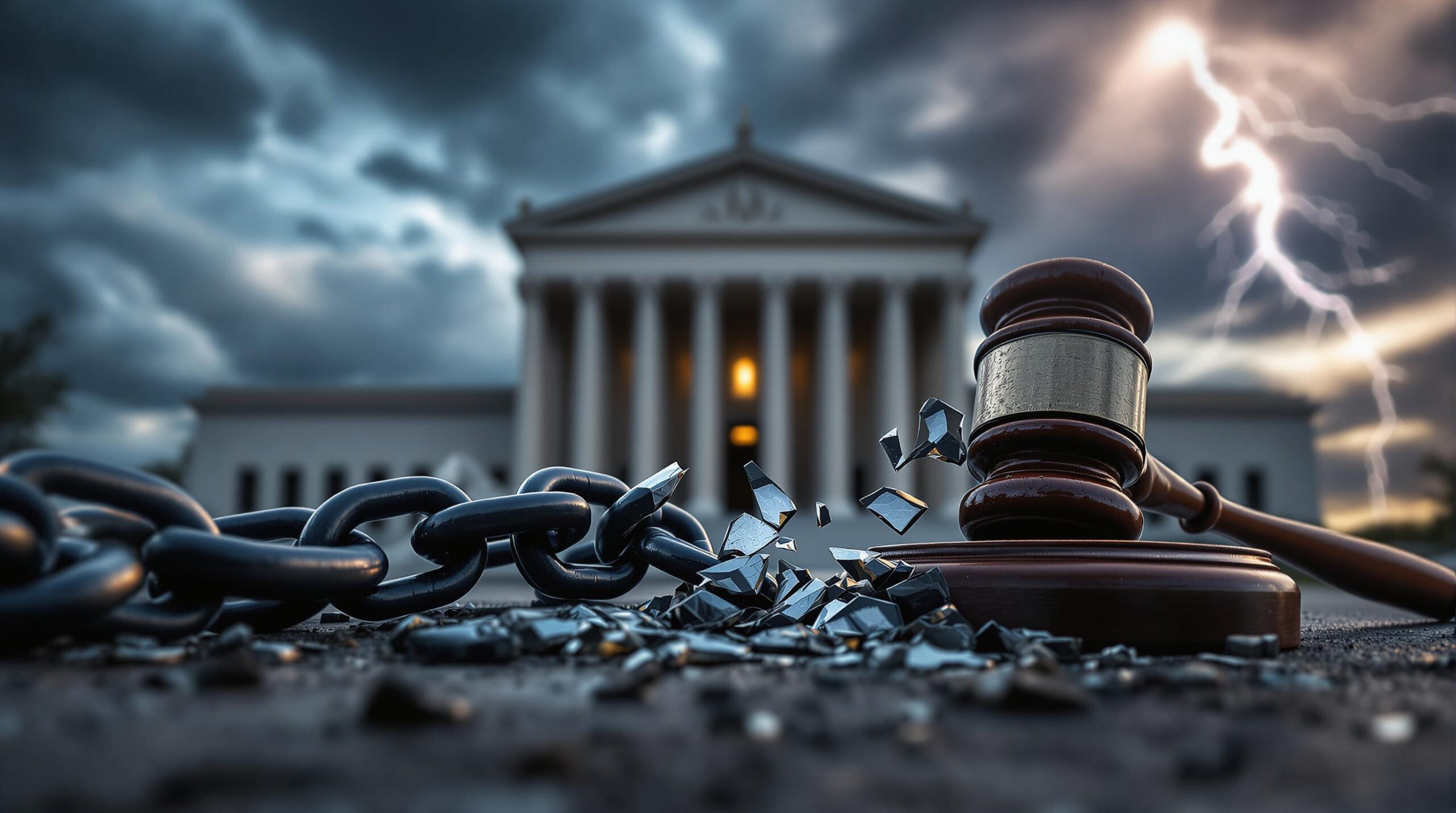
Amid a wave of executive orders from the Trump administration, the judiciary has clearly stood up for core American principles of fairness, equality, and constitutional governance. Recent court rulings have temporarily stopped or delayed several Trump directives aiming to rollback progressive advancements relating to workers’ rights, diversity initiatives, and fair judicial processes. These court decisions are pivotal indications of the judiciary’s critical role in curbing authoritarian overreach, especially where fundamental rights and liberties are concerned.
Defending National Security or Attacking Workers’ Rights?
One major battleground has centered on the administration’s move to rescind collective bargaining rights for federal employees under the guise of national security. Trump’s team is seeking affirmation from a one-judge district in Texas, asserting that labor unions prevent effective management of agencies related to security. This raises crucial questions about whether national security arguments are being conveniently wielded to dismantle long-standing protections for workers’ rights.
The American Federation of Government Employees (AFGE), a leading union representing federal workers, has vowed to challenge this decisive and controversial move. AFGE’s position crystalizes the broader battle—conservative attempts to frame unions as obstructions versus progressive commitments to worker protections and collective bargaining as vital democratic processes.
Historically, restricting collective bargaining rights is rarely justifiable purely through claims of security. Consider President Reagan’s harsh stance against air traffic controllers in the 1980s—a decision viewed by many labor historians as one of the most significant blows to union power. Today, there is growing recognition across progressive movements that collective bargaining empowers workers, helps maintain equitable workplaces, and safeguards democracy from authoritarian trends.
Protecting Diversity and Equality
Equally critical are judicial responses to Trump’s executive orders aiming at eliminating diversity, equity, and inclusion (DEI) efforts within federal contractors. A recent injunction, issued by Federal Judge Matthew Kennelly, halted the enforcement of these orders within the Department of Labor. Kennelly recognized that the ambiguity in Trump’s directive poses a direct threat to constitutional free speech rights, effectively pressuring organizations to abandon meaningful DEI programs to evade potential financial retaliation under the False Claims Act.
It was a critical victory secured by Chicago Women in Trades, illustrating how organized, grassroots advocacy remains powerful in confronting federal overreach. This nonprofit, dedicated to empowering women workers, illuminated how Trump’s sweeping and ambiguous orders could devastate initiatives aimed at rectifying historical inequities.
Such rulings reflect progressive values about societal equity, highlighting the essential role of judicial oversight when legislation endangers inclusive policies. From affirmative action debates to gender equity discussions, the progressive argument stands firm: dismantling DEI programs doesn’t create fairness—it perpetuates systemic imbalances and undermines America’s foundational equality principles.
“The courts have shown willingness to check executive power, providing hope for continuation of equitable policies in our workplaces and beyond.”
Judicial Safeguards Against Deportation Abuses
Another alarming aspect is the Trump administration’s deployment of the antiquated Alien Enemies Act to justify deportations of Venezuelan nationals and individuals accused of gang affiliation without proper hearings. This unprecedented application has drawn considerable criticism, notably from U.S. District Judge James Boasberg, who emphatically stressed that the government’s duty extends beyond merely invoking statutes; it must also conduct fair, individualized hearings.
Judge Boasberg’s clear assertion underscores that constitutional rights and due process must remain integral, regardless of the type of legislation invoked. The administration’s refusal to respect court mandates, leading to appeals all the way up to the Supreme Court, signals alarming disrespect for judicial authority—a pattern which undermines fundamental rights and trust in government institutions.
Boasberg’s stance reaffirms historical legal precedents set during times of direct national crisis, from World War II internment cases—now universally recognized as grave miscarriages of justice—to more recent battles over detention and deportation policies. Progressive advocates continually remind policymakers that protecting vulnerable populations from government overreach is not merely humane—it is constitutionally imperative.
A Critical Moment for Democracy
Together, these judicial interventions against Trump’s executive moves represent a safeguarded check-and-balance system in action. Courts aren’t just arbitrating policy disputes but actively interpreting constitutional provisions to protect fundamental human rights, equity, and justice.
What path forward does this create for America? For progressives, these rulings present an opportunity—to not only defend existing rights but to advocate aggressively for expansions of workplace protections, comprehensive immigration reform, and robust diversity initiatives that reflect America’s multicultural reality. It’s crucial for progressive communities and organizations to use these court battles as catalysts for solidarity-building, mobilization, and policy advocacy.
At a time when authoritarian ideas seem resurgent, and executive power appears intent on dismantling significant protections, a resilient judiciary becomes a beacon of hope. These court rulings vividly contrast conservative conceptions of security and governance—which often implicitly shield discriminatory agendas—with progressive ideals rooted in inclusion, fairness, and justice.
The courts, confronting unprecedented executive boldness, offer a powerful reminder: Democracy thrives only when government respects rights, values diversity, and remains accountable to principles grounded in justice and equity.
