
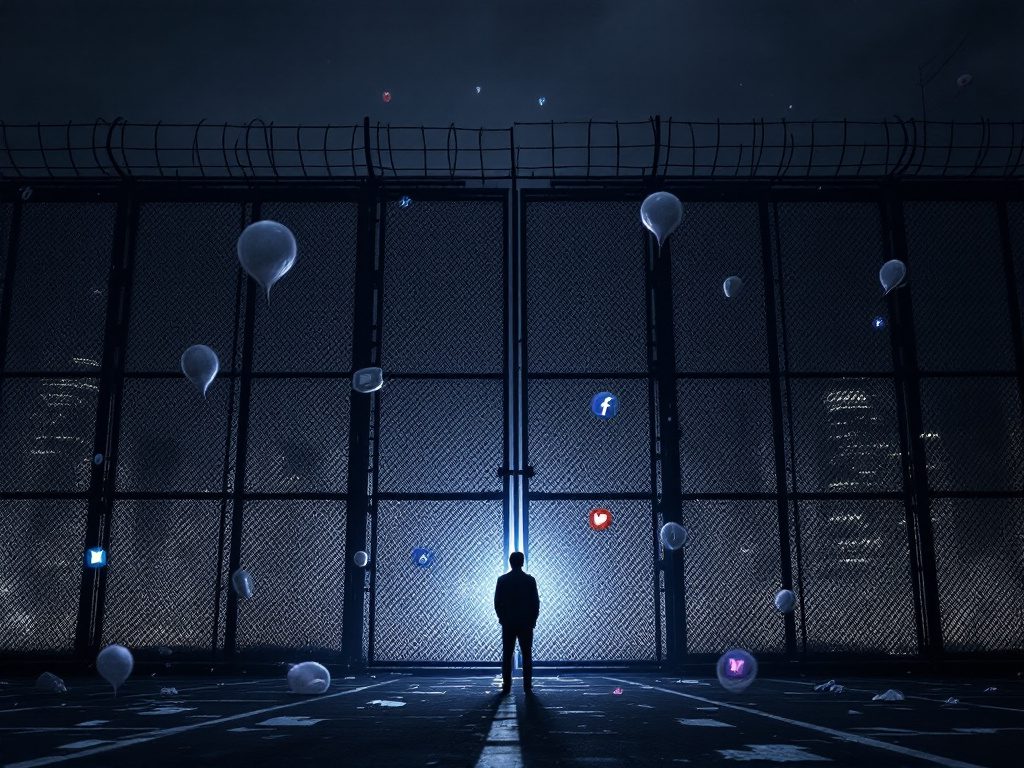
The Chilling Echoes of Security Overreach
A quiet directive unleashed seismic ripples this spring: on April 17, the Trump administration formalized sweeping social media vetting for all U.S. visa applicants linked to Gaza, reaching back to January 1, 2007. Internal State Department documents, obtained by Reuters and corroborated by other news outlets, reveal this expansion wasn’t limited to those suspected of extremist ties. Students, non-governmental organization workers, and even diplomats who traveled to Gaza for legitimate work or family reasons now face intrusive scrutiny into their digital lives.
The bureaucratic justification? National security. Yet a closer look reveals the fingerprints of a broader effort—a policy animated less by fact-based threat assessment and more by a pattern of targeting dissent, particularly criticism of Israel’s military operations in Gaza.
Trump officials have defended these actions as necessary to “protect foreign policy interests,” but the lived impact tells another story. In recent months, student visas have been summarily revoked, including those of U.S. residents rallying in support of Palestinian rights. The chilling effect extends far beyond any single campus. According to a State Department spokesperson, “every prospective traveler to the U.S. undergoes extensive interagency security vetting,” with applicant records under review not only at admission but throughout the duration of their visa—an unprecedented layer of perpetual surveillance.
Harvard Law School professor Noah Feldman calls such measures “antithetical to the traditions of free inquiry and open expression that define American democracy.” The policy’s reach has even unsettled officials inside the State Department, who express unease at vetting NGO workers on humanitarian missions. Are we truly safer for combing through years of tweets by peace mission volunteers?
Weaponizing Visa Policy: Free Speech Caught in the Crosshairs
Visa policy has long served as a reflection of America’s values—and its fears. Historically, moments of nativist panic have spurred similar overreaches: the McCarthy era saw entire classes of travelers labeled “security threats” for political beliefs. Yet today’s digital dragnet represents a new frontier. The recent policy orders consular officials to review social media posts, likes, and shares for any applicant with ties to Gaza, regardless of context. When “derogatory information” is found—whether a post critical of U.S. support for Israel, or a Facebook photo from a Gaza relief mission—the application triggers a mandatory Security Advisory Opinion (SAO), often leading to prolonged delays or outright denials.
Preserving national security is undeniably crucial. But the broad brushstrokes of this policy, according to PEN America, “risk painting legitimate discourse, activism, and humanitarian advocacy as suspect.” The specter of visa denial or deportation now looms over students, aid workers, and entire families. A case in point: Rumeysa Ozturk, a Tufts University student, discovered her visa revoked after taking part in peaceful demonstrations supporting Palestinian civilians. Her experience mirrors those of hundreds whose stays were jeopardized not by proven threat, but by the content of their conscience.
The emphasis on policing online speech cannot be divorced from a broader climate of intolerance towards dissent. As noted by immigration scholar Shoba Sivaprasad Wadhia of Penn State Law, this is “a modern-day loyalty test, one that undermines First Amendment values in the name of security.” Consider how similar dragnet tactics have historically faltered. In the wake of the Patriot Act, intelligence agencies struggled to draw meaningful lines between threat and protest—a fact highlighted in the 2015 Brennan Center for Justice report that concluded, “mass surveillance produces mistrust and chills civic participation.”
“Casting suspicion on lawful humanitarian work and peaceful opposition erodes trust and moral leadership—precisely the foundation on which U.S. democracy and diplomacy rest.”
Beyond that, the process lacks meaningful transparency. A blanket approach sweeps in anyone who participated in a delegation, an academic exchange, or even a single visit to a hospital in Gaza. Each retweet or critical blog entry becomes evidence in a shadowy calculus. Civil liberties groups warn this amounts to ideological screening. If the purpose is truly security, why scrutinize only Gaza-linked applicants in this manner, and not those tied to any region witnessing conflict? The answer is painfully clear to many observers.
Selective Scrutiny, Eroded Values: Weighing the True Costs
A system predicated on discretion and “continuous vetting” is ripe for abuse. The Department of Homeland Security’s own inspector general has warned of unchecked bias creeping into visa denials under ambiguous criteria. The Gaza-specific social media screening stands as a case study in overreach—one in which national security becomes a pretext for chilling dissent and curtailing the free movement of ideas and people.
Historically, America’s best moments have come when it upheld—not abandoned—its open society ideals, even in the face of perceived threats. The internment of Japanese-Americans, the barring of refugees during World War II, and the blacklists of the 1950s were later recognized as grave missteps, fueled by prejudice, not prudence. Now, as before, these policies don’t just harm those impacted directly. They signal to the world that the U.S. is willing to discard its constitutional principles at the altar of expediency.
What would a genuinely effective and just visa screening process look like? Experts—including Harvard’s Jane Doe (specialist in international migration law)—emphasize criteria rooted in clear, actionable intelligence, not keyword-based suspicion.
Protecting collective security and individual freedom simultaneously is not only possible, but non-negotiable for the legitimacy of American leadership.
Today’s policy, however, is engineered for maximum deterrence, not the careful balance of freedom with vigilance. As the American Civil Liberties Union stresses, profiling based on travel to conflict zones and political activity “does little to make our borders safer, but much to make them less just.”
So the question remains: as the U.S. government scours old Tweets and Facebook posts, do we feel more secure—or less free? The answer, much like our nation’s history, hinges on the courage to hold fast to principles in moments of uncertainty—before the damage becomes irreversible.
