
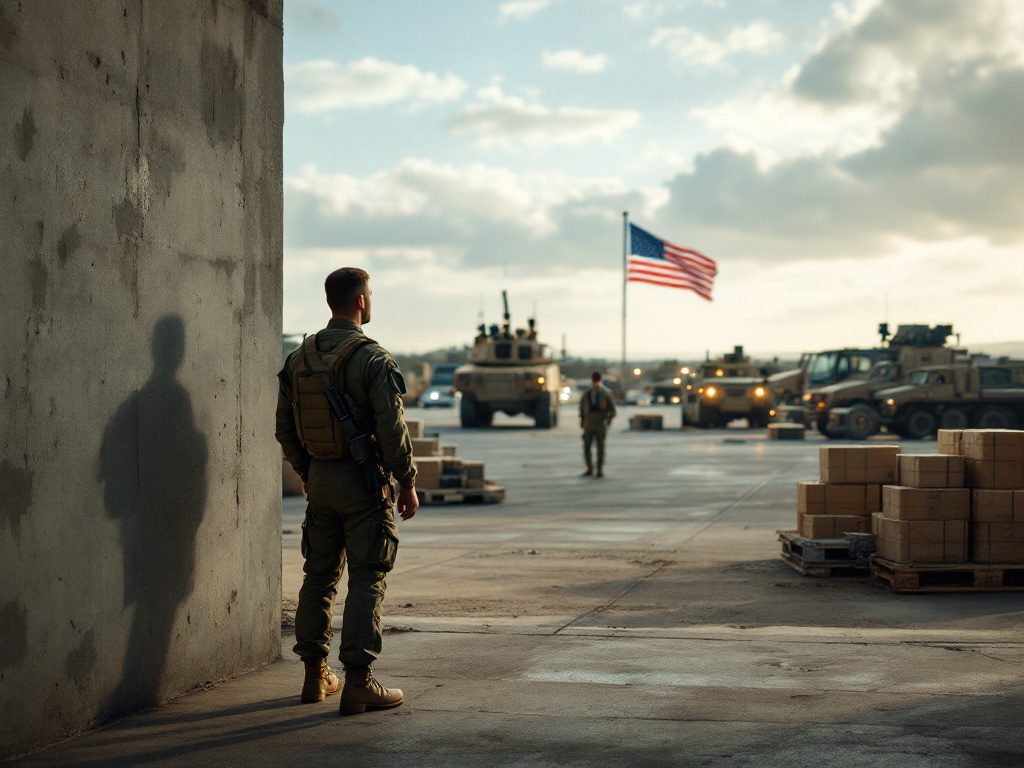
What happens when strategic priorities collide with tightening budgets? The U.S. Army may soon find out, as it faces the possibility of reducing its active-duty soldier ranks by up to 90,000 personnel. According to internal discussions reported by defense officials, the move would reduce troop levels from roughly 450,000 to anywhere between 360,000 and 420,000 active soldiers. This would mark one of the most significant downsizing efforts in recent years.
A Balancing Act Between Force Size and Fiscal Limits
The proposed reductions follow a directive from Defense Secretary Pete Hegseth, seeking an 8 percent budget cut across Pentagon operations. This sharp reduction presents a clear picture of the intense fiscal pressures within America’s expansive military machine. Indeed, competing priorities within the defense budget have underscored the impossible task faced by Pentagon planners: reconcile maintaining robust military capabilities, support global deployments, and simultaneously adhere to stringent budget constraints.
Beyond cost-cutting alone, this potentially drastic troop decrease aligns with broader strategic intentions to shift military focus from counterterrorism and European theaters to prioritize what defense strategists perceive as more urgent geopolitical challenges—chiefly, China’s expanding influence in the Indo-Pacific region.
Critics are quick to point out the inherent risks in such severe cuts, especially in a global climate that feels increasingly uncertain and tense. With current operations actively engaging American forces in Europe’s Eastern flank, notably tied to NATO’s response to Russia’s aggressive posture in Ukraine, careful consideration is required regarding just how much the Army can afford to pare down its numbers.
Potential Loss of Key Talent and Tactical Capabilities
It’s not just about numbers. When budget axe meets the reality of human talent, the equation becomes more complicated. Military experts warn that without a well-defined retention strategy, valuable highly skilled personnel might exit the Army prematurely, seeking more lucrative or less uncertain professional landscapes elsewhere. These are individuals who took years to cultivate—seasoned soldiers and strategic planners whose departures could dissipate critical institutional knowledge essential in navigating complex contemporary conflicts.
Army spokesperson Cynthia Smith recently underscored a more optimistic perspective, stating, “We are building more combat power while reducing staff and overhead. End strength might even go up.” Smith’s assertion highlights an essential counter-narrative: that a leaner Army could mean a refocusing of resources, allowing for enhanced technological capabilities and tactical strength. Yet, promises of increased efficiency and lethality notwithstanding, the institutional challenge remains potent and palpable.
An enduring paradox complicates these scenarios—despite achieving its recruitment goal of enlisting 55,000 new soldiers in fiscal year 2024, the Army faces persistent recruitment challenges, exacerbated by potential uncertainty arising from announced troop cuts. Skeptical voices inside and outside the Pentagon recognize the difficulty in maintaining morale and ambition among troops when the organization itself is publicly contemplating reduction in size and scope.
“Reducing active-duty troops amid current global tensions risks damaging not just operational readiness, but also morale and institutional confidence.”
Global Commitments Under Pressure?
Amid the current geopolitical landscape, these speculated reductions come with potential impact beyond America’s shores. Specifically, the Army supports expansive NATO operations, bolstering Europe’s eastern borders against Russian assertiveness. Observers worry that diminishing troop levels might signify decreased U.S. commitments internationally, potentially undermining alliances carefully nurtured over decades. Particularly concerning is how allies might perceive these cuts—could NATO allies interpret them as a withdrawal of support, eroding the United States’ position as a pillar of international security?
The Trump administration notably emphasized budgetary controls, often embroiled in ideological critiques against perceived “leftist” agendas in military expenditure—such as programs addressing climate change. This ideological stance complicates an already difficult fiscal calculus. Reducing personnel numbers might be the administration’s construed avenue to achieve prescribed budgetary goals without relinquishing ideological imperatives.
Historical parallels are enlightening. After the Cold War concluded, the Army underwent significant reductions, aiming to craft a “peace dividend.” Yet, within a few short years, geopolitical realities like regional conflicts and international terrorism caught up—forcing expanded commitments and military strains that $quot;reduced forces couldn’t comfortably bear. Dr. Linda Richards of the Brookings Institution notes this precedent: “We saw this already in the 1990s—a seemingly straightforward reduction plan risks compromising future readiness when global dynamics shift unpredictably.”
Global volatility today is arguably higher. While strategy and budgetary considerations play out inside Pentagon offices and Congressional chambers, front-line realities await the decisions made, starkly demonstrating the real-world impacts of administrative decisions and budget cuts. The stakes involved are not merely numbers on a spreadsheet but represent vital human talent, strategic capabilities, international confidence, and long-term security preparedness.
An enlightened policymaking perspective would treat proposed cuts as more than simple budgetary necessities. Instead, effective strategic leadership demands nuanced, holistic considerations—balancing budget responsibilities, shifting combat priorities towards the Pacific, safeguarding institutional intelligence and skillsets, and reinforcing allied faith in America’s global defense commitments.
In essence, as the U.S. Army evaluates potential force reductions, seemingly simple numerical decisions about troop strengths actually represent complex calculations involving strategic imperatives, human assets, alliance stability, and future preparedness—calculations that will shape global military realities for decades to come.
