
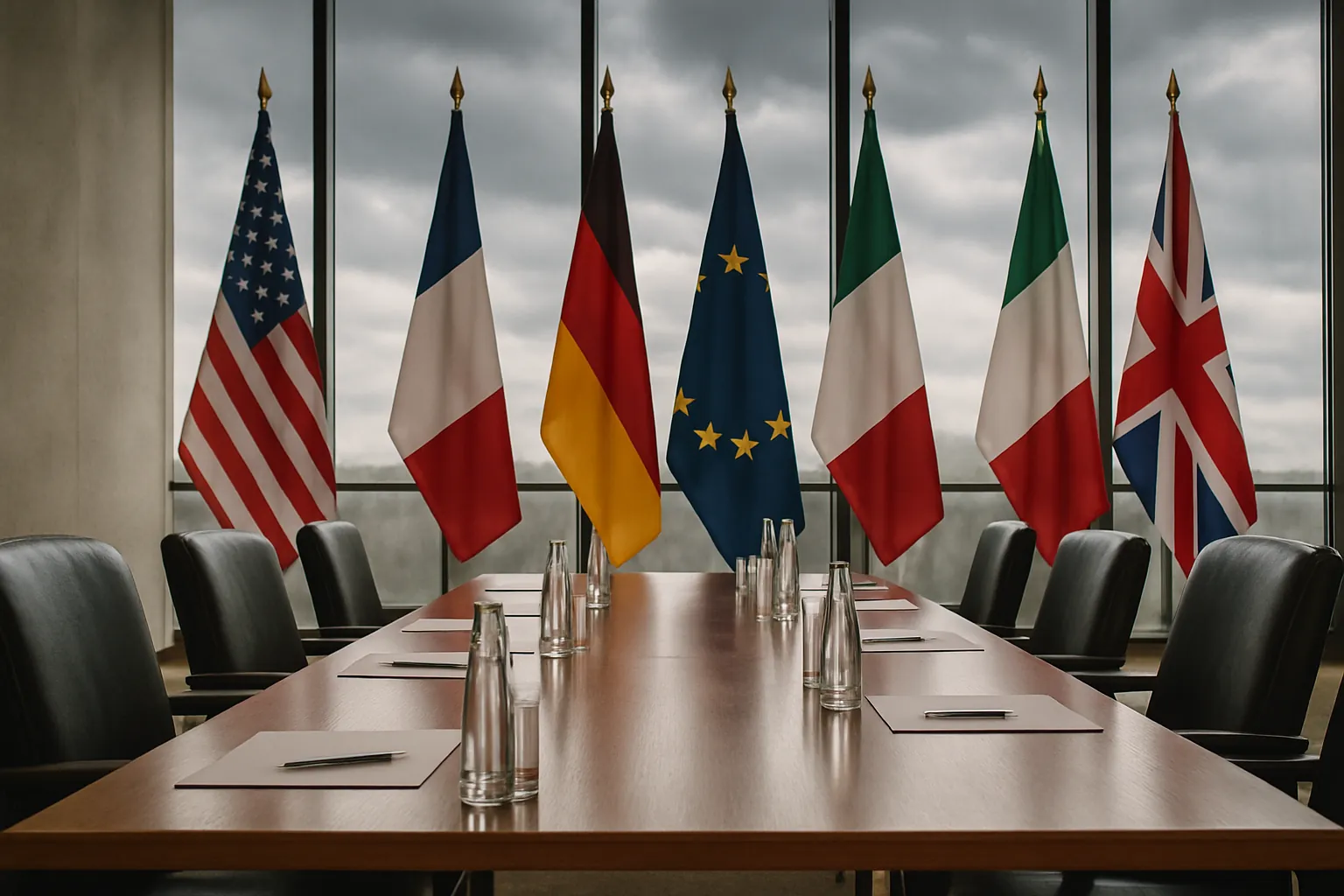
Beneath the Surface: Washington’s Waning Leadership
Something rare—and telling—will unfold in Brussels this week. For the first time since its formation in 2022, the Ukraine Defense Contact Group will convene without the physical or virtual presence of the U.S. defense secretary. The absence of Pete Hegseth, a break with both tradition and urgency, has sent tremors through the corridors of NATO headquarters and beyond. The United States created this multinational group in the crucible of Russia’s full-scale invasion, positioning itself as the lynchpin for more than fifty nations pooling resources to defend Ukraine’s democracy.
Officially, the Pentagon attributes Hegseth’s no-show to scheduling conflicts. Instead, the U.S. will send Ambassador Matthew Whitaker as its lead representative. According to Pentagon press secretary Kingsley Wilson, “The United States is focused on ending the war in Ukraine as quickly as possible, on terms that establish an enduring peace.” Such statements, earnest as they may sound, ring differently when paired with the reality of an atrophying American footprint in Ukraine support efforts.
Actions—especially absences—speak louder than words on the world stage. Hegseth isn’t just missing a meeting: he’s signaling a reordering of priorities at a moment when unity and clear resolve should be paramount for the West. Since February, the reins of the Contact Group have unofficially passed to the United Kingdom and Germany, with Defense Ministers John Healey and Boris Pistorius now chairing the coalition built to ensure Kyiv’s survival. Remember, this is a coalition that has poured roughly $126 billion into Ukraine’s defense—including more than $66 billion from the U.S. itself.
Europe Watches Nervously—Especially Paris
The ripple effects of America’s apparent recalibration are most vividly felt among anxious NATO members. Last month, Hegseth himself cautioned European allies that the American military presence on the continent was “not forever.” The phrase was more than a rhetorical flourish. It tapped into deep-seated European concerns about the reliability of the U.S. in an era of increasingly transactional geopolitics and unpredictable leadership shifts in Washington.
French President Emmanuel Macron has been especially blunt in sounding the alarm. During a recent summit in Paris, Macron asserted that if the United States begins shifting focus toward the Indo-Pacific and mulls troop withdrawals from Europe, the West’s credibility—both in Ukraine and other global hotspots like Taiwan—could suffer irrevocably. NATO members worry that a distracted, absentee America could invite adventurism not only from the Kremlin but from Beijing as well. These fears are not simply hypothetical. According to a study by the European Council on Foreign Relations, confidence among European publics in enduring U.S. security guarantees has already begun to erode, mirroring attitudes seen during isolationist swings in American history.
“If America moves its gaze away from Europe now—when Ukraine’s fate hangs in the balance—the entire Western pact against autocracy will fray at the seams.”
Look to earlier eras for precedent. When U.S. attention wavered in the 1930s, ignoring clouds gathering over Europe and Asia, the consequences proved catastrophic and enduring. The lesson is clear: Western unity cannot be casually paused without inviting risk.
The Stakes for Progressive Values—and for American Credibility
It’s impossible to decouple this moment from sweeping questions about American priorities, global leadership, and the preservation of democratic ideals in the face of authoritarian aggression. The U.S. may want to “end the war quickly,” but progressive values remind us that peace built on abandonment is neither just nor durable.
What does it mean that Washington—a nation that once marshaled the Free World—now appears to be stepping back, even incrementally? We’re reminded by Harvard historian Annalise Ford that “alliance reliability is measured not in press releases, but in who shows up when history is made.” With the Biden-to-Trump transition still fresh and domestic pressures mounting, the temptation to retrench grows ever stronger for American policymakers searching for short-term gains or simply tired of the burdens of global leadership.
The United States cannot protect democracy by disengagement. Even if American officials insist that shifting leadership roles within the Ukraine Defense Contact Group are a matter of pragmatism, European and Ukrainian officials see it as American disengagement by stealth. Just last month, the U.S. offered no new weapons commitments to Ukraine—another worrying sign amid Kyiv’s pleas for more advanced arms to repel Russia’s offensive.
Beyond that, there’s the symbolism. The Contact Group was born of crisis—a display of solidarity and resolve. To step away from that table is to risk diminishing its moral force. Could this embolden Russia to push even harder, or tempt China to test the boundaries in Taiwan? That’s what keeps both diplomats and citizens up at night.
Hegseth will arrive in Brussels in time for the broader NATO Defense Ministers’ meeting. Yet his absence when it matters to Ukraine’s frontline defenders is unmistakable. To borrow words from the late Senator John McCain, “The price of liberty is high, but Americans have always paid it.” If we turn away now, who pays the price next?
