
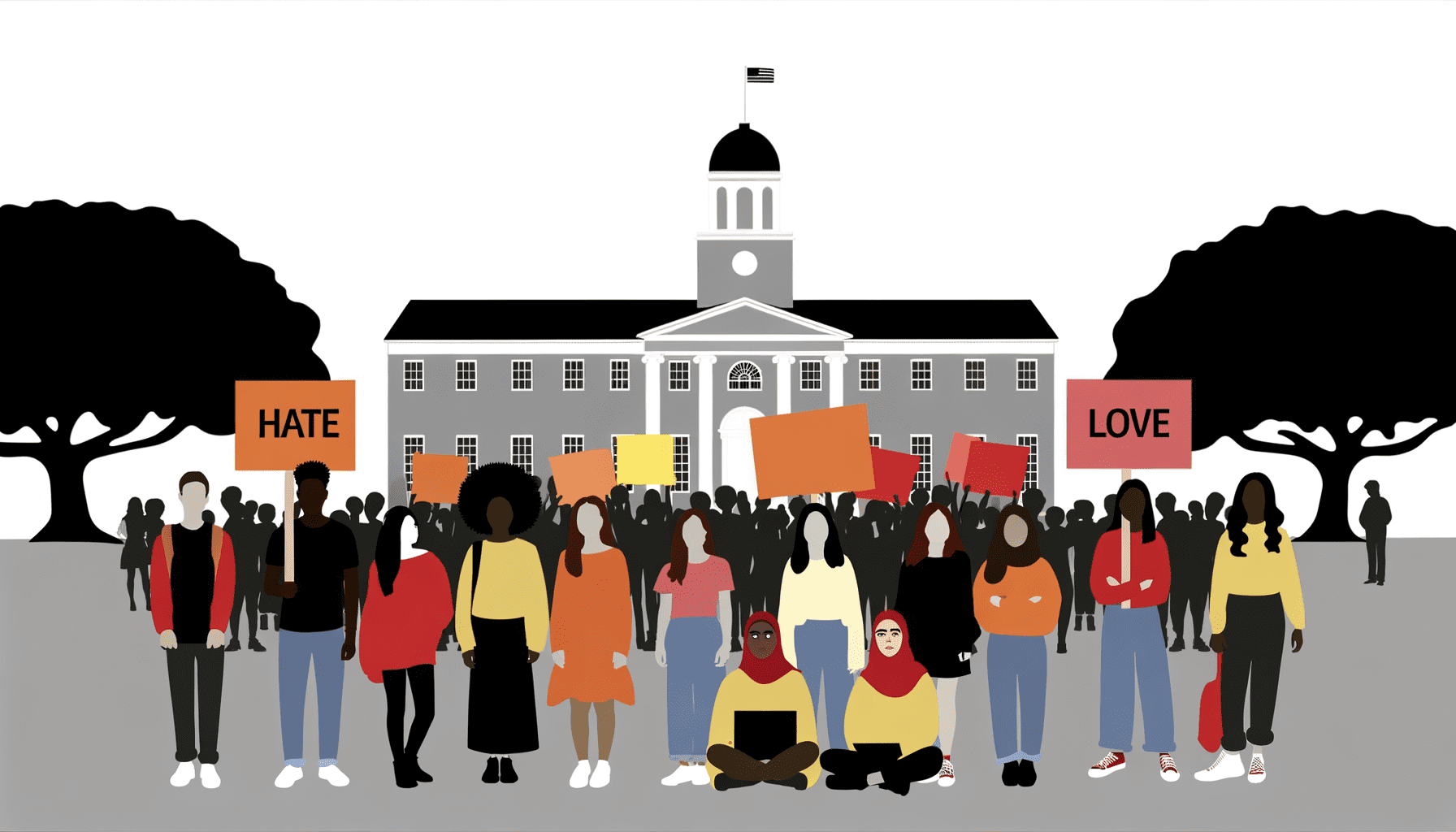
A Wave of Antisemitism Sweeps Campuses, Prompting Federal Action and Institutional Response
Across America, universities are grappling with rising antisemitism, especially following recent global tensions. The Trump administration, known for its aggressive stance on campus issues it perceives as problematic, has launched rigorous federal investigations into dozens of institutions nationwide, alleging their inadequate responses to antisemitic incidents. Columbia University saw a dramatic cutback of $400 million in federal funds, sending shockwaves across academic administration boards. In response, the University of California, Los Angeles (UCLA) swiftly launched its own initiative aimed directly at combating antisemitism, epitomizing higher education institutions finding a balance between federal mandates and their own campus values.
American filmmaker Wendy Sachs punctuated the present crisis, criticising Hollywood’s tepid response to Jewish stories following the Oct. 7 Hamas terrorist attack. In her words, “There’s an allergic reaction in Hollywood to this kind of film. Anything adjacent to Israel or Jews, unless it’s anti-Israel…anything sympathetic is radioactive.” Such a statement sets a compelling scene for the societal backdrop in which universities like UCLA navigate their actions.
Trump Administration’s Threat to Academia: Funding Cuts and Investigations Raise Alarm
The Trump administration’s swift condemnation—notably the halt of federal financial support on the order of nearly half-a-billion dollars previously directed to Columbia University—demonstrates an unprecedented level of interference. Critics, such as State Senator Scott Wiener, see these actions as highly politicized, stating bluntly, “The Trump Administration does not care about Jewish students or faculty.” According to critics, these investigations appear less about protecting Jewish students and more of a calculated intimidation strategy to stifle progressive voices and pro-Palestinian viewpoints. Universities now navigate a tense environment, pressured from all sides—by the administration, the public, worried parents, and concerned student bodies.
Meanwhile, U.S. Secretary of Education Linda McMahon has articulated the administration’s stance sharply, asserting disappointment over campus environments where Jewish students constantly feel unsafe, which she describes as “relentless antisemitic eruptions.” The administration targeted notable institutions, including historic titans such as Harvard, Yale, Stanford, UC Berkeley, and UCLA, publicly demanding immediate interventions under threat of severe financial repercussions.
UCLA’s Antisemitism Initiative: Leading by Example or Reacting to Federal Pressure?
In this fraught landscape, UCLA has chosen to proactively marshal its resources towards change. Chancellor Julio Frenk announced the university’s new initiative designed to tackle antisemitism head-on, pledging effective education programs, improvement of incident-reporting systems, and robust enforcement of existing and new policy protections for Jewish community members. UCLA’s intention behind this detailed and diligently planned initiative stretches beyond mere optics; it represents the earnest attempt of a major university system deeply aware of its responsibility to foster a fear-free environment—even as it navigates mounting federal pressures.
Stuart Gabriel, esteemed professor from UCLA’s Anderson School of Management, will helm this initiative, representing an intersection of diverse voices from across both the Bruin community and external civic spheres. UCLA positions its action not simply as response to federal impatience, rather as a steadfast institutional commitment to social justice—a nuance many liberals appreciate, reinforcing authentic advocacy bolstered by intentional action.
“At our universities, tackling hate starts by acknowledging its roots and addressing discrimination with a collective resolve.”
Nonetheless, UCLA’s proactive stance is set against the larger implications of institutional autonomy versus executive overreach. Universities nationwide grapple with leveraging genuine protective measures versus constraining academic freedom and open dialogue as reactions to federal threats.
An Urgent Call for Progressive Advocacy Amid Complexities of Campus Free Speech and Anti-Hate Measures
Universities facing this crisis must recognize that antisemitism cannot be addressed in isolation but demands intersectional approaches respecting various civil liberties. Indeed, the issues facing campuses postulate serious questions: How do institutions protect vulnerable communities without suppressing freedom of expression? Is it possible for federally enforced policies to coexist harmoniously with progressivism’s empathetic commitment to diversity?
From institutions as prestigious as UC Berkeley to local resources hubs like Temple in Philadelphia, this crisis doesn’t discriminate by reputation or locale. The University of Michigan aptly summed up the dilemma through spokesperson Kay Jarvis’s calm yet firm declaration: “Our commitment remains towards providing a non-discriminatory environment for all.” Ideally, robust education initiatives aiming to eliminate antisemitism would embody this aspiration and, indeed, strengthen communities.
Navigating these challenges compels not just an introspection from individual campuses but also national re-examination of the perennial tension between sanctuary in academia versus societal accountability. Liberal thought urges the reaffirmation of fundamental academic liberties while realistically confronting the complexities of entrenched prejudices—including antisemitism.
What UCLA’s initiative teaches us is a potent lesson for educational institutions everywhere: proactive integration of education against hate, ensuring transparent methods to report and fight prejudice, and clear commitment to community-wide dialogue—actions earning commendation instead of censure by envisioning genuinely appreciable social progress. Liberals well understand that positive progressive advocacy can thrive within the complex interplay between education, governmental regulation, and community accountability—so long as the ultimate compass is set towards equity, safety, and justice.
