
Culture, Terror, and the Meaning of a Flag
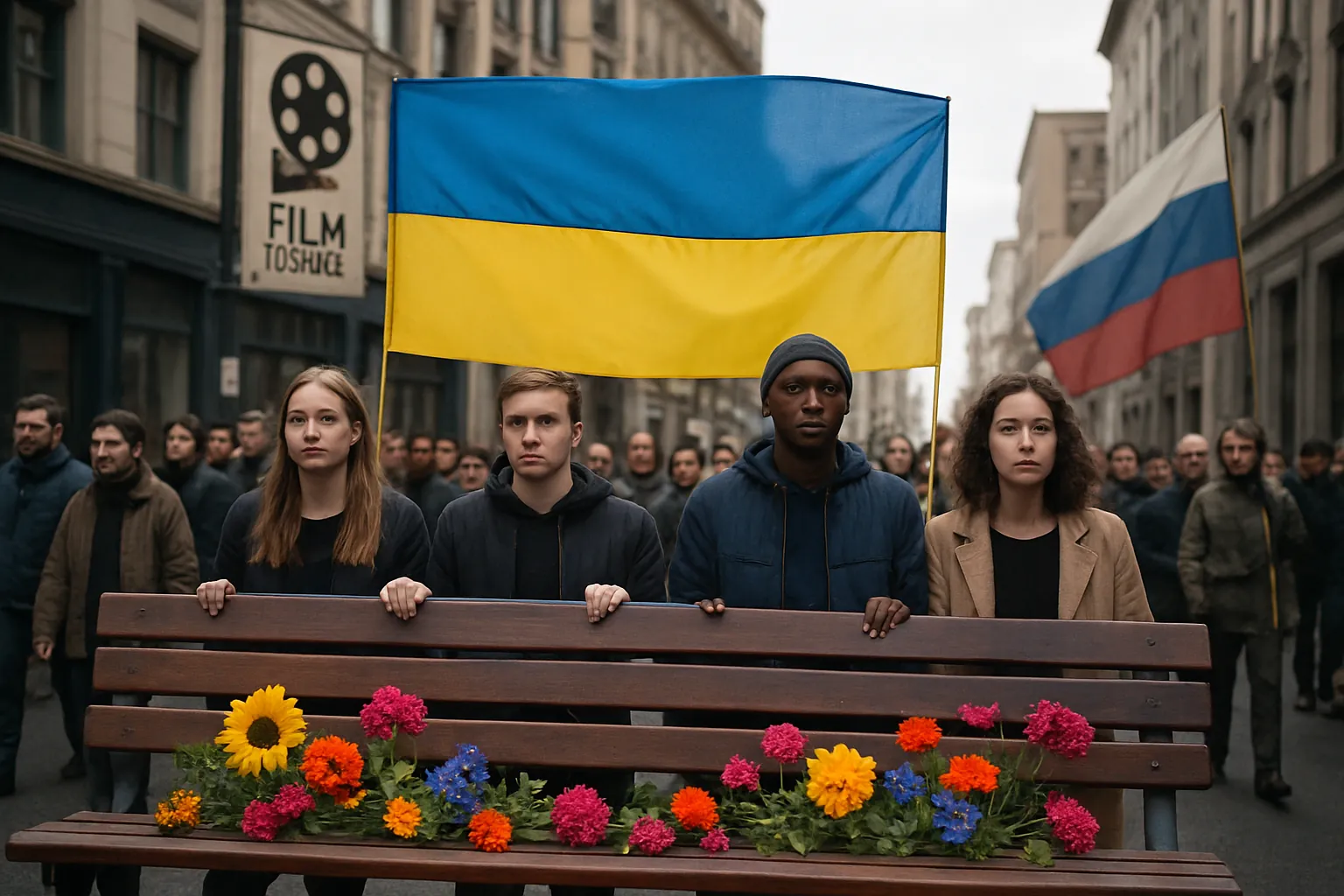
As the 82nd Venice Film Festival unfurled its regal banners on the Lido, one flag in the breeze became a lightning rod: Russia’s tricolor. Just days earlier, Kyiv’s residents had awoken to yet another barrage of missiles and drones — 23 Ukrainians dead, children among them, their lives cut short by an unrelenting war. The juxtaposition could not have felt more jarring.
The presence of the Russian flag above the festival’s main venue provoked swift condemnation from both the Ukrainian Foreign Ministry and the Ministry of Culture and Strategic Communications, who issued a joint statement demanding the flag’s removal. For Ukraine, the critique was more than ceremonial patriotism. It was a plea for moral clarity: Should an aggressor nation currently waging war on another be awarded the glamor and legitimacy of presence at one of the world’s oldest and most prestigious cultural gatherings?
Ministry spokespeople pointed directly to the “ongoing war crimes in Ukraine” — words that resonate with the distinctly modern horror of constant air raid sirens, ruined schools, and a nation’s creative and civilian class under siege. Labeling the festival’s gesture “not freedom of art but hypocrisy and indifference,” the ministries called into question whether international cultural platforms can or should maintain mere neutrality in the face of clear, state-driven violence.
A Festival’s Delicate Dance With Global Politics
Few institutions are as steeped in history and tradition as the Venice Film Festival, established in 1932 under the shadowy stewardship of Benito Mussolini, its long pedigree woven into the identity of the modern film world. The festival’s curators have long argued for the sanctuary of art “above politics.” Yet as the world grapples with the resurgence of autocracy, mass violence, and information warfare, the boundaries between art and accountability have become increasingly permeable.
Organizers clarified that Russia had not officially participated in the festival since its full-scale invasion of Ukraine began in 2022, an implicit acknowledgment of shifting norms. The presence of the Russian flag, they explained, was likely linked to the out-of-competition screening of “Diary of a Director” by Russian auteur Alexander Sokurov. Sokurov, who has occasionally voiced muted criticisms of his homeland’s autocracy, becomes emblematic of the conundrum: when does honoring individual artistic merit inadvertently enable state propaganda or offer cover for collective sins?
Within this context, Ukrainians are rightfully wary. The festival, after all, remains a beacon for international legitimacy. Ukrainian director Olha Zhurba’s documentary “Souche” also premiered at Venice, drawing attention to the creativity and resilience born under threat. For those living daily through war’s realities, the debate over symbols and stages is acutely lived, not theoretical.
“Granting Russia an international cultural platform while its missiles still rain down on Ukrainian cities isn’t freedom of art—it is complicity in terror.”
As Harvard-based scholar Dr. Nadia Bureiko notes, “Artistic autonomy only truly flourishes in spaces where human rights, truth, and justice are honored. To display the Russian flag before the world is, in this moment, to ignore both context and consequence.”
How, then, should cultural organizers navigate calls for boycott or censure? Ukraine’s government, for its part, has been consistent: Moscow’s military adventurism cannot be compartmentalized from its cultural exports. The Ministry of Culture keeps a public list of Russian artists it deems threatening to Ukraine’s national security, with repeated calls to cancel appearances by figures like opera singer Anna Netrebko, known for her equivocal stance toward the war. American director Woody Allen, too, was called out for attending the Moscow International Film Week, leading Ukrainian theaters to pull productions of his work in protest.
Global Culture, Local Consequences
Attempts by Venice’s organizers to thread the needle—invoking freedom of expression while appeasing mounting diplomatic and ethical pressures—mirror broader Western dilemmas. How does the international community stand with the victims of aggression without sliding into cultural McCarthyism?
A closer look reveals real stakes. According to a 2024 Pew Research study, public opinion across the EU has shifted sharply toward support for cultural isolation where state violence is concerned, especially in cases perceived as flagrant violations of international law. The Venice episode, then, is not merely a spat over symbols. It signals the rising cost for institutions hoping to avoid moral entanglement in an interconnected age.
Some might argue against the politicization of art. Yet history offers a sobering counterpoint. During apartheid, global boycotts of South African athletes and artists sent economic and social reverberations, ultimately aiding the dismantling of the regime. “Cultural platforms matter,” recalls Yale historian Timothy Snyder. “They transmit not just stories, but legitimacy and belonging. Whose voices are amplified speaks volumes about who and what we value.”
Absent clear ethical boundaries, “neutrality” often becomes an alibi for injustice. The world has seen time and again how regimes weaponize participation in international culture to whitewash atrocities. Even the appearance of legitimizing the Russian state’s actions — while civilians in Ukraine still live and die under bombardment — is a betrayal of art’s higher purpose.
The Venice Film Festival, set to run until September 6 and open this year with Paolo Sorrentino’s tragicomedy “La Grazia,” finds itself navigating high drama both on and off the screen. The upcoming premiere of Olivier Assayas’ “The Kremlin Wizard,” featuring Jude Law as Vladimir Putin, promises to keep geopolitics in focus. For audiences who care about justice and the responsibility of global citizenship, withholding honors and platforms from perpetrators of violence isn’t censorship; it’s a necessary act of solidarity with victims.
Culture is not a vacuum. Every flag raised, every film programmed, echoes across borders—and in moments like these, silence and neutrality become indistinguishable from complicity. You don’t have to be on the front lines to feel the weight of this choice.
