
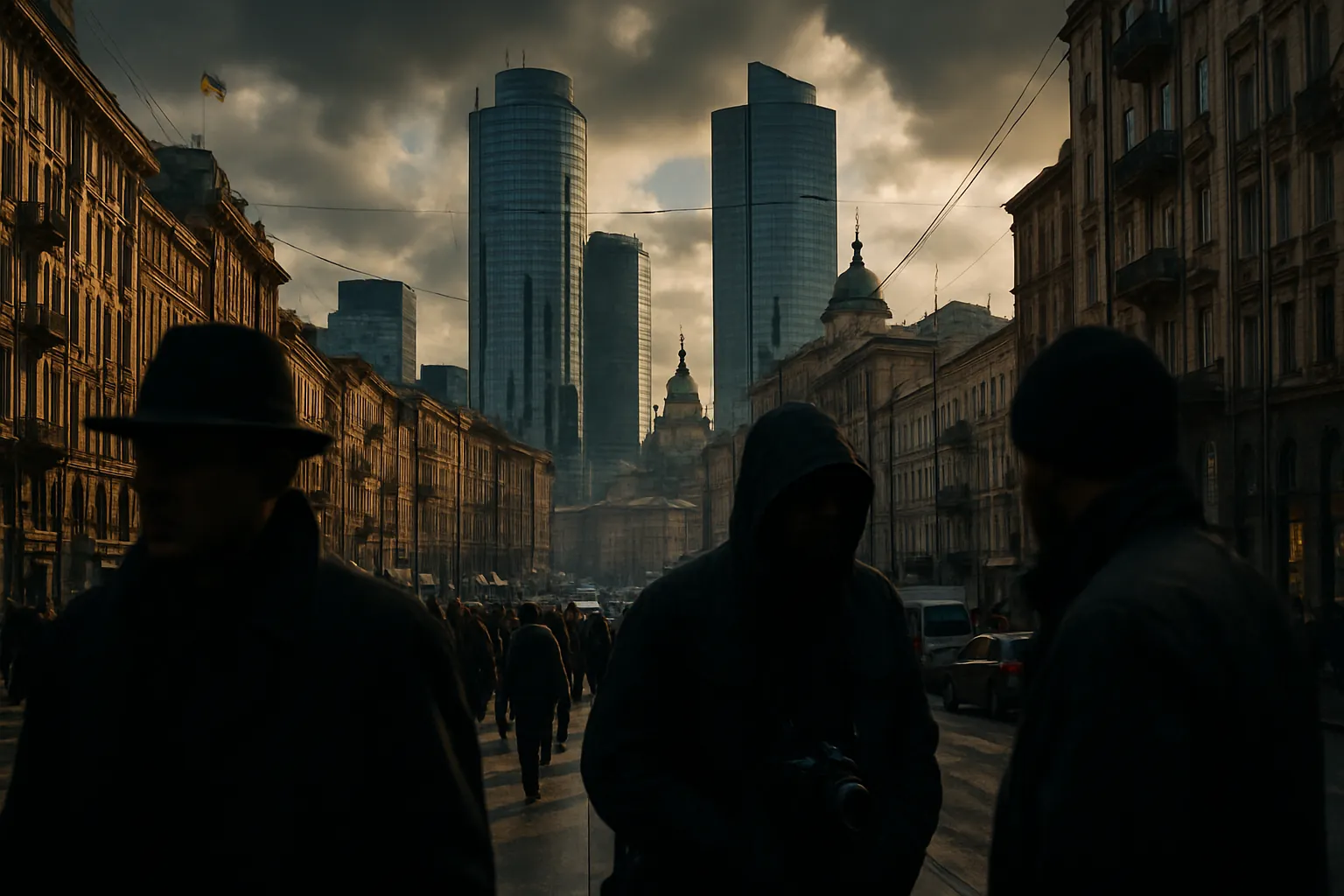
Daylight Assassination: The New Face of Modern Warfare
A summer afternoon in central Kyiv erupted into chaos, a sharp reminder that the front lines of Russia’s war on Ukraine increasingly stretch far from conventional battlefields. At the heart of this violent episode was the cold-blooded assassination of Colonel Ivan Voronych, a senior Ukrainian intelligence officer. Voronych, a figure described by colleagues as instrumental in clandestine operations behind enemy lines, was ambushed in broad daylight—shot five times with a silenced pistol as witnesses looked on in horror. Surveillance cameras captured the attack, transforming a quiet urban street into global news.
This was not random violence but a surgical strike thick with geopolitical implications. According to the Ukrainian Security Service (SBU), the perpetrators—a man and a woman later identified as Russian FSB operatives—were dispatched on a mission to remove a key player in Ukraine’s intelligence apparatus. Their assignment did not end with the trigger pull. Ukrainian officials contend the assassins were meticulously directed: surveil, eliminate, escape to a safehouse. There, they received a pistol equipped with a suppressor, underscoring a chilling professionalism.
Voronych’s death was not an isolated event, but the latest act in a broader, shadowy intelligence conflict. Those who equate the Ukraine war with mere territorial battles miss how 21st-century conflict now unfolds—where city squares become killing grounds and spies stalk foreign capitals in pursuit of proxies and symbols.
Justice or Escalation? SBU Hunts Down the Hit Squad
As the Ukrainian public grieved the loss of an intelligence stalwart, the SBU launched into action. According to agency chief Vasyl Malyuk, a determined round-the-clock operation quickly tracked the FSB agents’ movements, leveraging both traditional fieldwork and digital surveillance. What followed, SBU officials say, was not simply law enforcement—it was a message to Moscow that impunity would not be tolerated.
Security analysts like Mark Galeotti, author of “We Need to Talk About Putin,” emphasize that targeted assassinations of high-value Ukrainian assets have been a key part of Russia’s hybrid war strategy. By targeting Voronych, Moscow sought not only tactical disruption but psychological intimidation, a blast sent deep into Ukraine’s nerve center. Yet the swift SBU response illustrates a reversal: Ukrainian security forces have learned from past missteps.
“The only prospect for the enemy on the territory of Ukraine is death,” declared Malyuk during a somber press briefing. This was more than defiance; it was a warning echoing through Eastern Europe—a line in the sand drawn around Kyiv’s sovereignty.
“This brazen killing and rapid elimination of the assassins highlight not just Ukraine’s vulnerability, but its resolve to root out terror within its own borders. Ukraine is showing the world that even in the face of Russian subterfuge, it refuses to be cowed.”
Beyond that, the episode underscores the degree to which empathy for Ukrainian resistance—and suspicion of Russian methods—has become encoded in the West’s response. Western intelligence agencies, speaking to The Guardian on background, praised the SBU’s agility but voiced worries: with every high-profile hit, the spiral of retaliatory violence and espionage only deepens.
War in the Shadows: The Human Cost and Global Stakes
The brutal realities of this covert war extend far beyond the principal actors. In the days surrounding Voronych’s assassination, Russian drone and missile barrages killed at least four Ukrainian civilians and wounded more than a dozen, a tragic tally confirmed by Ukraine’s emergency services. Civilian death is nothing new in this conflict, but the calculated precision of these assassinations amplifies a climate of fear and uncertainty in everyday Ukrainian life.
The Kremlin’s silence—its refusal to comment on accusations or admit its agents’ demise—is part of a wider policy of plausible deniability, itself a favored tactic of Russian security operations stretching back to Soviet times. Harvard political scientist Alexandra Vacroux notes that similar patterns surfaced during the Cold War, with subterfuge and state-sanctioned violence bleeding across borders. Today’s iterations, made more ruthless by modern technology and nationalist fervor, raise new questions about the limits of international law and the efficacy of global norms.
Ukrainian officials want their Western supporters to see this episode not as a standalone tit-for-tat, but as an existential struggle. After all, Voronych was reportedly one of the architects behind daring operations inside Russia, including Kyiv’s audacious incursion into the Kursk region. For Vladimir Putin, whose regime has staked national pride on narratives of invulnerability, such missions are intolerable provocations—with deadly consequences.
A closer look reveals how these cycles of violence risk metastasizing if left unchecked. Who pays the price? All too often, it’s the public—concerned citizens, bystanders, dissidents. While the killing of Russian hit squads might deliver justice, liberals must grapple with a somber truth: constant escalation serves authoritarian interests more than it advances democratic ones. Maintaining moral clarity amid spy games is an imperative, not a luxury.
The stakes, ultimately, reach far beyond Kyiv or Moscow. As the world’s focus shifts from battlefields to boardrooms, from trenches to back alleys, what happens in Ukraine is a warning to democracies everywhere: unchecked aggression and clandestine violence abroad always ripple homeward.
