
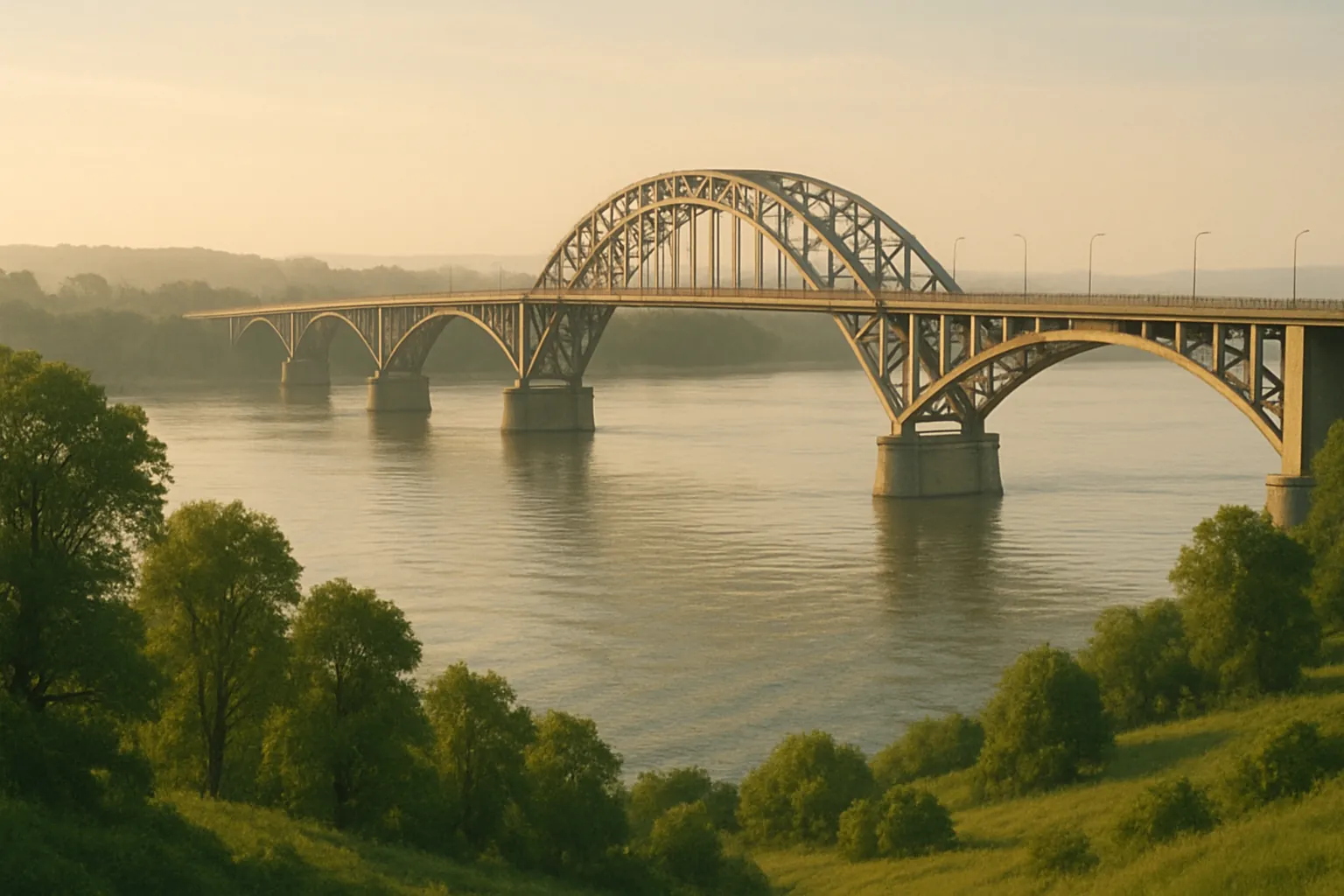
Shattering Symbols: Ukraine Sends a Message Across the Kerch Strait
Just after 4:44 a.m. local time on a Tuesday morning, the Kerch Strait Bridge—Putin’s grand postscript to Russia’s 2014 annexation of Crimea—shuddered under the force of a massive underwater explosion. According to Ukraine’s Security Service (SBU), this was no spontaneous operation: agents had spent months meticulously planting 1,100 kilograms of explosives around the bridge’s underwater supports. As dawn broke, the bridge—a personal obsession of Vladimir Putin, who once triumphantly drove a truck over it—was left scarred and broken, at least for several hours.
For Ukrainians, the Kerch Bridge is no mere stretch of concrete and steel; it’s an enduring symbol of occupation, connecting Russia to Crimea and facilitating the transport of tanks, missiles, and troops into Ukraine’s battered southern regions. Today, these explosions echoed far beyond the peninsula, reverberating through war rooms in Moscow, diplomatic suites across Europe, and even living rooms here in the West. The real story, however, runs deeper than military hardware. What does this bold strike reveal about the course of the war, Ukraine’s grim determination, and the flawed logic underpinning conservative calls for appeasement and disengagement?
The Legitimate Target: Why Ukraine Struck the Kerch Bridge
Near the heart of this strike lies an argument that is both moral and strategic. Lieutenant General Vasyl Malyuk, head of the SBU, underscored Ukraine’s position in blunt, unvarnished terms: “There is no place for any illegal Russian facilities on the territory of our state.” The bridge, Malyuk insisted, is an “absolutely legitimate target,” not out of spite but necessity.
Putin’s pet project isn’t just a road; it’s a lifeline—a critical artery for supplying Russia’s occupation forces with weapons, fuel, and manpower. Disrupting its function strikes at the very core of the Kremlin’s grip over Crimea, a bold display of resistance just as Russia ramps up drone assaults on Ukrainian cities. The symbolism isn’t lost on Ukrainians or their allies: bridges both connect and divide, and this bridge quite literally sustains a war of occupation.
As Harvard political scientist Erica Chenoweth notes, “Attacks like these are multipurpose… they aim to degrade logistical capacity, rally domestic and international support, and remind the aggressor that the status quo is not sustainable.” For Ukraine, inflicting visible, costly damage on this symbol of occupation sends an unmistakable message: Crimea is not conquered; resistance endures.
“Attacks like these are multipurpose… they aim to degrade logistical capacity, rally domestic and international support, and remind the aggressor that the status quo is not sustainable.” —Erica Chenoweth, Harvard University
The Conservative Response—and Its Shortcomings
At home and abroad, echoes of conservative pundits—quick to decry Ukrainian resistance and urge Washington to “focus on America’s problems”—grow louder with each escalation. Former officials and commentators have repeatedly claimed that sending aid only prolongs the suffering, or that attacks like the strike on Kerch Bridge risk escalating the conflict needlessly.
But what these arguments gloss over is precisely what this strike lays bare: Retreat and appeasement breed occupation, not peace. The track record is painfully clear. Cold War history—Hungary in 1956, Czechoslovakia in 1968—teaches that tyrannical regimes do not simply withdraw when unopposed. When bridges like Kerch are left unchallenged, they become not just instruments of occupation but also monuments to the international community’s indifference.
“If Ukraine were to stop fighting today, there would be no Ukraine tomorrow,” historian Timothy Snyder reminds us. On the other hand, strengthening Ukraine’s hand with targeted, high-impact operations has repeatedly forced Russia onto the defensive. Ukrainian innovations, from long-range drone warfare to underwater sabotage, have forced even Russia’s military planners to revise their timelines and logistics. The latest Kerch attack is yet another such disruption.
Beneath the Explosions: The Human Toll and the Road Ahead
It’s worth noting that, according to all available reports—including statements from Ukraine and monitoring by international journalists—no civilians were killed or injured in this calculated, months-long operation. Compare that with the simultaneous stories emerging from Sumy, where at least three innocent Ukrainians died in Russian drone attacks targeting homes, hospitals, and infrastructure. The difference is stark, and it shatters the cynical “both sides” arguments dangled by some in the right-wing media.
This is a war imposed, not chosen. In reality, Ukrainian strikes like the one on the Kerch Bridge—conducted with precision and careful planning—contrast sharply with Russia’s broad, devastating assaults on civilian life and infrastructure. According to a recent analysis by the Institute for the Study of War, deliberate attacks on military targets, coupled with the avoidance of civilian casualties, strengthen Ukraine’s position diplomatically and ethically.
Despite this, the drumbeat for a premature peace deal grows louder, especially among those on the hard right who view Ukraine as little more than a geopolitical inconvenience. What’s missing in these calls is empathy—for Ukrainians facing existential threat, and for a world order imperiled by the normalization of belligerent land grabs. When the bridge reopened in the hours after the blast, it was only a faint echo of its former utility.
Do the lessons of the Kerch Bridge—its construction, its repeated attacks, its resilience as a symbol—stretch beyond Ukraine?
The answer, increasingly, is yes. The persistence of Ukrainian resistance, and of international support for it, signals to autocrats everywhere: aggression will not be met with passivity, and occupation will never earn legitimacy. Ultimately, progressive values demand more than good intentions—they require resolve in the face of injustice. Looking at the charred pilings of Putin’s prized bridge, you might ask yourself: how much longer can brute force paper over historic wrongs and popular will?
