
The Kursk Incident: More Than a Lost Jet
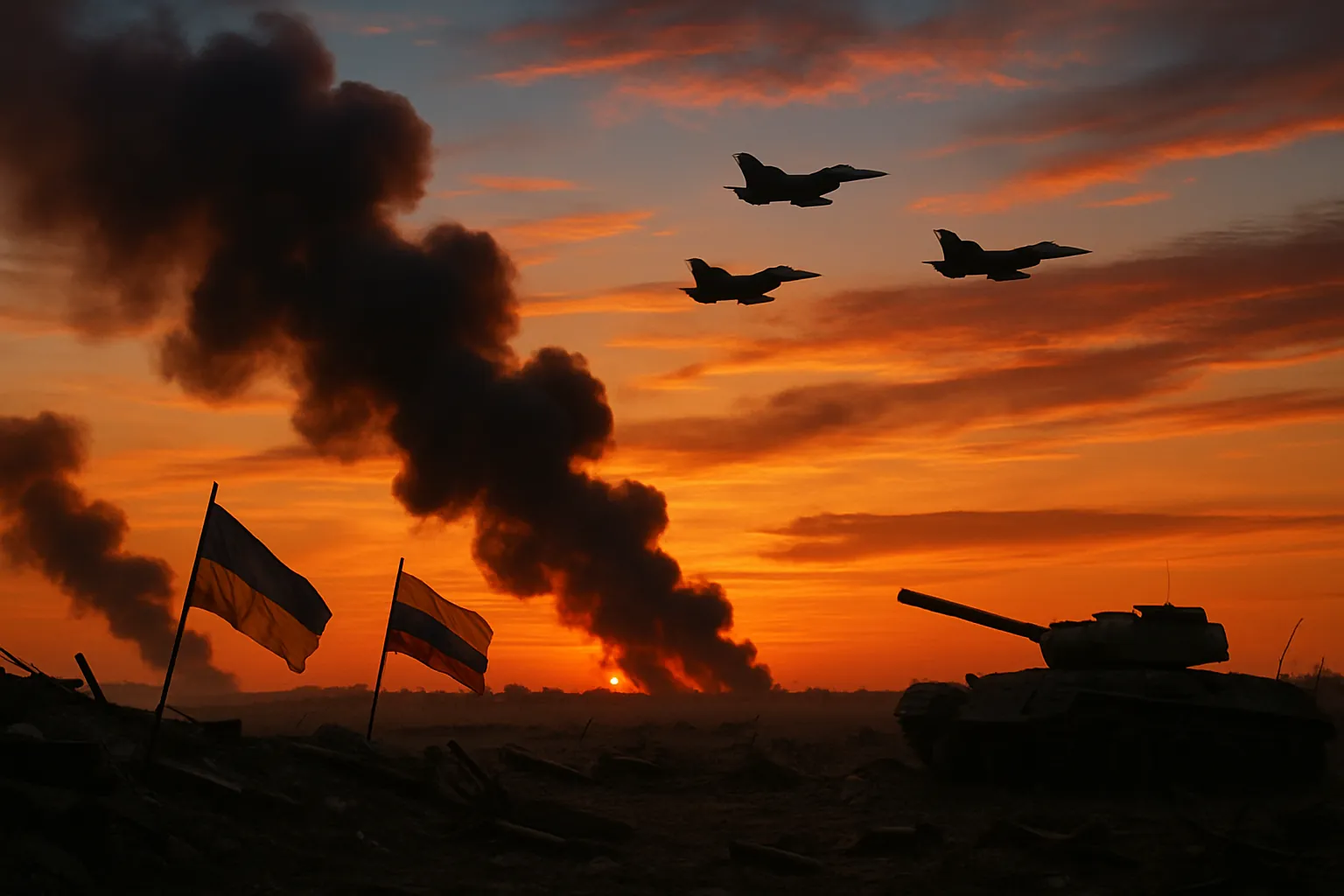
A flash of fire in the early hours over Russia’s Kursk region signaled what might be a pivotal moment in an air war many had grown accustomed to watching from afar. On June 7, 2025, the Ukrainian Air Force asserted it shot down a Russian Su-35 fighter jet—a machine touted as one of the crown jewels of the Russian arsenal. Video footage circulated across Ukrainian and international outlets showed the burning fuselage, broadcast as both evidence and warning.
The context is critical. The Su-35, a 4++ generation multirole aircraft, bristles with advanced avionics and thrust-vectoring engines, a symbol of Moscow’s claim to technological military superiority. Downing such an asset so close to the Ukrainian border did not just bruise Russia’s military pride. It cracked the veneer of invincibility around Vladimir Putin’s much-vaunted defense industry—as well as underscored how the front lines of this conflict often shift in unexpected, highly symbolic ways.
The incident unfolded near the village of Tiotkine, with reports placing the downed jet about 15 kilometers from Ukraine’s border. The jet’s mission was hardly routine—supporting Russian troops as Ukrainian forces pressed their offensive in the region. That a mission was mounted to rescue the pilot (with dramatic video footage later appearing online) only added to the sense of a new escalation.
Disputed Claims and Information Wars
Confusion inevitably followed. Some Ukrainian sources, amplified through social media, claimed the kill was delivered by one of Ukraine’s newly acquired F-16s, though these reports remain unverified. Others pointed to a surface-to-air missile system utilizing the AIM-120C-8, a missile known for its active radar homing and enhanced range—tools that have helped level the playing field against Russia’s numerically superior air force. Meanwhile, eagle-eyed observers noted a discrepancy: the aircraft silhouette on Ukrainian posts depicted a Su-34 Fullback, not the Su-35S as reported. Such inconsistencies are fodder for information warfare—each side scrambling to set the narrative.
Why this matters goes well beyond hardware. Modern war is as much about symbols and messaging as it is about battlefield outcomes. Russian military bloggers acknowledged the shootdown, even as Moscow’s official channels remained silent. The tacit admissions—underscored by the lack of immediate Russian condemnation—suggest the loss was damaging enough to warrant a strategic pause before public response. Kyiv, for its part, leveraged the moment to highlight Ukraine’s growing technical capability, presenting the incident as evidence that Russia’s supposed air dominance can be, and is being, contested.
A closer look reveals how these information skirmishes echo patterns from earlier conflicts. During the Cold War, for instance, tightly managed press releases on both sides masked both victories and defeats, using perception as a weapon in its own right. Now, with social media accelerating the news cycle, these battles for narrative supremacy unfold in real time—and missteps can alter public sentiment as rapidly as missiles down aircraft.
“A single downed fighter jet is more than metal twisted by fire—it’s a signal that no side can count on technology or bravado alone to win the air war.”
According to Michael Kofman, a senior fellow at the Carnegie Endowment, “Ukraine’s ability to strike valuable Russian targets near or inside Russian territory underlines the growing complexity and fluidity of this conflict. Moscow’s response—or lack of one—speaks volumes.”
Strategic Implications: Weakened Wings, Changing Tides
Beyond the events of June 7, the downing of the Su-35 forms part of a broader trend. Ukraine’s Security Service (SBU) has recently embarked on what it calls “Operation Spiderweb,” striking Russian airfields and destroying up to 41 strategic bombers and command aircraft—a blow that, according to Reuters, amounts to one-third of Russia’s cruise missile carriers. These campaigns signal a shift from defensive attrition to proactive, high-value targeting intended to sap the Russian war effort at its most vital arteries.
Putin’s campaign to market advanced weaponry on the global stage is directly threatened by such losses. Export deals for platforms like the Su-35—pitched to states seeking inexpensive alternatives to NATO standards—now face skepticism. If Russia’s vaunted aircraft can be destroyed near its own borders, what does that say about their reliability abroad? This matters not only for economic reasons but for the broader narrative of Russian technological might. It’s a narrative that, as history has shown, is deeply entwined with the Kremlin’s ability to project political power and influence, both at home and abroad.
Ukrainian forces, empowered by Western technology and intelligence, have proven increasingly adept at exploiting Russia’s logistical gaps, targeting vulnerable aircraft as they transition between operational areas. The impact ripples outward: Moscow must now allocate greater resources to protect its premier assets, stretching air defense and recovery teams thin, and compounding the military’s fatigue. Meanwhile, advances in Ukrainian air combat capability embolden both soldiers and citizens. This psychological edge is not to be underestimated. Harvard military historian Mary Elise Sarotte observes, “Air superiority is not won merely by numbers but by the ability to adapt and innovate on the fly—the Ukrainians are demonstrating both.”
A patchwork of facts, footage, and expert testimony underlies this turning point. As battles rage in both the sky and cyberspace, the downing of a single Su-35 might come to symbolize the vulnerability of even the most imposing war machines—and a war in which each day’s outcome shapes the diplomatic future as much as the military one.
