
The Politics Behind a Humanitarian Crisis
Imagine more than half a million people standing on the precipice of starvation—parents scrambling for crumbs, children weakened by malnutrition, entire families caught in the crosshairs of policy and war. That is the reality confronting Gaza today. Now, into this landscape steps a new actor: a US-backed private aid group, the Gaza Humanitarian Foundation (GHF), primed to begin operations by the end of May. The group’s emergence coincides with Israel’s agreement to ease a two-month-long blockade, a development that should signal hope. Instead, it’s igniting a fresh wave of anxiety among humanitarian experts and international agencies.
The strategy advanced by GHF is unorthodox—and controversial. Instead of relying on long-standing United Nations mechanisms, this new initiative taps US-based contractors and security firms to handle aid distribution, all under a blueprint created during the Trump administration and with the close cooperation of Israeli authorities. According to Human Rights Watch, this pivot away from established multilateral frameworks “undermines the impartiality and independence critical to humanitarian access.”
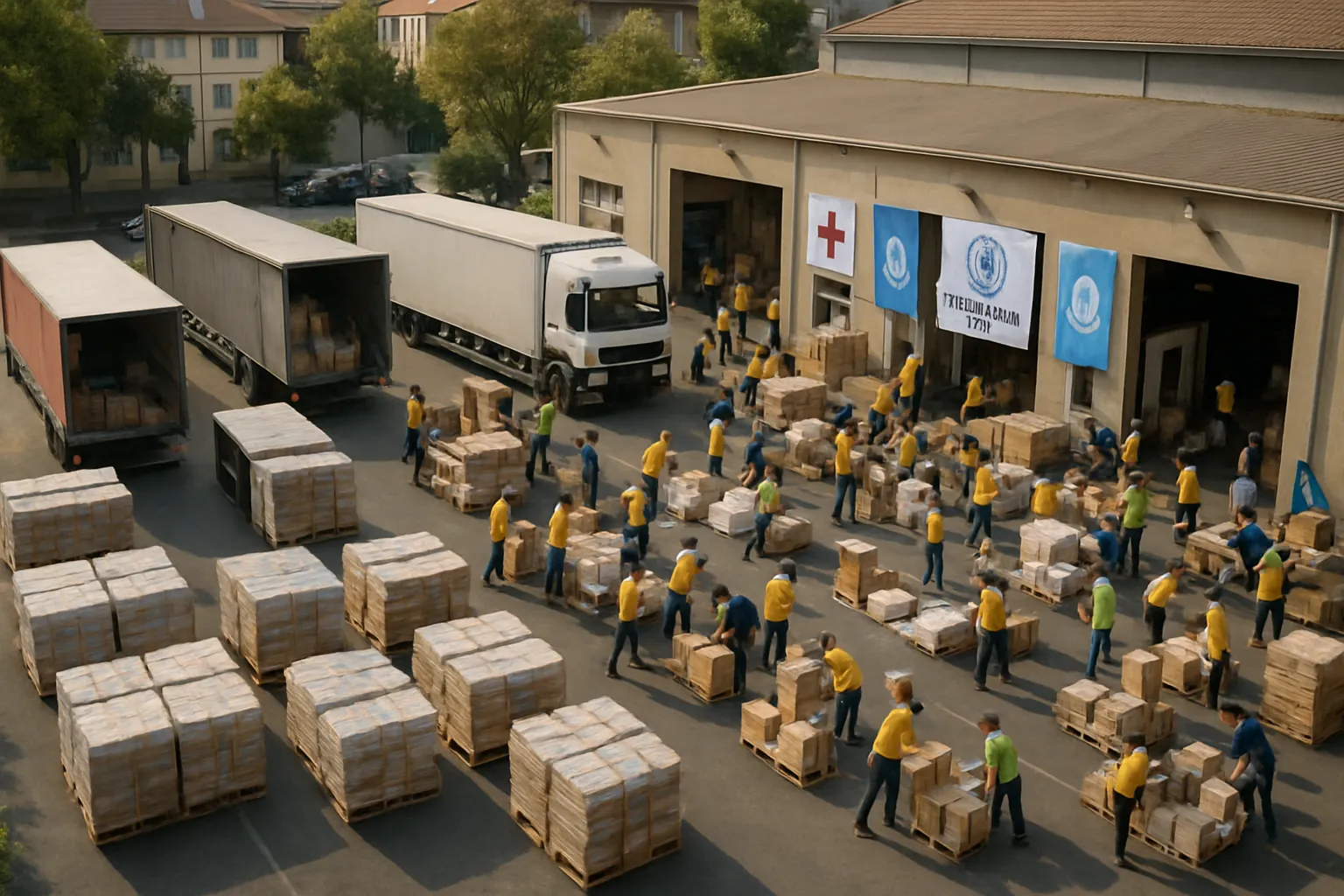
At first glance, the plan seems straightforward: establish Safe Distribution Sites (SDSs) across the Gaza Strip, starting with four in the south and expanding as needed. US logistics company Safe Reach Solutions and security outfit UG Solutions will facilitate warehouse management and delivery convoys. But a closer look reveals a system custom-built to sideline major players like the UN, with Israel retaining close oversight and introducing stipulations that have frightened off some international NGOs.
Shifting the Burden: Who Really Benefits?
On paper, it sounds efficient—targeted delivery, new oversight mechanisms, and a commitment to keep Hamas away from redirected aid. Supporters, including the US State Department, argue that traditional UN-led efforts failed to prevent civilian suffering and ensure security. Those same supporters point to the fact that Israel has agreed to temporarily lift its blockade and expand the number of distribution points after initial pushback about the plan reaching just 60% of Gaza’s population.
But humanitarian reality rarely matches such technocratic optimism. According to Jan Egeland, Secretary General of the Norwegian Refugee Council and a veteran of crisis zones, “sidestepping those with decades of experience in favor of untested systems isn’t just reckless—it risks lives.” Many seasoned relief agencies, including the United Nations itself, flatly refuse to participate under current Israeli constraints, insisting that fundamental principles—impartiality, humanity, neutrality, and independence—must not be treated as afterthoughts.
The foundation’s initial plan would have delivered food and medical supplies to select sites serving roughly 1.2 million Palestinians. That leaves nearly a million more in limbo, particularly those in hard-to-access northern Gaza, where the humanitarian crisis is most acute. GHF leadership has acknowledged this limitation and, under pressure, claims they’ve secured approval for more distribution centers. However, questions about security, aid monitoring, and the risk of politicization continue to swirl.
“By making aid conditional on Israel’s approval and excluding long-standing UN partners, this new model risks deepening both human suffering and the sense of collective abandonment felt by ordinary Gazans.” — Amal Hassan, Middle East policy fellow at the Brookings Institution
What often gets lost in this bureaucratic maneuvering is the urgency of the crisis itself. According to the Integrated Food Security Phase Classification (IPC), over 500,000 people in Gaza face catastrophic food insecurity. The United Nations Office for the Coordination of Humanitarian Affairs warns that without a sustained and neutral delivery pipeline, famine is not a distant specter—it’s a clear and present danger.
Can Privatized Aid Deliver Justice and Relief?
There is a bitter irony at play: while the Gaza Humanitarian Foundation requests that the United Nations and other agencies resume deliveries during its ramp-up, its very existence is predicated on sidelining those same groups over accusations of inefficiency and diversion. This contradiction exposes a deeper tension in modern humanitarianism: is the goal saving lives, or scoring political points?
History invariably warns us about the perils of politicizing relief. During the Balkan wars of the 1990s, the international community learned—at extraordinary human cost—that bypassing experienced multilateral actors often led to gaps in aid, proliferation of black markets, and exacerbation of local resentments. Similar patterns have been documented in Yemen, where conflicting delivery models have repeatedly complicated life-saving assistance and emboldened local spoilers.
The new Gaza model lands at the intersection of global politics and humanitarian necessity. Critics fear that placing US security firms in the middle of Gaza’s crisis could erode what little trust remains among recipients and further endanger already vulnerable civilians. Humanitarian scholar Sara Roy of Harvard reminds us, “Making the distribution of basic necessities dependent on the whims of warring parties is antithetical to everything relief work aspires to achieve.”
Some might ask: Does breaking the UN’s monopoly on Gaza aid offer a long-overdue solution, or merely introduce fresh risks and deepen the already catastrophic suffering of Palestinians caught in the crosshairs? The answer hinges not just on logistics but on moral clarity and political will. If America and Israel are serious about delivering justice as well as bread, they must heed warnings from seasoned humanitarians, open their model to real scrutiny, and—most of all—put the welfare of Gaza’s people above all else.
Right now, eyes remain fixed not only on the Safe Distribution Sites but on whether the world’s most powerful nations will recommit themselves to the core humanitarian values—impartiality, independence, and humanity—that have too often gone missing in the fog of political calculation. The choices made in the coming months will reverberate for generations, not just in Gaza, but wherever humanitarian aid becomes a pawn in the great power game.
