
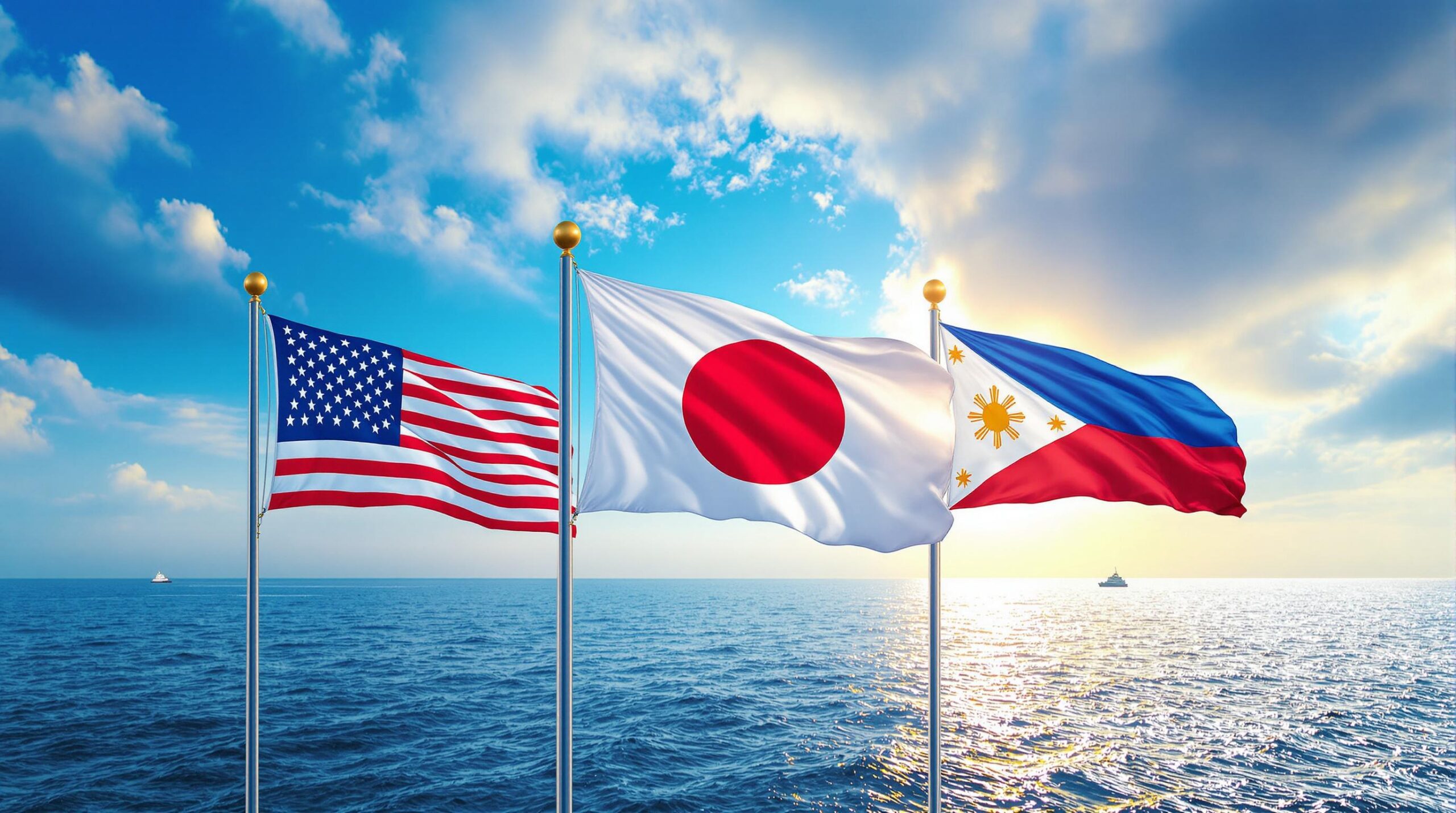
In a powerful display of multilateral cooperation, the naval forces of the United States, Japan, and the Philippines recently converged for joint maritime drills in the West Philippine Sea. Conducted on March 28, 2025, this Multilateral Maritime Cooperative Activity (MMCA) served as a robust reminder that international collaboration remains paramount in addressing regional security challenges posed by expansive territorial claims, notably from China, whose navy vessel was seen monitoring the exercise closely from a distance.
A Unified Presence in Troubled Waters
The exercises, strategically occurring approximately 31 nautical miles southeast of Bajo de Masinloc—commonly known as Scarborough Shoal and long a flashpoint for geopolitical tensions—brought together an impressive assembly of assets from the participating countries. The Philippine forces showcased the Navy’s modern flagship, BRP Jose Rizal, enhanced by an AgustaWestland AW109 helicopter, and the vital reconnaissance support of C90 aircraft and Air Force SAR units. Joining them, the US Navy dispatched the USS Shoup, a guided-missile destroyer, enhanced by cutting-edge platforms like the MH-60R naval helicopter and the sophisticated maritime patrol aircraft, the P-8A Poseidon. Japan likewise contributed formidable naval capabilities with JS Noshiro, a frigate accompanied by an SH-60K helicopter.
Commander Irvin Ian Robles of the Philippine flagship notably expressed pride in the nation’s naval upgrades, affirming, “We are at par with other countries now that we have modern platforms.” This projection of increased military proficiency underscores not only an advancement in the Philippines’ defense posture but its commitment to reinforcing a multilateral front against aggressive territorial incursions.
Multilateralism: A Strategic Imperative
Echoing this sentiment on mutual cooperation, US Defense Secretary Pete Hegseth emphasized the enduring value of such strategic alliances. During his associated visit, Secretary Hegseth articulated the broader intention behind the drills, asserting, “We’re here in the Philippines to strengthen that partnership. We’ll be in Japan to do the same.” His message subtly reinforced a stance of diplomatic unity, setting a firm international response to the perception of China’s unilateral actions in disputed maritime regions.
These drills, meticulously designed, included exercise routines such as Communications Checks Exercises, focused Personnel Exchange drills, Maritime Domain Awareness (MDA) activities, and Rotary Flight Operations. Each phase intended to enhance interoperability and preparedness, providing a clear deterrence against escalatory actions within volatile maritime territories. Certainly, this intense coordination signifies a noteworthy development in regional defense initiatives, signaling the shared resolve of these nations to uphold international law and maritime security.
A Response to Rising Tensions
This latest MMCA aligns contextually with ongoing territorial disputes in the South China Sea. Claiming nearly the entire maritime expanse as its own, China’s assertive stance contrasts sharply with the 2016 Permanent Court of Arbitration ruling in the Hague, which decisively favored the Philippines’ claims. China’s continued disregard for this ruling increases diplomatic friction and elevates the urgency for reliable collaborative defense strategies among neighboring nations and global allies.
Defense Secretary Gilberto Teodoro Jr. of the Philippines aptly framed these developments, stressing that trilateral cooperation is rapidly advancing. The recognition of such formal structures, including Japan’s recent establishment of a Joint Operational Command under Lieutenant General Kenichiro Nagumo, marks an evolution in regional security architecture designed to respond swiftly and effectively to security threats.
The joint exercises emphasize that collective maritime capabilities are essential for maintaining peace and stability in the contested Indo-Pacific region.
As AFP Chief of Staff General Romeo Brawner Jr. pointed out, these comprehensive training activities underscore a united capability to face maritime security challenges head-on. Far from isolated maneuvers, what transpired in the West Philippine Sea represents a practical response to increasing tensions, reinforced through international cooperation rather than unilateral endeavors.
Beyond rehearsing military tactical maneuvers and enhancing strategic military communication, these exercises send a potent message to nations attempting to alter regional balances through intimidation and coercion. They reinforce diplomatic principles underscored by international law and collective responsibility toward regional peace and economic stability—values dearly held by progressive policies and democracy advocates.
Further, it’s significant to note that such collaborative exercises extend beyond military logic. They are profound statements echoing progressive ideals of solidarity, multilateral diplomacy, and collective action, all within the framework of equitable defense and mutual respect. Integrating diplomatic engagement with strategic preparedness ensures affected nations can safeguard sovereignty without escalating tensions unnecessarily, with interventions rooted solidly in diplomacy and collective international advocacy.
Wrapping up, these drills amidst Chinese naval monitoring strongly indicate a steadfast international commitment to maintaining lawful maritime navigation and regional peace. They stand as concrete examples of multilateral diplomacy addressing international disputes carefully, respectfully, and above all, cooperatively. In times when geopolitical tensions continually challenge global peace, such demonstrations of unity serve profoundly to remind aggressive actors that the world watches closely, unified in defense of sovereignty, international norms, and regional stability.
