
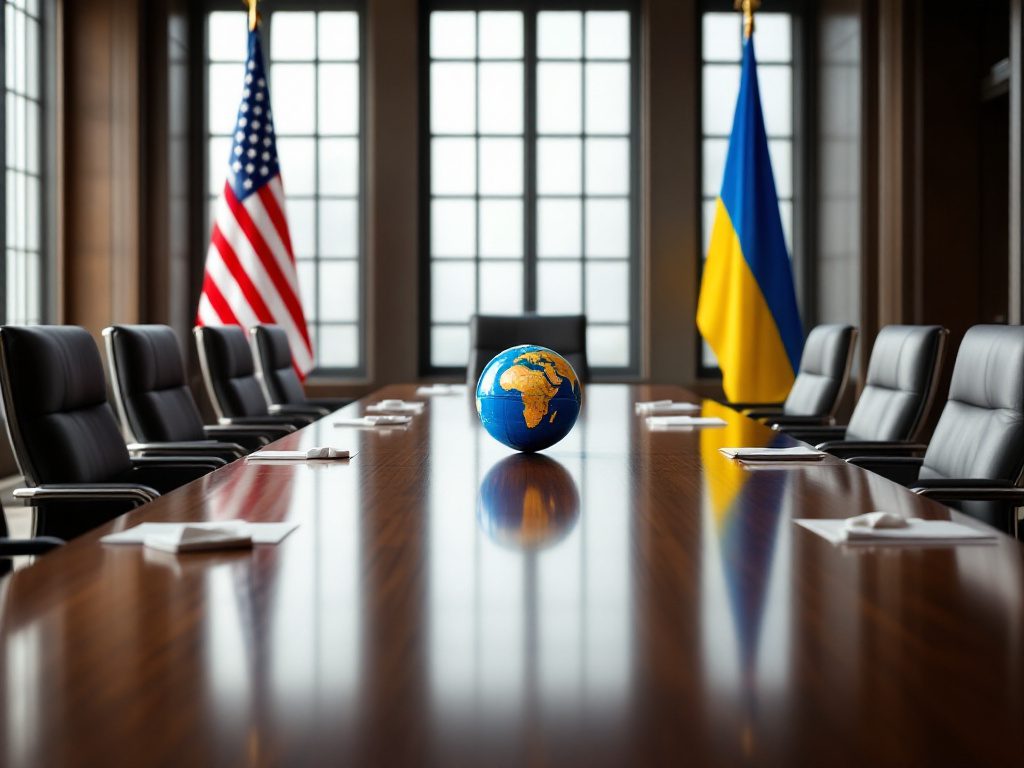
The Clock Ticks on Ukraine Diplomacy
Barely a year ago, hawkish optimism and talk of Western resolve seemed to define the mood in Washington regarding Russia’s war on Ukraine. Yet, the past week illustrated a sharp pivot in U.S. tone: Vice President JD Vance took to the stage in New Delhi, issuing a stark warning that has sent tremors through diplomatic circles and European capitals alike. The message to both Moscow and Kyiv was as blunt as it was dire: accept a U.S.-brokered ceasefire—under terms widely seen as favoring Russian claims over occupied territories—or risk seeing Washington “walk away” from its leadership role in the peace process altogether.
Why now? Talks in London, once headlined by prime ministers and foreign secretaries, recently withered to mid-level huddles after a spate of deadly Russian airstrikes—including a drone attack in Marganets that killed nine Ukrainian civilians and injured dozens more—highlighted the chasm between diplomatic ideals and battlefield realities. According to the UK Foreign Office, “The Ukraine Peace Talks meeting with Foreign Ministers today is being postponed. Official-level talks will continue.” The timing speaks volumes: at the very moment diplomatic maneuvering is most urgently needed, the machinery falters.
Frustration in the White House is palpable. President Donald Trump’s much-boasted deadline to end the conflict in “24 hours” has long passed; concessions from Vladimir Putin remain elusive, and the optics of American leadership are beginning to wane. It’s no coincidence that Vance’s ultimatum came on the heels of a U.S. proposal, first raised the week prior in Paris, to freeze territorial lines—essentially accepting current battlefronts. Trump allies appear increasingly willing to countenance Russia’s annexation of Crimea, a position that not only violates Ukraine’s sovereignty, but also reverses decades of Western policy.
Behind the Ultimatums: The Costs and Perils of U.S. Policy Shifts
The U.S. gambit hinges on the assumption that both sides are exhausted enough to accept terms, but that calculation ignores Ukraine’s political resolve and the moral hazard of rewarding aggression. President Zelensky’s government, while battered by war and craving Western support, continues to reject any recognition of Russia’s occupation of Crimea and other regions. Ukraine’s constitution, national identity, and the collective memory of 20th-century occupations stand as immovable obstacles.
Should America force the issue, it risks more than just diplomatic backlash. Expert voices caution that U.S. withdrawal carries perilous consequences. Harvard historian Serhii Plokhy warns, “Abandoning Ukraine in the midst of Russian escalation would set a precedent for rogue states everywhere—and signal the collapse of the international order the U.S. helped build.”
What might that look like in practice? In the days leading up to Vance’s remarks, Ukrainian officials braced for intensified bombardment—far from a negotiating table, everyday citizens faced nightly terror as drones and missiles thundered down on Kharkiv, Poltava, and Kyiv. According to CNN’s Chief International Correspondent Clarissa Ward, families in bunkers see ceasefire talk as “abstract theater,” dwarfed by the immediacy of survival. This is the human cost of diplomatic brinkmanship.
“Abandoning Ukraine in the midst of Russian escalation would set a precedent for rogue states everywhere—and signal the collapse of the international order the U.S. helped build.” — Serhii Plokhy, Harvard historian
Congressional Democrats have voiced their concern as well. Senator Chris Murphy (D-CT) warned on PBS that “forcing Ukraine to make concessions under duress is antithetical to every value we profess.” The Biden administration’s cautious approach, in contrast, consistently emphasized the right of Ukrainians to decide their own fate—but this hardline ultimatum nudges the U.S. away from that principle, all in apparent service to expedience.
A closer look reveals division in the U.S.-European alliance as well. French and German officials have reportedly resisted U.S. pressure to support any settlement enshrining Russia’s territorial gains. Instead, they argue for guarantees of Ukrainian sovereignty and postwar economic support—echoing the Marshall Plan ideals that rebuilt Europe, not the cold logic of a poker table deal.
Diplomacy, Deadlines, and the Price of Impatience
The rhetoric from Washington—especially from the Trump-Vance axis—suggests a zero-sum narrative in which U.S. involvement persists only as long as a deal is swiftly reached. History, however, offers a cautionary tale. Every time superpowers have imposed artificial deadlines on peace processes, the result has been either fragile armistices or outright failure. Think of the Dayton Accords, only successful because of painstaking, patient negotiation. Contrast that with the hasty U.S. pullout from Afghanistan, which left allies scrambling and authoritarian forces emboldened.
The moral dimension is equally urgent. Ukraine’s fate is not merely a geostrategic bargaining chip—it is a bellwether for 21st-century democracy itself. Should a great power validate land grabs by force, the repercussions would be global. Taiwan, the Baltics, and other vulnerable democracies would hear the message loud and clear.
Why should you care? Because if American credibility crumbles abroad, the consequences inevitably ripple home. As U.S. support teeters, so too does the international coalition that has—however imperfectly—kept the world’s wars at bay. A deal crammed through at the point of a gun, without buy-in from those whose homes are on the line, cannot endure.
Beyond the headlines, Ukrainians are paying for every diplomatic miscalculation in blood, not just in territory. According to a recent Pew Research study, a majority of Americans still back robust aid for Kyiv—not because it’s simple, but because it’s right.
As the London talks spiral downward and ultimatums mount, the world confronts a critical test: Will the U.S. insist on genuine, just peace—or will impatience and political posturing discard principles in the name of expedience? The answer will echo far beyond Eastern Europe’s embattled fields, shaping the kind of world we all inherit.
