
Opening a Door—and a Debate—in Hermitage
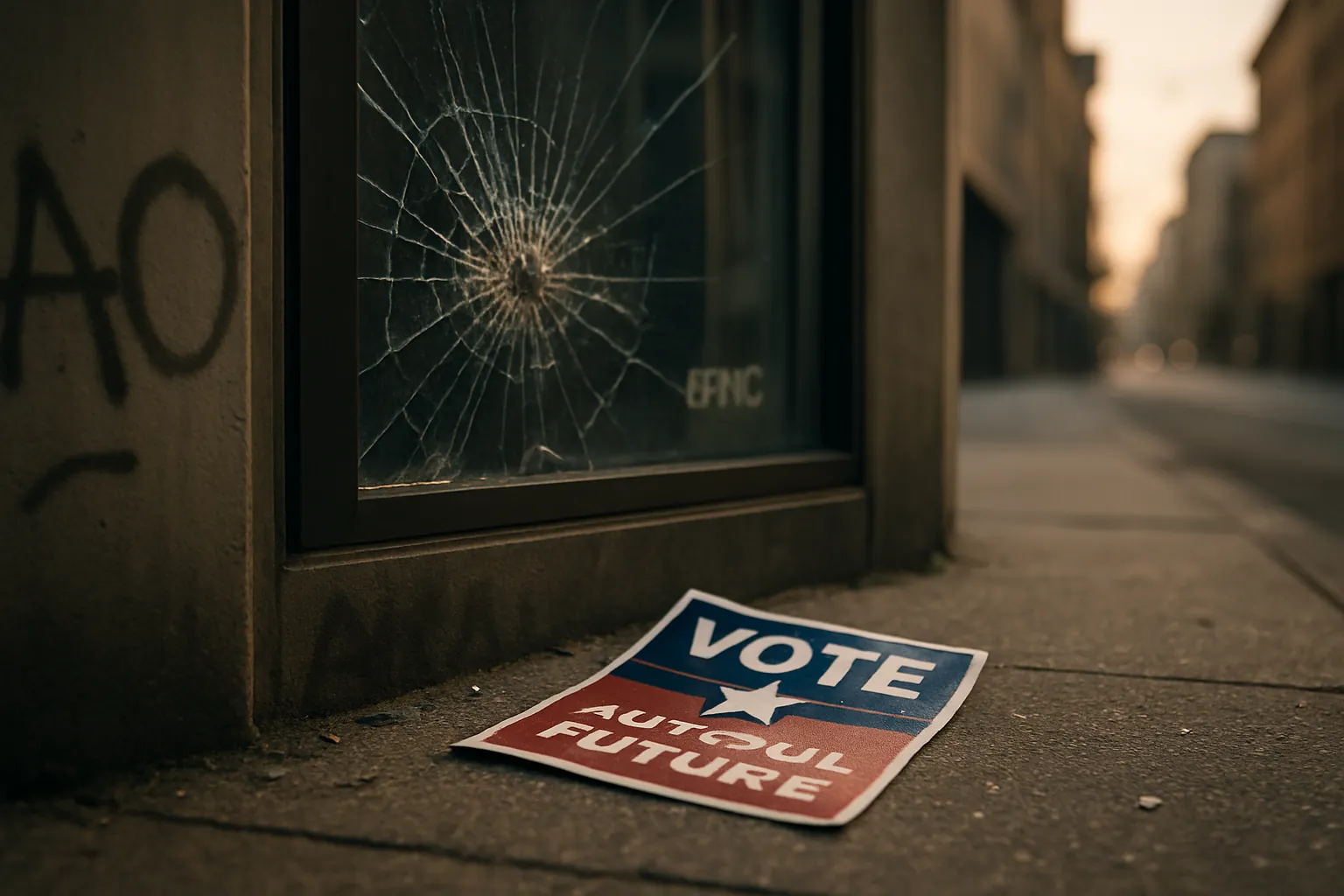
A streak of angry red paint appeared on the windows and door of Rep. Mike Kelly’s freshly opened district office in Hermitage, Pennsylvania, this past weekend—a jarring sight in an otherwise quiet corner of Mercer County. The office, relocated just last month from Sharon to Hermitage to increase constituent access, was defaced overnight with a litany of hostile, explicit messages aimed squarely at both Congressman Kelly (R-PA) and the Republican Party at large. “Mental illness is not a crime,” one message declared. Another seethed: “GOP = racism, rape, child rape, cover up.” A flyer—its contents not visible in media photos—was found taped to the door, suggesting premeditation and pointed intent.
The incident has rattled the community, touching off a fresh round of debate over the limits and symptoms of America’s deep political polarization. Some view this as a troubling escalation of political protest—heralding concern for the safety not just of officials, but of our broader civic dialogue. Others see desperate measures as a reflection of desperate times. Police have yet to make arrests, but both local law enforcement and the U.S. Capitol Police are actively investigating.
Rep. Kelly, a vocal Donald Trump ally and one of Congress’s more reliably conservative voices, responded by condemning what he called an act of violent intimidation. He was not present, nor were his staff, sparing them potential trauma. In his statement, Kelly insisted that political violence and vandalism are never acceptable—a position hard to argue, whatever one’s leanings. But beyond the paint and broken glass, the language spray-painted on this modest district office window is a window itself—one that opens into the depths of mistrust simmering in present-day American politics.
Crisis of Expression or Crisis of Democracy?
This is hardly the first time the boundaries between protest and criminality have blurred. American history is replete with moments where outrage has spilled onto the streets and into public buildings—sometimes peacefully, sometimes not. What’s different, experts warn, is just how feverish the rhetoric has become in recent years, and how quickly even modest acts of protest can accelerate fears of broader unrest. University of Pennsylvania political scientist Dr. Sophia James observes, “The tone and tenor of public discourse have changed—outrage mobilizes, but it also radicalizes.”
According to a 2023 Pew Research Center study, Americans now report the lowest levels of trust in political institutions since polling began. This acute distrust, combined with the omnipresence of social media outrage cycles, creates fertile ground for such acts. When voices feel marginalized or unheard within traditional forums, the temptation to make a statement somewhere it can’t be ignored—literally on the front door of a Congress member’s office—grows that much greater.
It’s easy to denounce vandalism as wanton lawlessness, and yes, the rule of law matters—threats and personal attacks can’t be how we make our democracy work. But a closer look reveals that the language scrawled on those windows signals deeper grievances than a single night’s anger. Those provocative messages about “mental illness,” systemic racism, and “cover ups” evoke long-standing criticisms of GOP policies and priorities. A salient point: The criminalization of mental illness, often tied to Republican cuts in social services and resistance to comprehensive healthcare reform, continues to haunt America’s broken justice system. According to the Treatment Advocacy Center, people with untreated mental illness are sixteen times more likely to be killed during a police encounter—numbers that rise in states with inadequate public mental health spending. Vandalism may be criminal, but the cry etched in red points to institutional failings that cost lives.
“When dialogue feels impossible and peaceful protest seems ineffective, some will sadly resort to destructive acts. That is both a failure of law enforcement and a failure of our politics to create space for true listening and reform.” — Dr. Sophia James, University of Pennsylvania
The Blame Game vs. Building Better Politics
For those hoping this incident might spur healing or honest self-reflection among conservative lawmakers, recent history isn’t encouraging. Consider the aftermath of the January 6 Capitol riot, when many Republican leaders issued pro forma condemnations of violence even as some downplayed or excused the deeper grievances that led to the unrest. The risk is that outrage on either side hardens into a cycle of resentment and retaliation, where vandalism begets more rhetoric about “law and order” but sidesteps uncomfortable, necessary conversations: Why do so many Americans feel compelled to scrawl desperate pleas for justice on government buildings?
Political violence—be it large-scale insurrections or isolated acts like this—undermines the very fabric of liberal democracy. But so, too, does an insular, punitive approach to dissent. Harvard sociologist Dr. Michael Fine reminds us, “History shows that repression without reform ultimately fuels more anger. The solution to a broken system isn’t just more security cameras or locks, it’s policy change and responsive leadership.”
Rep. Kelly’s district includes a swath of Pennsylvania encompassing Butler, Crawford, Erie, Lawrence, Mercer, and parts of Venango County. These are communities that have seen economic upheaval, shifting demographics, and public health crises linked to mental illness and opioid abuse. Conservative lawmakers like Kelly have long pushed supply-side economics and tough-on-crime policies, but rarely matched rhetoric with systemic investment in public health or anti-racism initiatives. Is it any wonder, then, that the pain and anger erupting in headlines make their way, literally, onto his office walls?
Beyond that, Americans must reckon with a hard truth: Real accountability comes only with honest debate, inclusive policymaking, and a willingness by leaders to face criticism head-on. Until Congress takes bold steps to address inequalities in mental health care, racial justice, and economic insecurity, we will continue to see tempers flare far beyond the ballot box.
Choosing Our Future—With Paint, or With Policy?
Vandalism is never the answer. But dismissing those scrawled messages as mere lawlessness misses the forest for the trees. The Hermitage office attack gives us a mirror—however cracked—that reflects not just raw anger, but decades of policy neglect and bipartisan blame-shifting. If you’re tired of waking up to headlines about broken windows and investigations instead of real progress, it’s time to demand more from leaders, left and right.
As Dr. James suggests, “Our democracy thrives not in moments of silence or security, but when the marginalized are heard and their needs addressed without fear or retribution.” The graffiti will be scrubbed away, but the demands for justice—for safe, healthy, and dignified lives—cannot so easily be erased. The real question isn’t whether protest should be peaceful or loud. It’s whether elected officials will finally answer the calls for justice embedded, however messily, in their constituents’ cries for help.
