
The Technology Backlash: One Teacher’s Viral Wake-Up Call
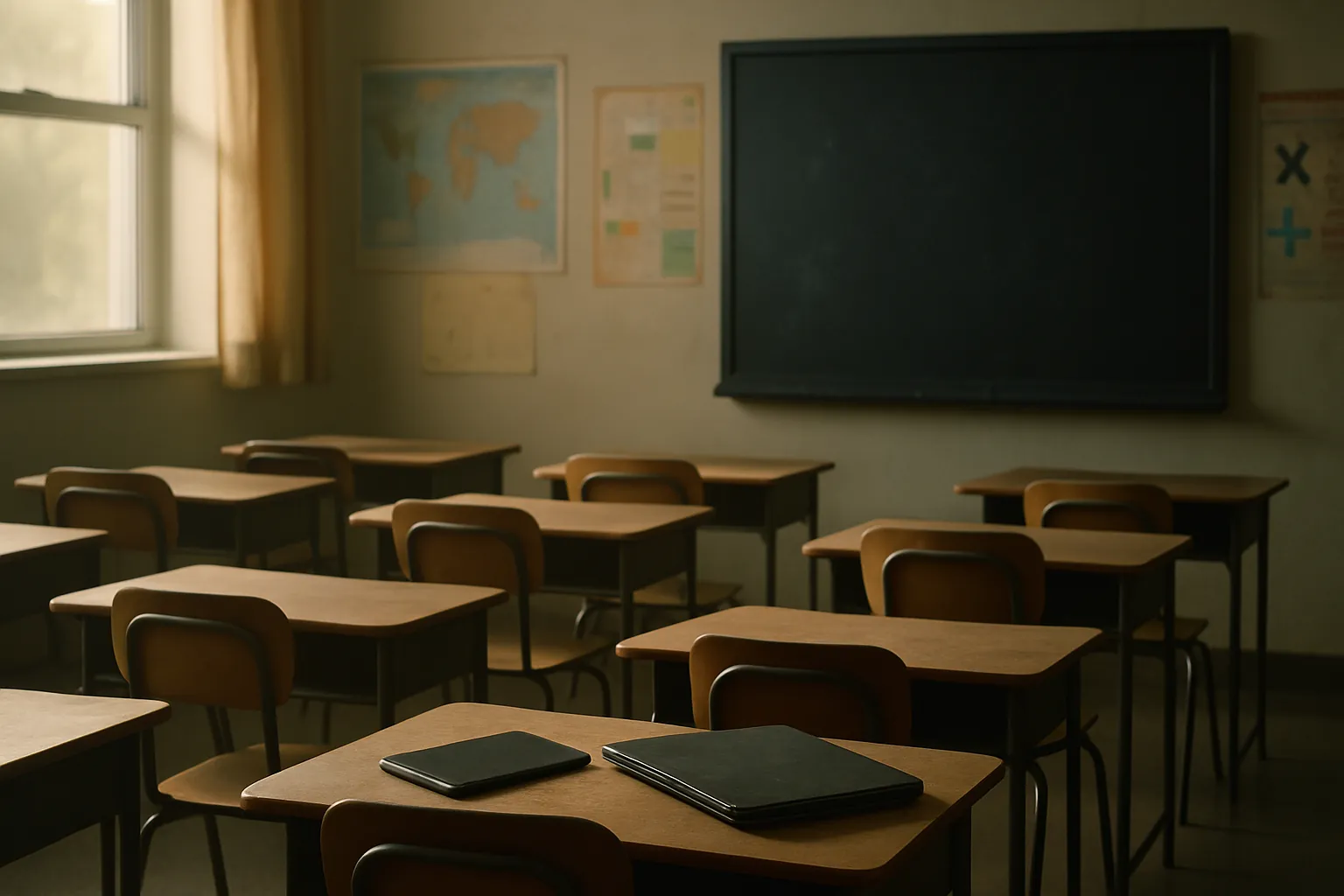
Sometimes it takes a single, unvarnished voice to crystallize a crisis long brewing beneath the surface. In a dim, empty classroom, 26-year-old English teacher Hannah Maria did what America’s education system rarely seems able to do: she sounded an alarm no parent, policymaker, or neighbor can afford to ignore. Her candid, emotionally raw TikTok video—posted on the eve of her resignation—reverberated across the internet, amassing millions of views and reigniting a fierce debate about the cost of technology in schools. It’s a debate that’s not merely academic. As families and educators nationwide quietly grapple with growing disengagement, falling test scores, and eroding basic literacy, Hannah’s appeal lands with chilling urgency: “These kids don’t even care anymore.”
Hannah, an “older Gen Z” by her own account, spent her brief teaching career in a district where every sixth-to-twelfth grader receives an iPad—an innovation once hailed as a democratizing leap forward. But in her experience, these devices devolved into stumbling blocks, not stepping stones. Instead of unlocking curiosity, she saw students sidestep actual reading and writing, often ghostwriting with the aid of AI or relying on copy-pasted answers from the web. The result is a cycle of disengagement that leaves teachers frustrated and students unprepared for the demands of the world beyond the classroom walls.
Seen through Hannah’s eyes, technology isn’t empowering students—it’s eclipsing them. “Some of these kids couldn’t even write a paragraph without asking me if they could use their phones to look it up,” she recalled. The viral nature of her resignation, far from a private meltdown, is a public reckoning with a failed promise and a warning about who pays the price when innovation advances without reflection or restraint.
Too Plugged In To Learn: The Literacy Epidemic
What makes Hannah Maria’s story impossible to dismiss isn’t just the pain in her voice—it’s the weight of the evidence backing her up. According to a recent report from the National Assessment of Educational Progress (NAEP), American adolescent reading proficiency is now at its lowest point since 1992. Even more alarming: the National Literacy Institute finds that 21% of American adults are functionally illiterate, and more than half—some 54%—read below a sixth-grade level. That’s not just a statistic. Imagine the generational consequences when 1 in 5 adults struggles with basic comprehension, critical thinking, and communication.
How did we get here? Technology alone isn’t the villain, but it has become the new scapegoat, a tool too often substituted for meaningful instruction. The intention behind iPads and AI in classrooms was to close gaps and modernize learning. In reality, as many educators like Hannah now warn, screens have become a “crutch”—a word she chose pointedly—for dodging the written word. Instead of facilitating, devices distract, entrenching shallow engagement over deep understanding. Students now juggle TikTok feeds, multiplayer games, and streaming videos during study time—and the academic toll is plain to see.
Johns Hopkins child psychologist Dr. Suniya Luthar observes, “Attention spans are collapsing. The human brain simply wasn’t built for the hyper-stimulation we’re allowing in our classrooms.” The result is a cohort of students who feel constantly bored by anything not flickering and fast, yet incapable of sinking into a novel, essay, or even a classroom discussion. The very fabric of intellectual curiosity—the lifeblood of democracy—grows threadbare when screens supplant stories and multitasking replaces mindfulness.
“We’re raising a generation of copy-paste thinkers—kids who struggle with nuance, depth, and original expression. The cost isn’t just lower test scores. It’s a diminished sense of agency and imagination.”
Can Public Education Reclaim Its Voice?
After the dust settled, Hannah Maria clarified: her real frustration isn’t with her students—it’s with the system that set them up to fail. Her apology to students (“I never lost faith in you as people”) may counter headlines, but her critique of institutional indifference to warning signs cuts deeper than any personal insult. Why, she asks, are education leaders doubling down on screen-centric learning models when all signs—including the federal government’s own testing—point to a crisis? Why accept a status quo in which students finish high school unable to write a handwritten paragraph or finish a single book?
Beyond that, her call for “a 20-year plan” to gradually reintegrate technology offers a practical, if radical, prescription. Imagine schools where, before the age of 18, screens are offered only as a supplement—not a substitute—for close reading, discussion, pen-and-paper composition, and healthy debate. In Finland, such a model remains standard, and that nation regularly outpaces the US in literacy, creativity, and student well-being. Of course, change won’t come by simply ripping tablets out of teenagers’ hands. As Harvard education scholar Dr. Pedro Noguera reminds us, “Technology is a tool. The question is who wields it, and how.”
Teachers—the front line of this debate—deserve support, not scapegoating. They need the freedom to innovate, the resources to inspire, and leadership that puts evidence over expediency. Parents too must face hard truths about screen time at home. Most of all, we all need a shared willingness to ask: What do we truly want from our schools? If it’s citizens who can think, create, and lead, the evidence tells us it’s time to turn down the volume on technology and turn up the focus on fundamental skills.
Hannah Maria’s resignation shouldn’t be viewed as an isolated outburst or a “must-see rant.” It is a mirror, held up to a nation at a crossroads. If the alarm rings loudly enough, maybe—just maybe—American education will find the courage to choose substance over spectacle, for the sake of a generation who need us to care enough to fight for their future.
