
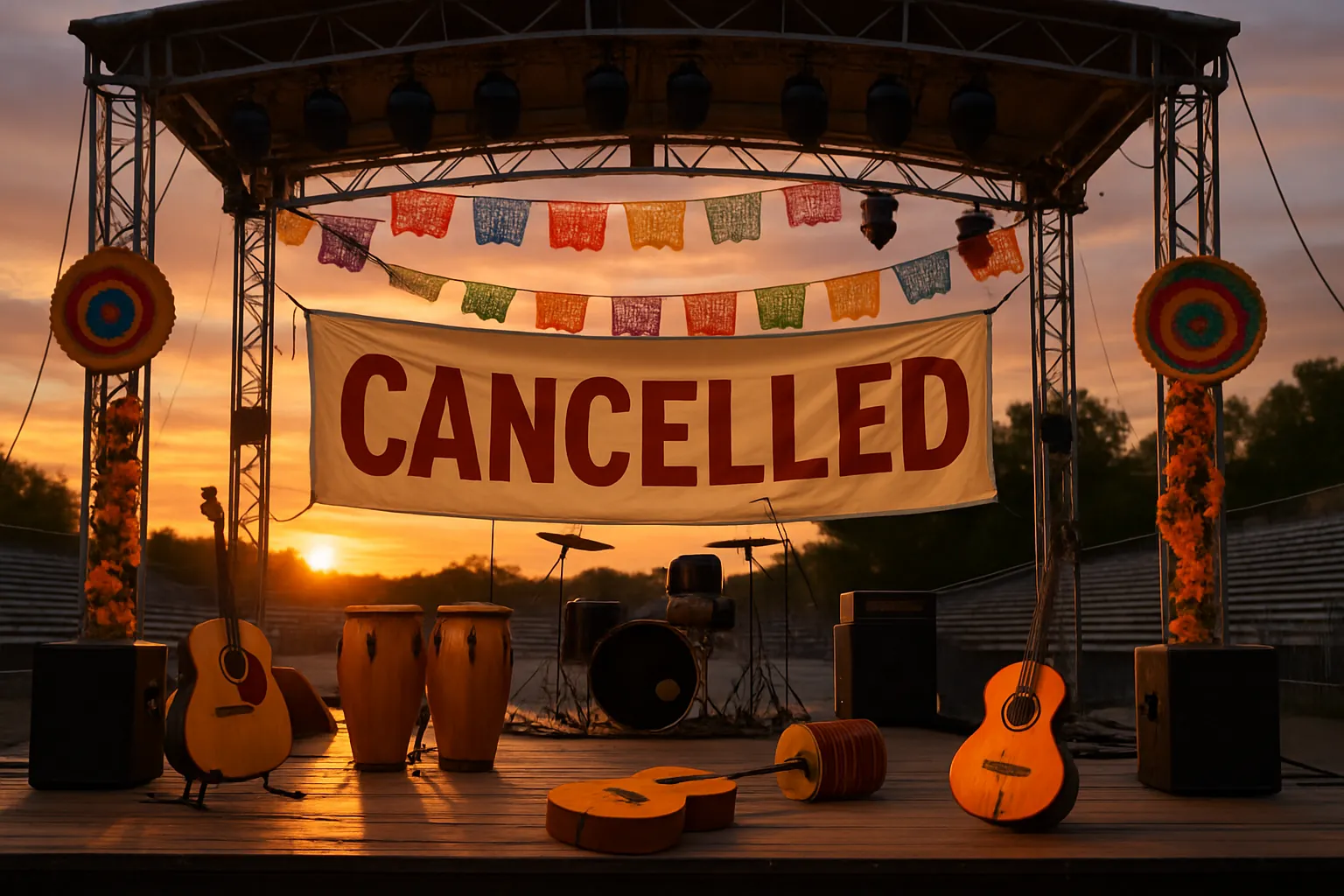
When Politics Shut Down the Stage
A hush will fall over the Verizon Stage at Napa Valley’s La Onda festival this Sunday—a silence standing in stark contrast to the vibrant, foot-stomping revelry for which the two-day celebration is renowned. That hush won’t be for want of fans or a shortage of talent, but rather the sudden absence of Grupo Firme, Mexico’s chart-topping regional band, after being denied U.S. entry by immigration officials under policies that blend bureaucratic coldness with cultural censorship.
Festivalgoers who snatched up tickets, some traveling from as far away as Texas or even Mexico, expected Grupo Firme to close out the weekend on June 1, 2024, with their unmistakable roar—brass and voices soaring into the valley night. Instead, the news broke mere days before showtime: the band’s U.S. visas had been suspended, leaving them marooned across the border. Organizers, facing disappointment from more than 60,000 attendees, scrambled to fill the void, ultimately bringing rising corrido star Tito Double P to the headlining spot. The buzz now is not only about what’s on stage, but what’s been wrenched off of it.
Lost somewhere in the chaos are the stories behind the artists: Grupo Firme had come to symbolize the modern Mexican music movement—an intoxicating blend of traditional and new, defiant in the face of adversity. Their abrupt exclusion isn’t just a logistical headache for La Onda. It spotlights a mounting crisis facing international performers in America, a crisis rooted in political decisions made far from the festival grounds.
Visa Politics and the New Cultural Iron Curtain
What went wrong, and who gets to decide where artistic boundaries are drawn? Since the Trump administration took office, gaining work visas became an intricate, often insurmountable maze for global performers. The clampdown, justified on the grounds of security and, in this case, alleged links to problematic musical themes, has chilling effects far beyond the intended targets. Bands like Grupo Firme are swept up under a broad suspicion directed at the “narco-corridos” music scene—a regional genre frequently scapegoated for supposedly glorifying cartel violence, despite also serving as raw, unfiltered chronicles of daily life in Mexican communities wracked by narco-politics and trauma.
Unlike visa snafus of the past—quickly resolved blips in otherwise buzzing festival lineups—this year’s obstacles appear more systematic and punitive. Harvard immigration scholar Dr. Elsa Domínguez describes the era as producing “a new kind of cultural blockade,” where musical genres with Mexican roots become collateral damage for political posturing. “If officials were truly interested in addressing violence,” Dr. Domínguez told KQED in May, “they’d be investing in binational cultural exchange, not shutting the border on musicians who give voice to shared struggles.”
Artists across the globe are feeling the sting. Even British experimentalist FKA Twigs canceled a U.S. tour after her work visa was snagged by similar red tape. The consequences are immediate and stark: events like the Michelada Festival in California have axed their entire 2025 programming due to uncertainty over which Latin acts would actually be allowed to perform. Ticket holders are left frustrated, while up-and-coming Latinx artists, many of whom dream of U.S. festival stages, see doors closing rather than opening.
“To deny visas is to deny a generation of Mexican and Latinx youth the chance to see their stories and sounds celebrated—they’re shutting out more than a band. They’re stifling a movement.”
So who benefits? History suggests a backward step. During the Cold War, American policies oscillated between welcoming Soviet dissidents as cultural heroes and fearing foreign artists as dangerous infiltrators. “It’s not just a matter of paperwork,” reminds music historian Dr. Sara Gómez from UC Davis, “It’s whose voices are considered legitimate, and who gets erased.”
Musical Borders, Real-World Fallout
The immediate impact of shutting out Grupo Firme reverberates through more than just Northern California’s festival scene. For tens of thousands of fans—many second- or third-generation Mexican Americans—the experience is deeply personal. Maria Torres, a Napa local and daughter of farmworkers, planned her entire weekend around seeing the band: “When you grow up surrounded by stereotypes, music like theirs helps you feel seen. Now, it feels like we’re the ones being kept out.”
These are not isolated disappointments. Visa suspensions have already sent shockwaves across the U.S. entertainment landscape, with ripple effects felt from Coachella to small-town fiestas. According to the National Independent Venue Association, harder visa standards have torpedoed dozens of bookings for Latin and other international acts since 2017, stunting not just economic opportunity but also community connection.
Conservative lawmakers frame these restrictions as a matter of safety, yet the vast majority of artists facing obstacles have no ties to criminal activity. The accusations over “glorifying” violence ignore the complex reality that music can be both a form of protest and of storytelling—a nuanced record of social issues rather than a simple celebration of them. “Silencing musicians isn’t going to end cartel violence,” argues cultural critic José Valdez in the Los Angeles Times, “but it will erase crucial narratives from the public sphere.”
What’s at stake isn’t just La Onda Fest or the career of one beloved band. Communities lose the chance to connect, to celebrate, and to challenge stereotypes through shared music. The new barriers to entry reflect a growing rejection of diversity, leaving the country culturally poorer and more divided.
How, then, do we respond? Progressive voices demand a return to immigration practices that are transparent, evidence-based, and recognize the power of the arts to bridge divides. As the dust settles at the Napa Valley Expo, one can only hope that the silence following Grupo Firme’s absence is broken not just by the next act, but by a chorus calling for change.
