
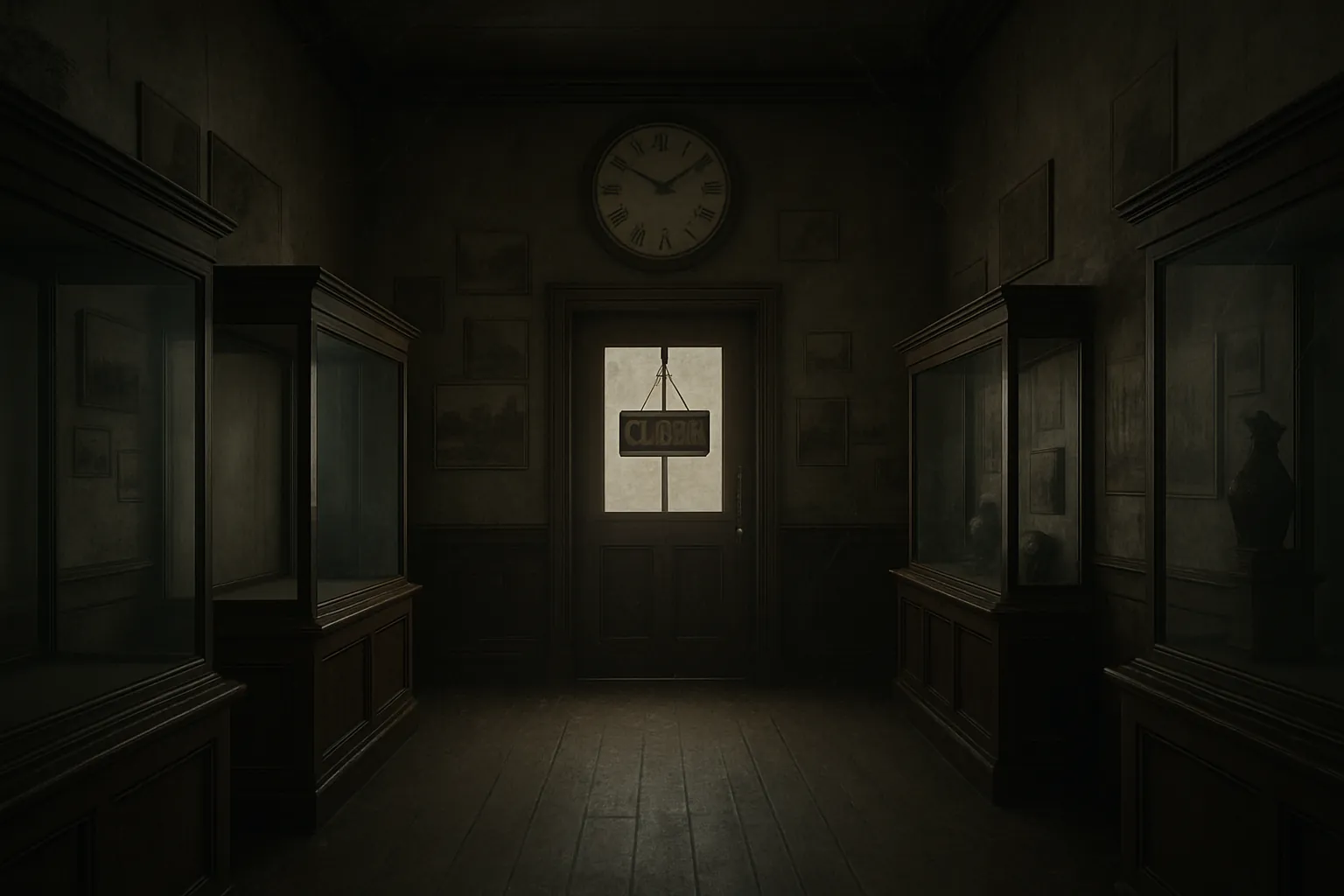
The Ripple Effects of Congressional Inaction
On a gray Wednesday morning, Americans in cities from Dayton to Grand Rapids peered through locked doors and saw once-vibrant cultural beacons—museums and military sites—completely still. The story repeats each time Congress grinds to a halt, leaving the public cut off from resources they themselves fund and cherish. This latest government shutdown has shuttered icons of our nation’s past and present, from the National Museum of the U.S. Air Force to the hallowed halls of the National Mall, all casualties in a political battle that ignores real-world costs.
High school students who planned field trips to learn about civil rights or military innovation instead learned a lesson in legislative dysfunction. The Museum of Aviation at Robins Air Force Base sits silent, and the celebrated Gerald R. Ford Presidential Museum in Michigan—host to ongoing art exhibitions and a valuable educational resource—has turned visitors away with little explanation beyond, “Sorry, we’re closed.” According to the Smithsonian Institution, closures during previous shutdowns cost local economies millions in lost tourism and revenue (Smithsonian Magazine).
How did we arrive at a point where public treasures become bargaining chips? The answer lies in the legislative impasse, with a small but emboldened segment of Congress—often under the banner of fiscal conservatism—refusing to pass appropriations or short-term resolutions without extracting deep, often divisive, policy concessions. At the heart of the shutdown lies a fundamental disagreement over priorities: investing in the public good or succumbing to political brinkmanship. The consequences ripple outward, leaving not just public servants and government contractors, but every American, paying the price.
Museums Go Dark: Culture Caught in the Crossfire
Imagine planning your family’s once-in-a-lifetime visit to see the National Air and Space Museum—only to find a sign in the window: “Closed. Government Shutdown.” That’s the stark reality for Americans and international tourists alike. As social media channels fall silent and websites freeze, even digital access to resources vanishes, compounding the sense of loss.
The National Museum of the U.S. Air Force, for example, announced, “All events and activities are suspended until an appropriation bill or continuing resolution is enacted.” This decision echoes across military museums, from the National Aviation Hall of Fame to the Museum of Aviation in Georgia. The cost is more than inconvenience—it’s civic amnesia. According to the American Alliance of Museums, more than 850 million visitors are welcomed by U.S. museums annually. Every day these cultural landmarks remain closed, communities lose opportunities for education, inspiration, and shared national memory.
The impact is particularly acute for veterans, students, and families for whom these nonpartisan spaces serve as lifelines. Local schools adjust lesson plans; families cancel trips; veterans’ groups mourn the inability to gather or commemorate in spaces built to honor service and sacrifice. As historian David Blight argued in a recent NPR interview, “Museums hold our nation’s collective memory. When we close them, we forget ourselves.”
“Museums hold our nation’s collective memory. When we close them, we forget ourselves.”
— Historian David Blight, NPR Interview
In contrast, sites like the Vicksburg National Military Park underscore not just the significance of historical preservation, but the generosity and ingenuity of local communities. During the 2019 shutdown, the park “pioneered a way to keep the park open” with private donations, operating for more than a month with help from the Friends of Vicksburg National Military Park—spending roughly $2,000 per day to pay skeleton crews. These stopgap measures offer a poignant lesson: private charity, while admirable, cannot substitute for a functioning government. Public heritage should not be at the mercy of unpredictable fundraising or the political whims of a few lawmakers.
Essential and Nonessential: The Unseen Human Toll
Far beyond the museum turnstiles, government shutdowns leave a trail of quiet despair. At the Air Force Academy, about 183 civilian faculty faced furloughs, with cadet laundry suspended, student fitness programs halted, and contracting activity—except the most essential—on ice. Meanwhile, at Peterson and Schriever Space Force Bases, community pillars like libraries, pools, and family readiness centers stand idle, while essential services such as commissaries, medical offices, and child development centers operate on reduced schedules. Legal assistance is whittled down to emergencies and last wills.
While intercollegiate athletics may continue to appease television contracts, civilian faculty who build the intellectual foundation of military service academies find themselves in limbo. This “essential” versus “nonessential” distinction, mandated by federal guidelines, creates a cruel irony: those who dedicate their careers to public service often have the rug pulled from underneath them, forced to choose between bills and professional commitment. Families struggle with child care gaps; students lose critical learning moments; military spouses face greater uncertainty. As Harvard public policy scholar Linda Bilmes wrote for the Bipartisan Policy Center, repeated shutdowns breed instability, reduce morale in federal agencies, and cost taxpayers billions in stop-start inefficiency.
Can we call ourselves stewards of democracy if our elected officials play politics with public heritage? The answer is clear: political brinkmanship fails all Americans, but particularly those least able to weather the consequences. When shutdowns happen, the government effectively signals that the connections between past and present, culture and community, learning and legacy are expendable in the face of partisan gamesmanship.
History offers a stark warning. During the 2013 shutdown, hundreds of thousands of federal workers were furloughed and Washington’s economy lost an estimated $217 million per day. Pew Research surveys showed a majority of Americans blamed congressional Republicans for that impasse, and the party’s approval ratings suffered long-term damage. Yet a decade later, the lessons seem lost on those willing to risk the nation’s cultural and educational foundations for an ideological win.
For progressive readers, the path forward is about more than gridlock and blame—it’s about insisting that access to history, culture, and education never again hangs by a thread. True patriotism means keeping the doors of our shared past open to all, regardless of the partisan storms raging in Washington.
