
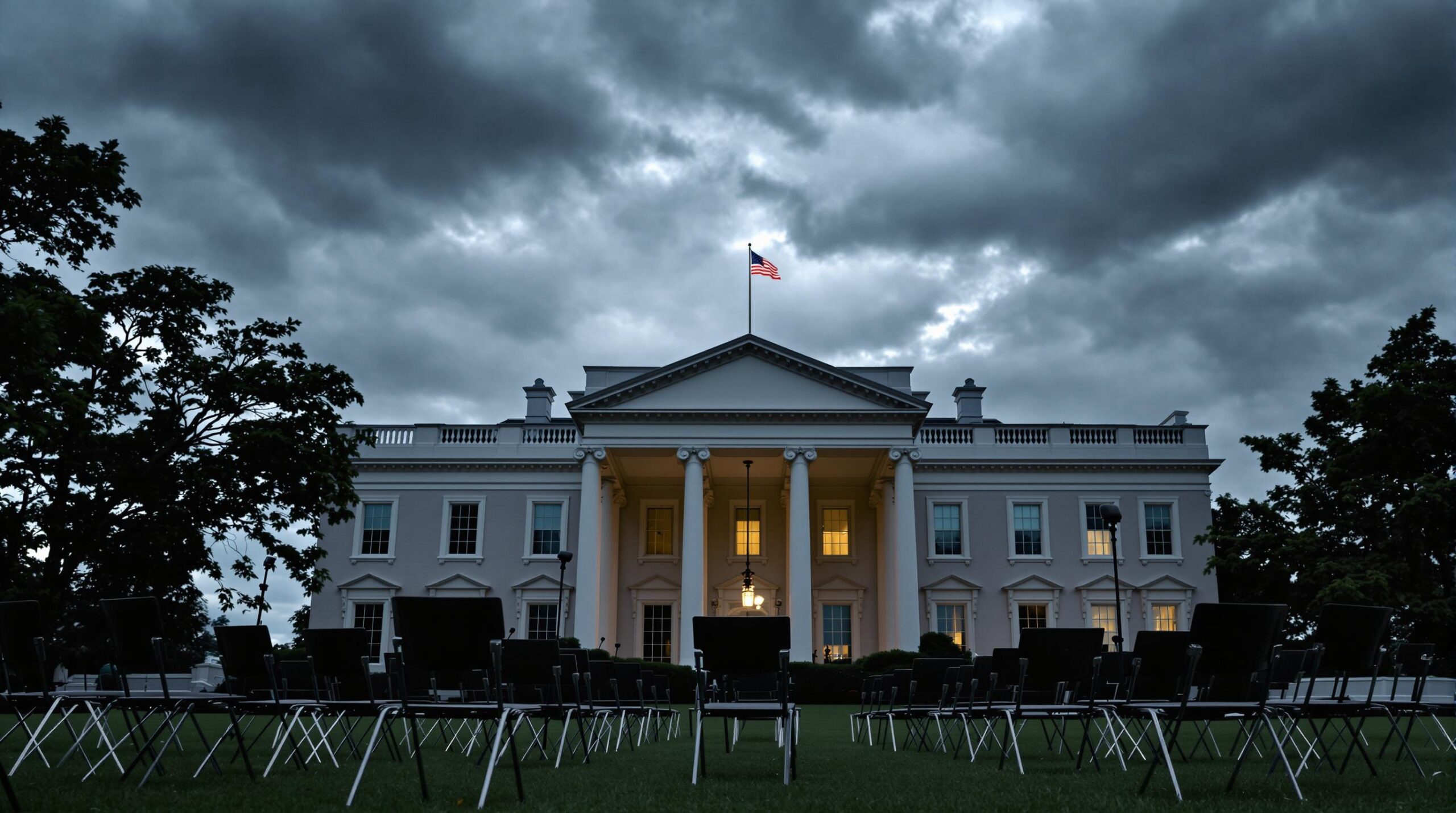
In a striking shift from established norms, the Trump administration has announced it will impose its own seating chart in the iconic James S. Brady Press Briefing Room. This move uproots a longstanding practice traditionally managed by the White House Correspondents’ Association (WHCA). While the administration frames the move as modernizing media access based on contemporary metrics, critics argue it poses a worrying threat to press freedom.
A Historic Shift—or Return?
Redefining acceptable tradition, White House officials claim their goal is to restructure seating according to modern consumption patterns, aiming not just for favorable coverage, but genuine alignment with today’s news landscape. However, the true implications of these changes evoke deep skepticism among reporters and First Amendment advocates. For decades, front-row seats in the Brady Briefing Room have symbolized journalistic excellence and responsibility, reinforcing transparency by placing traditionally rigorous newsrooms front and center to pose tough, critical questions.
Former White House Press Secretary Ari Fleischer fueled debate by noting that the White House historically had control over such decisions until 2006—a practice replaced by WHCA stewardship during the Bush era:
“Historically, seating decisions were a White House responsibility. This return, while controversial, isn’t entirely unprecedented,” said Fleischer.
Yet, can reverting to past practices genuinely serve the public good, or does it obscure a power grab that threatens media access and independence?
A Backlash of Concern
The fear of losing prime access has particularly stirred anxiety among established media giants accustomed to prime seating. Strategically, the best seats in the briefing room allow journalists to engage directly and assertively with the press secretary or president. Losing these positions to potentially more administration-friendly voices, or less critical outlets, could significantly alter the tenor and rigor of briefings.
The move understandably sparked concerns among media advocates like Eugene Daniels, president of WHCA, who vehemently criticized the decision, asserting that the independence of journalistic institutions should remain beyond government interference. “This is a direct threat to how an unbiased and unfiltered media system is supposed to function,” Daniels argued in a sharp and direct statement.
Indeed, the symbolic power of seating charts reflects broader concerns about media manipulation and the ability of journalists to hold leaders accountable. Historically fraught instances, such as press exclusions during Nixon’s presidency or Trump’s own habit of labeling critical outlets as “fake news,” heighten fears that the White House might use this move to control narratives and temper scrutiny.
Changing Dynamics of Media Engagement
Modernizing metrics vs. controlling narratives presents the fundamental debate at the heart of this controversy. Advocates for the White House’s decision, citing shifts in media consumption, argue that archaic traditions should give way to a greater diversity of voices, potentially democratizing what has historically been an elite circle. Yet, skeptics question whose diversity is being championed. Is this truly democratizing, or is it a subtle strategy to marginalize investigative journalism in favor of outlets more inclined towards positive coverage?
This essential function of media as gatekeepers, particularly within the White House sphere where accountability is crucial, cannot be understated. Placing impartial reporting at risk sets a troubling precedent that could ripple outwards, further eroding media trust already weakened by rampant misinformation and increasing partisanship.
Ultimately, what is proposed as an adjustment for contemporary audiences must indeed confront much deeper questions of transparency, accountability, and democratic health. While change is inevitable, who controls this change—and why—is the true measure of its integrity. Herein lies the genuine tension underpinning this seemingly administrative decision: effective governance requires robust, independent media coverage, free from perceptions or realities of governmental favoritism or exclusion.
As this new seating arrangement takes shape, journalists, advocacy groups, and indeed the public will need to stay vigilant—advocating steadfastly for protected, impartial journalism as a cornerstone of democracy. It is through this vigilance, scrutiny, and public engagement that the integrity of our press and democracy is best preserved.
