
A Multibillion-Dollar Partnership Under Scrutiny
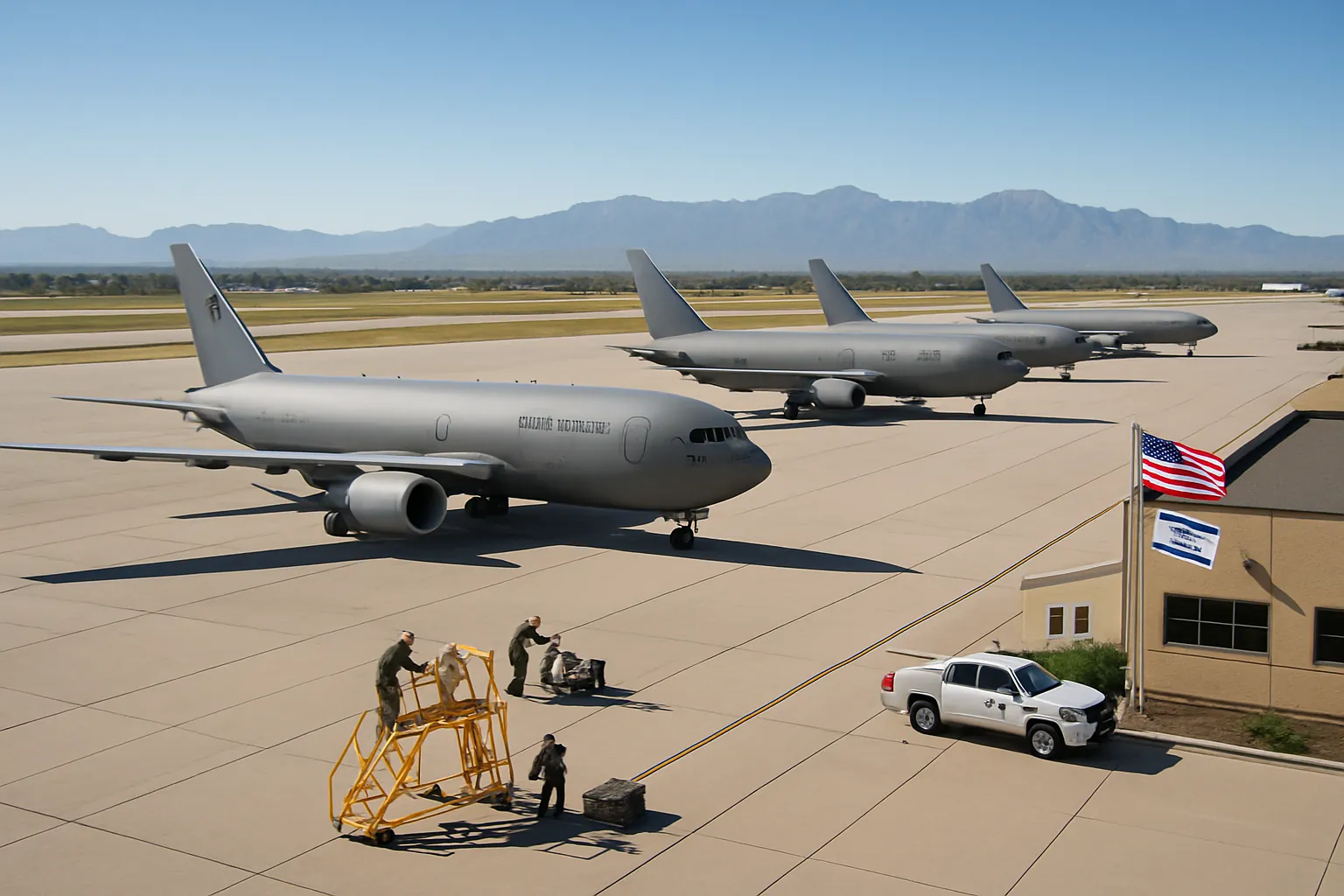
When the Israeli Ministry of Defense announced its intention to purchase two additional Boeing KC-46A Pegasus aerial refueling tankers, the news came with a hefty price tag—approximately $500 million, almost entirely funded by U.S. military aid. This isn’t just another footnote in the ongoing defense relationship between the United States and Israel. Rather, it’s a flashpoint in a broader conversation about the intersection of foreign policy, military technology, and U.S. taxpayer accountability at a time when both regional stability and American domestic priorities are up for public debate.
Between the contracts, Israel’s interest in securing at least eight KC-46As, and the ongoing delivery of four previously ordered tankers, the stakes are much higher than a simple defense upgrade. According to the Israeli Defense Ministry, the KC-46As will eventually replace aging KC-130 Hercules and converted Boeing 707s—aircraft that played pivotal roles not just in regional patrol, but in Israel’s notorious 12-day air campaign against Iran earlier this year. That context alone amplifies concerns voiced by critics about the strategic implications and political ethics of U.S. military aid.
The Allure—and Cost—of American Military Technology
The KC-46A Pegasus represents a leap forward for the Israeli Air Force (IAF). Designed for mid-air refueling, military transport, and rapid deployment, these multi-role aircraft are set to dramatically expand the IAF’s operational reach. Defense Ministry Director General Maj. Gen. (Res.) Amir Baram has been clear: the tankers will “enhance our strategic capabilities, enabling us to operate with greater force and scope in distant theaters.” It’s a view echoed by Boeing Israel President Ido Nehushtan, who described the Pegasus as the world’s most advanced multi-mission aerial refueling platform—confidence rooted in decades of military innovation and U.S.-Israeli collaboration.
Yet beyond the technical fanfare lies a more contentious reality. The $3.8 billion annual military aid package—guaranteed through a 10-year memorandum—ensures that the United States is more than just a supplier. Washington is, in effect, underwriting Israel’s capacity for sustained, far-reaching military operations, some of which have stirred profound controversy on the world stage. The Council on Foreign Relations points out that Israel remains the largest cumulative recipient of U.S. foreign aid since World War II, with defense contracts routinely serving to both modernize the Israeli military and buoy American defense manufacturers. This dual-purpose relationship, while lucrative for certain sectors, invariably reignites debate in Congress and among the American public, especially when civilian casualties and human rights concerns are raised—as they have been in recent conflicts in Gaza and, most recently, in the face-off with Iran.
“Every appropriated dollar not only strengthens a close ally but reflects a profound—and at times, problematic—commitment to maintaining technological and operational superiority in a region defined by perpetual volatility.”
Who ultimately benefits, and at what cost? While defense analysts like RAND’s Michael Eisenstadt credit aerial refueling capabilities with providing Israel vital operational flexibility, humanitarian advocates and some progressive lawmakers argue that American-funded hardware disproportionately empowers aggressive tactics over diplomatic solutions. According to a 2023 Pew Research survey, a majority of Americans—across party lines—want stricter oversight on how U.S. aid is used by allies, especially when it comes to military force that may contravene human rights standards.
Military Power or Political Responsibility?
A closer look reveals the KC-46A purchase is not merely about force projection; it symbolizes the enduring—if increasingly contentious—nature of U.S.-Israel relations. Conservative policymakers uphold military aid as a linchpin of security and deterrence, frequently invoking existential threats facing Israel. However, critics on the left demand closer scrutiny, calling for an aid framework that matches U.S. values of justice, restraint, and accountability. Senator Bernie Sanders, for example, has repeatedly questioned whether unconditional military support actually advances peace or entangles the United States in cycles of conflict.
Israel’s deployment of older refueling platforms in varying operational theaters has often dovetailed with some of the region’s most fraught moments—think the 1981 raid on Iraq’s Osirak nuclear reactor, or more recently, covert operations targeting Iranian assets. The new Pegasus fleet is poised to expand these capabilities, creating both strategic advantages and uncomfortable precedents. When American-funded aircraft facilitate missions that raise the specter of civilian harm or spark broader conflicts, the ensuing blowback doesn’t stop at Israel’s borders. It ricochets into American political life, fueling grassroots opposition and impelling lawmakers to rethink the parameters of alliance and support.
There’s no ignoring the fact that the KC-46 deal is deeply intertwined with larger questions of democratic accountability. Harvard international affairs expert Stephen Walt observes that providing advanced weaponry with few conditions undermines both the U.S.’s credibility as a broker for peace and its global image as a champion of human rights. Progressive policy advocates propose a more balanced approach: targeted aid tied to clear standards, rigorous oversight, and a greater investment in diplomacy and conflict prevention. The machinery of war may be manufactured abroad, but its consequences—human and political—are felt at home and around the globe.
Toward a Broader Reckoning on U.S. Military Aid
Beyond that, the intricacies of American military assistance force us to confront uncomfortable truths about our priorities and responsibilities. Is the core mission of U.S. foreign policy to mechanically extend military dominance through alliances? Or is it, as the progressive tradition demands, to promote shared security, uphold universal rights, and forge pathways toward peace—especially when existing power structures default to force?
Let’s be clear: Israel’s right to self-defense is real and non-negotiable. Yet so is the imperative for American resources—dollars, technology, and moral authority—to serve a vision of security that doesn’t sacrifice justice for temporary gains in battlefield supremacy. The KC-46 tankers, advanced as they may be, are more than hardware; they are a case study in the enduring tension between military readiness and political responsibility. The question now is whether American leaders can recalibrate the balance before the next contract is signed, or if we are destined to repeat history’s mistakes under the guise of modernity and partnership.
