
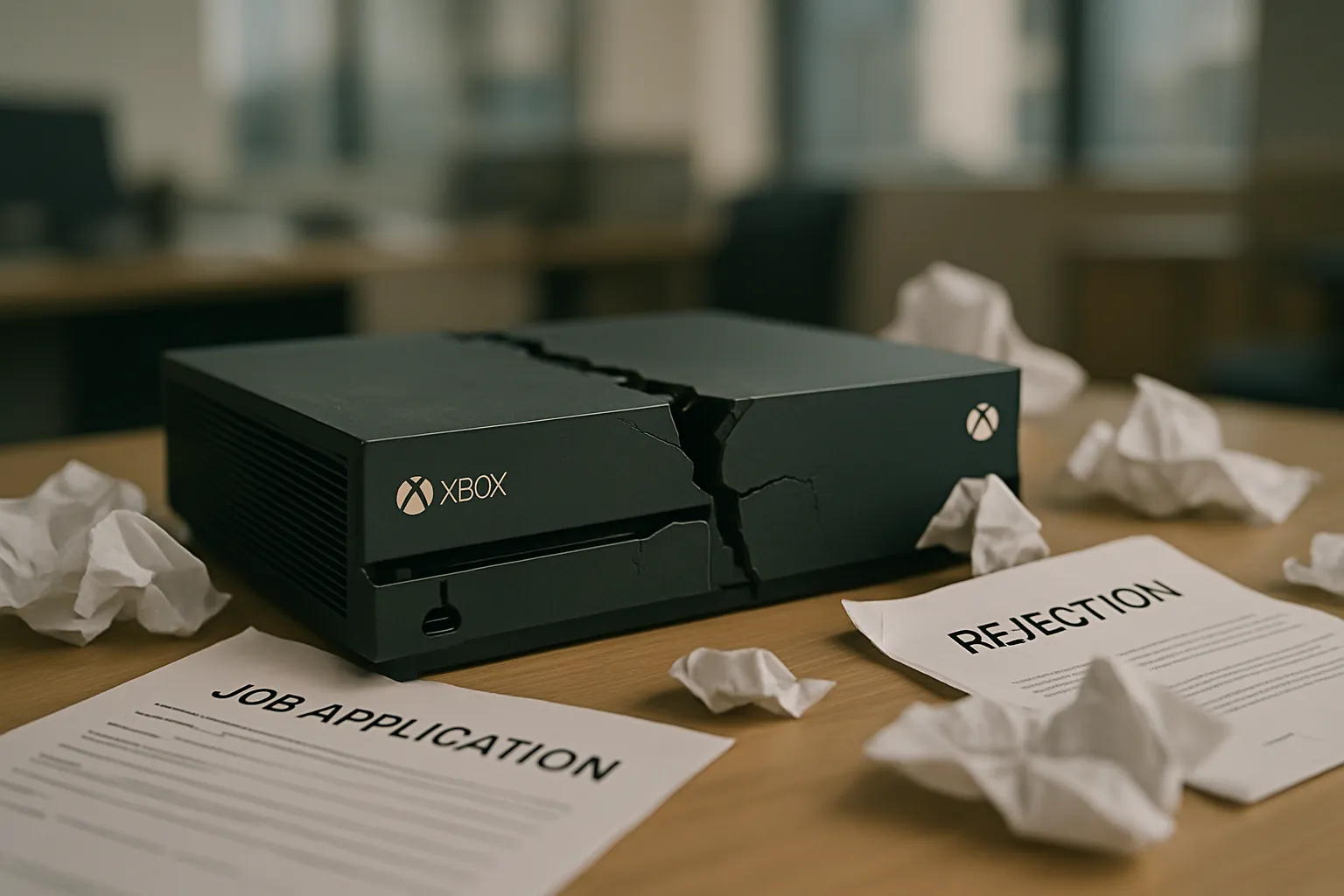
The Thin Line Between Innovation and Insensitivity
Not long after slashing thousands of jobs and shuttering major game studios, Microsoft’s Xbox division ignited a fresh outcry—this time not because of pink slips, but due to a mangled hiring post featuring a clumsy AI-generated image. Shared on LinkedIn by Mike Matsel, Xbox’s Principal Development Lead for Graphics, the post was meant to attract new talent for coveted engineering roles. Instead, it became a lightning rod for criticism about the company’s ongoing relationship with artificial intelligence and its human workforce. There’s palpable irony in a cutting-edge graphics team bungling the very image designed to lure the industry’s best and brightest.
The now-infamous illustration depicts a woman typing diligently at her desk, but with the monitor screen facing the back—an amateurish mistake symptomatic of rushed generative AI. Critics, both inside and outside Xbox, classified the episode as “embarrassing” and “tone-deaf,” seizing on the symbolism: a company trumpeting its AI virtuosity, mere weeks after downsizing actual creators, and then fumbling the most basic visual detail when it counts.
What explains this collision of technology and public perception? According to labor technologist Sarah T. Roberts, “Companies that cut creative talent in favor of automation risk missteps that undermine consumer and employee trust. When those errors go public, they damage not only morale but also brand credibility.” The discontent echoed across social media and gaming forums, with former employees openly lamenting the apparent lack of care.
Beneath the Surface: A Broader Pattern of Disregard?
Why did a simple hiring post hit such a nerve? The answer is rooted in the broader context. Just weeks ago, Microsoft laid off nearly 9,000 workers in its gaming division alone, abruptly canceling high-profile titles like Rare’s Everwild, Zenimax Online’s new IP, and The Initiative’s highly anticipated Perfect Dark reboot. The message was clear: AI and automation were Microsoft’s new priorities, even if that meant sacrificing the people who powered its most beloved projects. Fans and former staff alike responded with real consequences, including coordinated subscription cancellations and open letters demanding accountability.
The AI image mishap lands squarely in this wounded landscape. Community reaction was swift and unsparing, with many drawing direct lines between the layoffs and what they saw as a symptomatic carelessness. “Too soon, too careless, and too little understanding of what makes this industry tick,” wrote one longtime Xbox user in commentary that quickly rose to the top of Reddit threads.
“What does it say about your respect for human talent when the face of your graphics division can’t spot a glaring AI mistake in a hiring post? It’s cynical and sadly unsurprising.” — User comment, ResetEra Forum
This isn’t just internet outrage. Studies from the Institute for the Future of Work note a direct link between job insecurity, workforce morale, and long-term productivity. A company—or industry—that signals disposable humanity will face a crisis of trust, internally and externally, that can’t easily be papered over with clever code or glitzy advertising. Is this the legacy Microsoft wants for Xbox, a brand historically fueled by the passions of gamers and developers alike?
The Perils and Promise of AI in Tech Recruiting
Tech titans have long promised that artificial intelligence would unleash creativity and efficiency. Yet the spectacle of Xbox’s AI-generated blunder, juxtaposed with its recent layoffs, has crystallized public anxieties about what the future of work in technology actually looks like. The messaging—a “robotic” image fronting human opportunity—became a symbol of what’s lost when cost-cutting trumps craftsmanship.
Harvard ethicist Dr. Maria Lang notes, “When tech companies adopt AI-driven shortcuts to the exclusion of human creative judgment, they risk eroding the very distinction that made their brands strong.” Historically, visionary tech leaders—from Steve Jobs to Shigeru Miyamoto—embraced technology as a tool in service of human vision, not as a replacement for it. Xbox’s public stumble offers a cautionary tale: technological innovation, without humility or respect for skilled labor, ultimately alienates the very audiences it seeks to impress.
Beyond that, the oversight in the hiring post reveals a broader truth: investing in people is not just a moral imperative but a strategic one. Diversity of thought, experience, and attention to detail are essential in building games and platforms that engage, inspire, and endure. When leadership signals, even inadvertently, that automation and speed matter more than authenticity and expertise, the contradiction is impossible for the public to ignore. Collective well-being shouldn’t be a casualty of the next upgrade cycle.
Will Xbox—and the industry at large—relearn the lesson that people matter, not just algorithms? That remains to be seen. For now, the monitor turned backward stands as a stark visual metaphor: progress without perspective risks sending your best hopes, and your best people, in exactly the wrong direction.
