
The Spark That Lit the Encampment
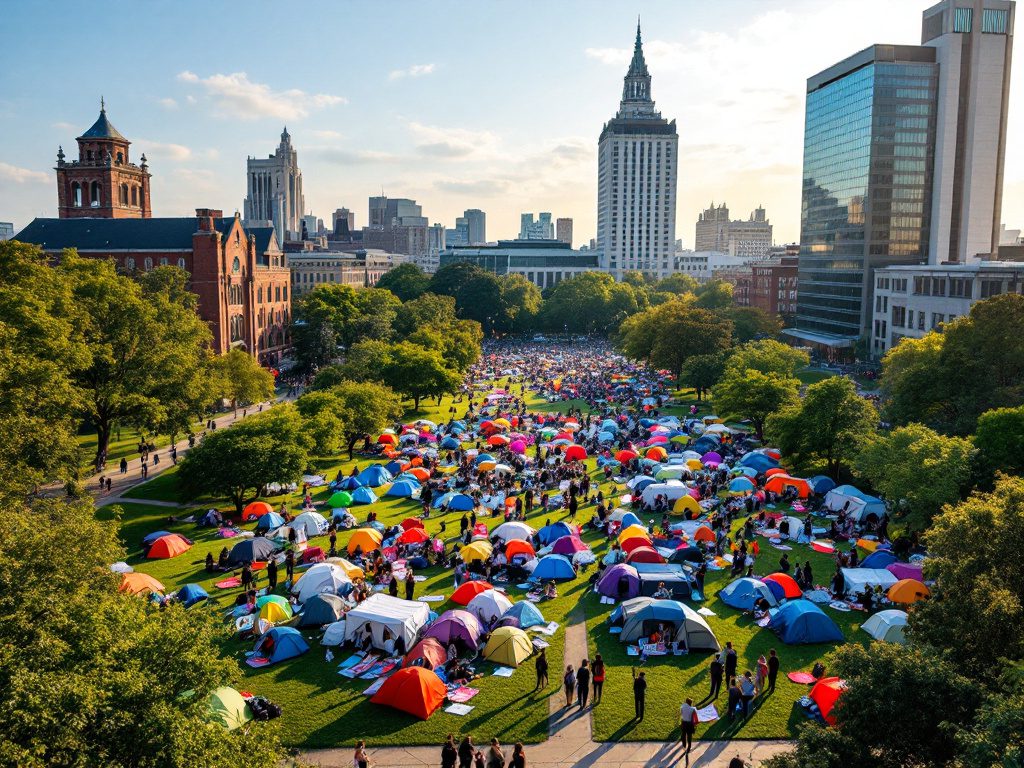
On a mild spring evening in New Haven, the usually tranquil lawns adjoining Yale’s hallowed halls became the setting for a passionate display of dissent. What started as a small gathering of 25 students soon swelled into an encampment of over 200, galvanized by news of Israeli National Security Minister Itamar Ben-Gvir’s imminent appearance near campus. This was no ordinary protest—it was the rekindling of a movement that, just weeks before, had led to dozens of student arrests as Yale grappled with its own response to the bloodshed in Gaza.
Ben-Gvir’s visit—part of his first US tour, with scheduled stops in New York and New Haven—was not simply a talk by a foreign official. For many students, it symbolized a direct affront to the calls for justice that have echoed across college campuses nationwide since the escalation of conflict in Gaza. Social media posts from Yale Students for Justice in Palestine (SJP) and allied groups quickly spread the word, urging activists to reestablish the tents and “let Yale know we have not moved on.”
By dusk, the number of demonstrators had quadrupled, and eight tents stood as silent testament to the students’ refusal to accept business as usual. The encampment, however, resolved to disband before dawn—not due to waning commitment, but owing to tangible fears of university retribution, a stark reminder of April’s crackdown when 44 Yale students were among nearly 50 arrested for protest actions.
Campus Tensions: Free Speech or Endorsement?
Behind the scenes, tension built not only between protesters and campus administrators but within the Yale community itself. The event’s host, Shabtai—a prominent independent Jewish organization—justified Ben-Gvir’s invitation by referencing a climate of what it called “toxic extremism” on Ivy League campuses. Shabtai’s founder, Shmully Hecht, boldly asserted, ‘At a personal level I believe it is specifically unapologetic events such as this one that has preserved Yale as a more moderate safe haven for Jews in the current toxic Ivy community of extremism.’
“For the students rallying on the Green, Ben-Gvir’s presence was about more than controversial speech—it was about challenging the normalization of state violence and demanding institutional accountability.”
Within moments, questions swirled: Where is the line between fostering dialogue and platforming extremism? Across the Ivy League and beyond, universities have weathered a surge of protests and polarization concerning Israel-Palestine, alongside contentious debates about free speech, academic independence, and the obligations of privileged institutions in times of global crisis.
The core dilemma—can universities both protect marginalized communities and maintain robust debate?—is not new, but the stakes feel heightened against the backdrop of April’s mass arrests at Yale, and similar actions at Columbia and other campuses. As Harvard Law Professor Noah Feldman notes, “Universities have a dual mission—to foster open inquiry while also ensuring student safety and dignity. Balancing both in today’s polarized climate is an unprecedented challenge.”
Protesters argue that Yale’s failure to denounce Ben-Gvir’s visit is part of a pattern of institutional neutrality that, in effect, appears as tacit approval of human rights abuses. Their concerns are not merely abstract; Ben-Gvir, known for his far-right politics and incendiary rhetoric, epitomizes for many the escalation of violence and discrimination faced by Palestinians both in Gaza and within Israel itself. The university’s muted response led SJP and others to call for stronger action, both against the event and regarding Yale-linked investments in weapons manufacturers.
The Weight of History—and the Path Forward
It would be easy, perhaps, to minimize these protests as campus theatrics. A closer look reveals their resonance with America’s long tradition of student activism, from the anti-apartheid and Vietnam sit-ins to the Black Lives Matter movement. In each case, pressure from young people forced institutions to confront their complicity and, sometimes, change course. According to a 2024 Pew Research Center report, nearly 60% of Americans aged 18-29 believe universities should actively divest from companies profiting from international conflicts—a dramatic shift from sentiment just one generation ago.
Yale’s struggle echoes a broader reckoning within American higher education. Institutions once content to shield themselves behind the supposed sanctity of neutrality now find themselves at a crossroads. Do they risk their reputation as bastions of critical thought by enforcing strict protest policies, or do they embrace robust dissent—even when it is uncomfortable or controversial?
Recent history offers both cautionary tales and inspiration. When Columbia University called police on anti-war protesters in 1968, the resulting backlash led to a reimagining of student rights and campus norms. These lessons linger; author and activist Angela Davis, reflecting on her own student protests, reminds us: “It is the audacity of people demanding justice that ultimately expands the circle of freedom for all.”
Still, the risks cannot be ignored. Student protesters at Yale spoke of fear—fear of discipline, fear for their academic futures, but also fear that ignoring injustice signals tacit complicity. Professors and alumni collaborate to draft letters of support; parents call the administration demanding explanations. The university, for its part, insists it must remain a marketplace of ideas, though critics argue the balance all too often tilts toward power rather than principle.
Beyond campus boundaries, the implications are sobering. When academic leaders choose to mute dissent or prioritize donor comfort over student safety, the chilling effect reaches far beyond any one event. Real accountability—whether through divestment, transparency about decision-making, or honest engagement with protester demands—remains the litmus test for universities claiming moral leadership.
The protests surrounding Ben-Gvir’s US tour are part of a larger national moment. They force us to reckon with the boundaries of free speech, the definition of safety and inclusion, and the role universities ought to play in the fight against state violence abroad. You may not agree with every tactic or sentiment shouted on the quad. But if the history of American social progress tells us anything, it’s that those voices—sometimes messy, often courageous—are not a threat. They are a necessity.
