
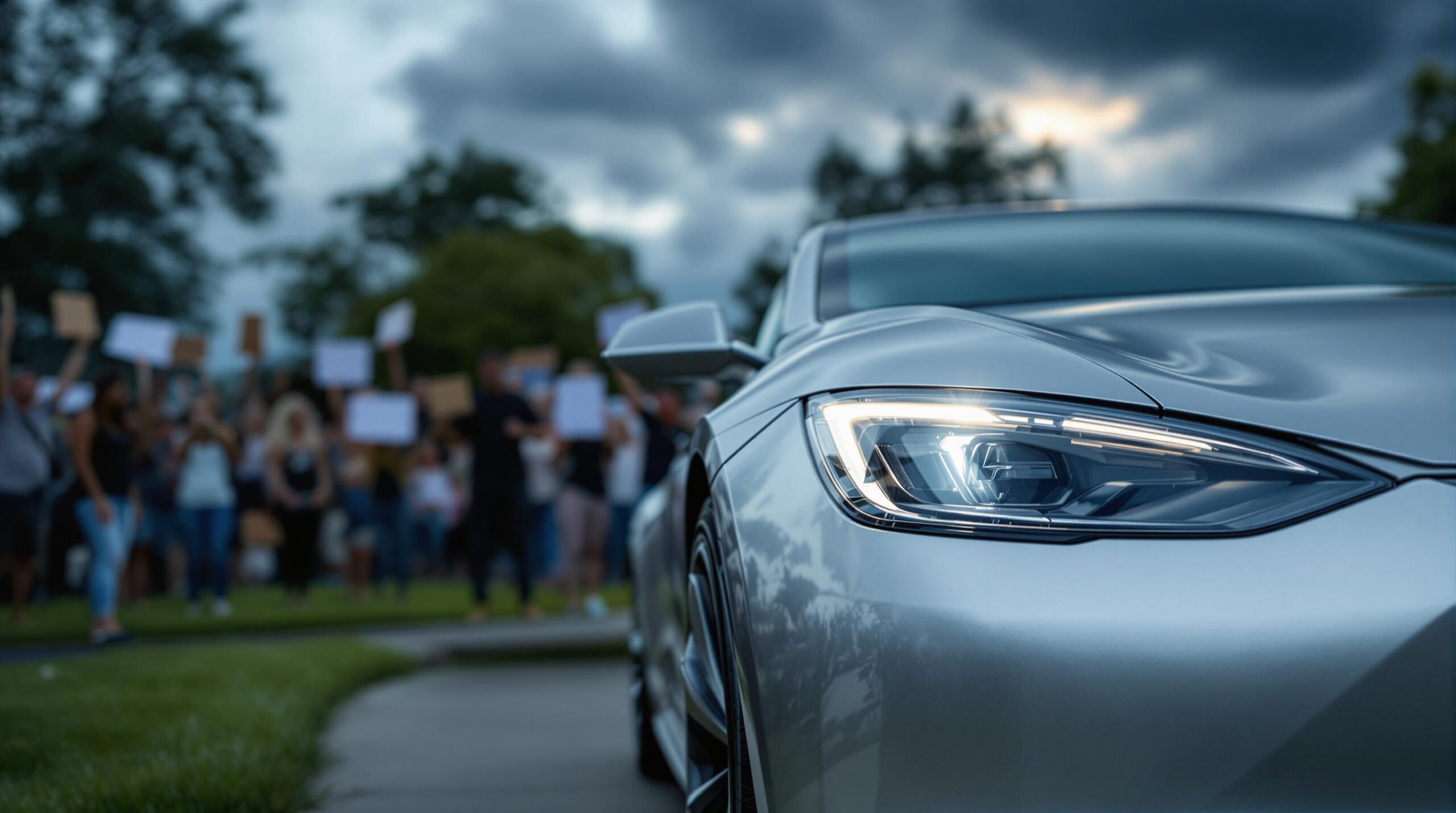
Of all the things one expects when driving a Tesla—envy at sleek engineering, maybe some good-natured ribbing about the high-tech lifestyle—becoming a victim of violent road rage certainly isn’t one of them. Yet, that’s precisely what happened to Susan, a 61-year-old Arizona resident, who found herself targeted and attacked on the historic Route 66 in Flagstaff simply for driving her electric vehicle. This alarming incident, unfortunately, isn’t isolated but reflects a troubling rise in hostility against Tesla owners nationwide, linked directly to Elon Musk’s polarizing presence.
The Incident: Changing Our Commute
Susan’s harrowing experience unfolded on March 18, when another driver cut her off in heavy traffic, forcing her to the curbside. As recorded by Tesla’s sophisticated security cameras surrounding the vehicle, the assailant exited his green sedan, approached Susan’s car, and violently attacked her. Susan courageously fought back, biting the attacker’s hand until a passenger from the aggressor’s vehicle intervened, allowing Susan a chance to escape from the violent encounter relatively physically unharmed but emotionally shaken.
As troubling as Susan’s case is on its own, it’s not the first nor the only instance of aggression directed at Tesla owners. Across the country, a troubling wave of anti-Tesla sentiment has escalated into vandalism and outright violence. In Las Vegas, a Tesla collision center was deliberately set ablaze, causing thousands in damage and a crisis of safety among employees. Further north and west, a shooting at an Oregon dealership has rattled both employees and customers. Clearly, what began as online vitriol has mutated into dangerous tactics, causing tangible harm and fear in the real world.
Why Tesla? Linking Anger with Musk
At first glance, it’s perplexing. What could possibly prompt someone to lash out so violently against drivers simply for their choice of car? However, deeper ideological divides appear at play, echoing the increasingly polarized climate around politics and public personalities. The spotlight falls firmly on Tesla CEO Elon Musk, whose controversial remarks, provocative Twitter activity, and shifting political leanings have turned him into a lightning rod for both adoration and fierce hostility.
Tesla, once merely symbolic of innovation and environmental responsibility, has unintentionally become entwined with Musk’s divisive public persona. Musk’s outspoken political positions on social media, specifically his recent increased alignment with conservative viewpoints, place him—and by unfortunate extension, Tesla—in the crosshairs of tremendous consumer backlash, especially among progressive communities who once praised the company’s eco-friendly mission.
Is it fair for regular everyday citizens to suffer due to backlash aimed at an influential billionaire? Susan certainly doesn’t believe so. “I didn’t buy my car as a political statement,” she said, highlighting the absurdity of facing aggression simply due to her vehicle choice. And yet, this irrational association persists, with disturbing consequences becoming increasingly common.
An Indictment on Extremism: What Experts Say
According to experts who monitor extremism and public hostility, incidents targeting Tesla vehicles have seen a noticeable uptick over recent months. The correlation between increased attacks and Musk’s publicly expressed opinions isn’t coincidental. Rather, it demonstrates precisely how influential figures’ rhetoric can affect public behavior.
Experts emphasize the urgent need to address the growing extremism evident in these incidents. Hateful rhetoric online isn’t just contained in the digital sphere. It manifests in physical violence, targeting innocent people whose only crime is inadvertently aligning with—or symbolizing—a public figure caught in controversy.
In Susan’s case, she’s far from alone in feeling intimidated because of her choice of car. Another Arizona resident recently reported receiving anonymous and aggressive notes on her Tesla, labeling her a “Nazi” and “racist,” prompting her to enroll in firearms training classes out of sheer self-preservation. As distressing as these actions are, they exemplify the real-world consequences of inflammatory rhetoric and heightened political polarization.
“It’s terrifying. I bought a car to lessen my environmental footprint, and now I feel unsafe driving it due to something totally unrelated to who I am,” one Tesla owner shared.
Moving Forward: How to Curb the Hatred?
To combat such alarming trends, meaningful, collective engagement is critical. Primarily, this should include strong condemnation of violence and harassment, no matter one’s political alignment. Influential figures—including Musk himself—carry a responsibility to explicitly discourage violence and foster understanding rather than fan the flames of division.
Equally essential is enhanced communication between communities, authorities, and victims to ensure reports of violence or harassment receive swift responses. Support systems should be established for victims like Susan, who may otherwise feel isolated or vulnerable.
Ultimately, the goal must be a societal shift—moving away from stigmatizing symbols and towards more nuanced discussions addressing ideological differences without targeting innocents. No one should fear violence or hatred because of what they drive, who they admire, or for being unintentionally associated with polarizing personalities.
Tesla, at its best, represents an urgent step towards combating climate change and embracing technological innovation. Those virtues shouldn’t become secondary to the politicization and polarization surrounding a controversial leader. For Susan and countless others, reclaiming this significance—and driving their vehicles without fear—will be an essential step not just toward road safety, but a healthier public discourse.
